
Saudi Arabia Cloud Computing Market Size & Forecast 2025–2033
Vision 2030 Fuels the Kingdom’s Rise as a Regional Cloud Powerhouse


Saudi Arabia Cloud Computing Market Outlook
The Saudi Arabia Cloud Computing Market is projected to expand at a CAGR of 11.33% during 2025–2033, reaching US$ 38.23 billion by 2033, up from US$ 14.55 billion in 2024, according to Renub Research. This strong growth trajectory is powered by rapid digital transformation, accelerating enterprise adoption of cloud services, and large-scale government initiatives under Vision 2030 aimed at modernizing IT infrastructure and fostering innovation across industries.
Saudi Arabia is fast emerging as one of the most attractive cloud markets in the Middle East. Massive investments in smart cities, e-governance, fintech, healthcare digitization, and industrial automation are reshaping how data is stored, processed, and analyzed across the Kingdom.
Saudi Arabia Cloud Computing Market Overview
Cloud computing refers to the on-demand delivery of computing services—such as data storage, processing power, networking, databases, and software—over the internet. Instead of owning physical servers and data centers, organizations access scalable resources from cloud providers, benefiting from flexibility, efficiency, and cost optimization.
In Saudi Arabia, cloud adoption has accelerated significantly due to government-backed digital reforms, regulatory evolution, and partnerships with global cloud providers. Deployment models such as Infrastructure as a Service (IaaS), Platform as a Service (PaaS), and Software as a Service (SaaS) are being increasingly utilized by both public and private sectors.
Collaborations with international technology leaders like Google Cloud, Oracle Corporation, and Microsoft Azure have strengthened local cloud ecosystems through the establishment of in-country data centers, ensuring compliance with data residency requirements.
Key Growth Drivers in the Saudi Arabia Cloud Computing Market
Vision 2030 and National Digital Transformation
Saudi Arabia’s Vision 2030 remains the cornerstone of cloud computing growth. The strategy focuses on economic diversification, innovation, and digital governance. Cloud platforms play a central role in enabling e-government services, smart infrastructure, AI initiatives, and national data platforms.
In April 2023, the inauguration of the Cloud Computing Special Economic Zone (CCSEZ) marked a major milestone, offering incentives for global cloud providers and reinforcing the Kingdom’s ambition to become a regional technology hub.
Expansion of Smart Cities and IoT Ecosystems
Mega-projects such as NEOM, along with other smart city initiatives, are driving massive demand for cloud-based data storage, analytics, and real-time processing. Cloud infrastructure supports Internet of Things (IoT) platforms used in traffic management, energy optimization, public safety, and urban planning.
In February 2023, Oracle Corporation announced plans to establish its third public cloud region in Saudi Arabia, investing approximately US$ 1.5 billion to strengthen cloud capacity across Riyadh, Jeddah, and NEOM.
Rising Demand from BFSI and Healthcare
The BFSI and healthcare sectors are among the fastest adopters of cloud computing in Saudi Arabia. Financial institutions leverage cloud platforms for digital banking, fraud detection, compliance automation, and personalized customer experiences. Meanwhile, healthcare providers use cloud solutions for electronic health records, telemedicine, AI diagnostics, and hospital information systems.
In August 2024, Google LLC introduced advanced data sovereignty, security, and AI capabilities for organizations operating in the Dammam region, further accelerating cloud adoption in regulated industries.
Challenges Facing the Saudi Arabia Cloud Computing Market
Data Residency and Regulatory Complexity
Despite progress, concerns around data sovereignty and compliance continue to influence enterprise cloud strategies. Many organizations remain cautious about storing sensitive data outside national borders. While government initiatives are encouraging local data center development, regulatory clarity and consistent enforcement remain essential for sustained adoption.
Shortage of Skilled Cloud Professionals
The Kingdom faces a talent gap in cloud architecture, cybersecurity, and DevOps. Although universities and training programs are expanding cloud-related curricula, demand still outpaces supply. This shortage increases reliance on foreign expertise and can delay cloud deployment for enterprises.
Saudi Arabia Public Cloud Computing Market
Public cloud services are witnessing rapid growth due to their scalability, cost efficiency, and ease of deployment. Government-led initiatives encourage businesses to use public cloud platforms for non-sensitive workloads such as e-commerce, web hosting, and CRM systems.
Leading providers like Amazon Web Services Inc., Microsoft Corporation, and Google LLC are expanding local infrastructure to comply with regulatory standards, boosting confidence among enterprises.
Saudi Arabia Private Cloud Computing Market
Private cloud adoption is particularly strong among government agencies, BFSI institutions, and large enterprises handling sensitive data. Private clouds offer enhanced control, customization, and security while ensuring compliance with Saudi data regulations.
Hybrid cloud models—combining public and private environments—are gaining popularity, allowing organizations to balance flexibility with compliance requirements.
Cloud Computing Adoption by Enterprise Size
Large Enterprises
Large enterprises dominate cloud spending in Saudi Arabia. These organizations use advanced cloud architectures such as hybrid and multi-cloud environments to support disaster recovery, AI workloads, and large-scale analytics while integrating legacy systems.
Small & Medium Enterprises (SMEs)
SMEs are increasingly adopting cloud solutions due to affordability, scalability, and reduced infrastructure costs. Government support programs and cloud credits are enabling SMEs to modernize operations and compete in digital markets.
Industry-Specific Cloud Adoption
BFSI
Cloud platforms are transforming Saudi Arabia’s BFSI sector by enabling mobile banking, digital wallets, real-time analytics, and regulatory reporting.
Manufacturing
Manufacturers use cloud computing for predictive maintenance, IoT-enabled smart factories, and supply chain optimization—aligning with Vision 2030’s industrial diversification goals.
Healthcare
Cloud adoption in healthcare supports telemedicine, AI diagnostics, patient data management, and remote monitoring, improving accessibility and care quality.
Regional Insights
Western Saudi Arabia
Cities like Jeddah and Makkah are witnessing strong cloud adoption driven by tourism digitalization, smart infrastructure, and logistics modernization.
Eastern Saudi Arabia
The energy and industrial hub of the Kingdom relies on cloud computing for real-time monitoring, cybersecurity, and operational efficiency in oil, gas, and logistics sectors.
Southern Saudi Arabia
Gradual adoption is underway, supported by e-government services, SME digitization, and improvements in digital infrastructure.
Market Segmentation
By Deployment
Public Cloud
Private Cloud
By Service Model
SaaS
PaaS
IaaS
By Enterprise Size
SMEs
Large Enterprises
By End Use
BFSI
IT & Telecom
Retail & Consumer Goods
Media & Entertainment
Manufacturing
Energy & Utilities
Healthcare
Government & Public Sector
Others
By Region
Northern & Central
Western
Eastern
Southern
Key Players Analysis
Major companies operating in the Saudi Arabia cloud computing market include:
Google LLC
Amazon Web Services Inc.
Alibaba Cloud
Microsoft Corporation
Oracle Corporation
CloudSigma
VMware Inc.
Salesforce Inc.
Saudi Telecom Company
IBM Corporation
Each company has been evaluated across five viewpoints: Overview, Key Person, Recent Developments, SWOT Analysis, and Revenue Analysis.
Final Thoughts
The Saudi Arabia Cloud Computing Market is entering a high-growth phase, supported by Vision 2030, large-scale digital infrastructure investments, and increasing enterprise confidence in cloud security and compliance. While challenges such as data sovereignty and talent shortages remain, ongoing regulatory reforms and education initiatives are expected to mitigate these risks.
With expanding data centers, smart city projects, and industry-wide digitization, Saudi Arabia is well-positioned to become a regional cloud computing hub, offering long-term opportunities for global technology providers, enterprises, and startups alike.
About the Creator
Marthan Sir
Educator with 30+ years of teaching experience | Passionate about sharing knowledge, life lessons & insights | Writing to inspire, inform, and empower readers.
Keep reading
More stories from Marthan Sir and writers in Futurism and other communities.
Global Advertising Market Size and Forecast 2025–2033
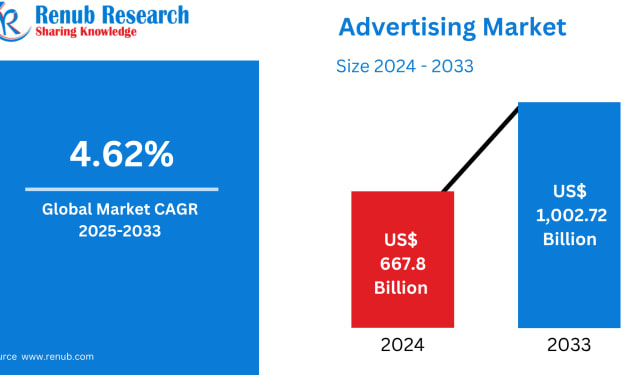
Global Advertising Market Overview The Global Advertising Market was valued at USD 667.8 billion in 2024 and is projected to reach USD 1,002.72 billion by 2033, expanding at a CAGR of 4.62% from 2025 to 2033, according to Renub Research. This steady expansion reflects the advertising industry’s central role in a digitally connected global economy, where brands compete intensely for consumer attention, loyalty, and trust.
By Marthan Sir21 days ago in Futurism
About Binding Prometheus
I want to start actively advocating on behalf of my own work, and the most valuable part of my canon is, without a doubt, Binding Prometheus, the play I have been working on since 2019 and only finished in 2023 as part of my MA. The play itself is an amalgamation of a million different inspirations. On one end, it evokes the Ancient Greek myth-play, deriving its own title from the earliest extant work of Western drama we have, Aeschylus’s Prometheus Bound. On the other end, it borrows significantly from the sci-fi bulwarks from over the years, namely Mary Shelley’s Frankenstein and Karel Capek’s Rossum’s Universal Robots. The play could be an episode of Black Mirror, I fear. I don’t know. I’ve only ever seen one episode of Black Mirror.
By Steven Christopher McKnight12 days ago in Futurism
France Convenience Store Market Size and Forecast 2026–2034
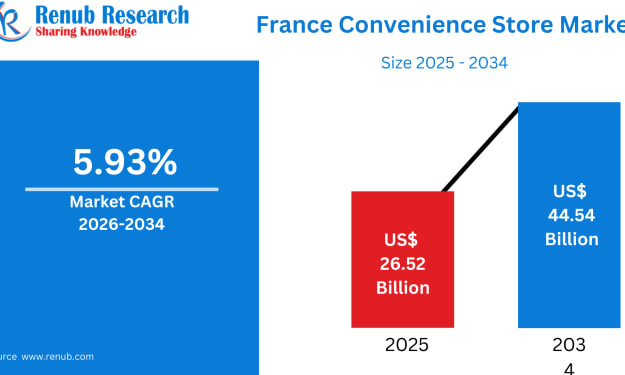
Introduction The France Convenience Store Market is poised for strong expansion over the coming decade, reflecting the country’s changing consumer habits, growing urban density, and rising preference for speed, accessibility, and ready-to-consume products. According to Renub Research, the market is expected to grow from US$ 26.52 billion in 2025 to US$ 44.54 billion by 2034, registering a healthy compound annual growth rate (CAGR) of 5.93% from 2026 to 2034.
By jaiklin Fanandish4 days ago in Futurism


Comments
There are no comments for this story
Be the first to respond and start the conversation.