
Saudi Arabia Aquaculture Market: Sustainable Production, Export Growth & Future Outlook
How sustainable farming practices, advanced feed and water management technologies, and growing seafood demand are improving productivity, quality, and long-term growth across the Saudi Arabia aquaculture market

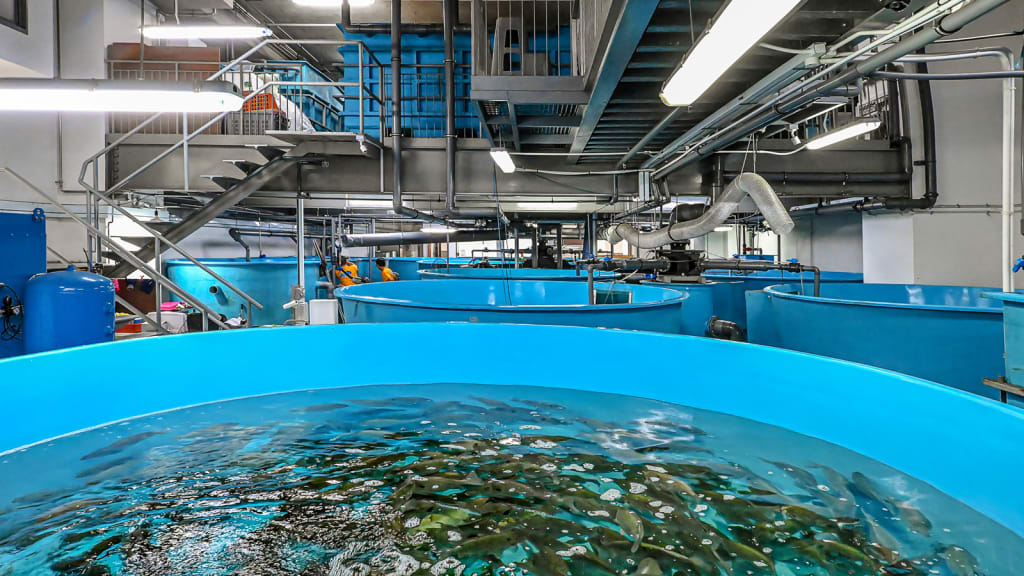
Driven by Vision 2030's strategic focus on food security and economic diversification, the Kingdom is reshaping its aquaculture sector through major government investments, cutting-edge technology adoption, and strategic public-private partnerships. The sector enjoys robust policy support including subsidized financing via the Saudi Agricultural Development Fund, streamlined licensing procedures, and infrastructure development across coastal and inland regions. Growing health awareness combined with the Kingdom's expanding population is fueling demand for protein-rich seafood, pushing the Saudi Arabia aquaculture market to new heights. According to IMARC Group's latest data, the Saudi Arabia aquaculture market reached 489,294 Tons in 2025. Looking ahead, IMARC Group projects the market will reach 850,500 Tons by 2034, growing at a compound annual growth rate of 6.34% from 2026-2034.
The sector has transformed from modest beginnings in the early 1980s into a major economic pillar, with production surging from just 27,000 tons in 2016 to 139,949 tons in 2023. Today, aquaculture accounts for roughly 65% of Saudi Arabia's total seafood production, surpassing traditional fisheries. The Kingdom has emerged as one of the world's leading white shrimp producers and exporters, shipping over 50,000 tons annually to more than 40 countries. Major species include white shrimp, barramundi, sea bream, and tilapia, with recent expansion into premium finfish like salmon and trout through innovative recirculating aquaculture systems.
Access the Sample Report for Current Insights and Forecasts
Saudi Arabia Aquaculture Market Growth Drivers:
- Vision 2030 Strategic Alignment and Government Investment
The Saudi government has elevated aquaculture to strategic importance as a pillar of food security and economic diversification under Vision 2030. This commitment comes through multiple channels: subsidized financing via the Saudi Agricultural Development Fund covering up to 70% of project costs with favorable terms, streamlined licensing down to three months through the Naama digital system, and infrastructure investments exceeding $4 billion targeting hatcheries, feed mills, and health labs. In 2025, Saudi Arabia and China signed 57 agreements worth $3.7 billion covering agriculture, food security, and industrial supply chains. The Ministry of Environment, Water, and Agriculture targets 600,000 tons of annual fish production by 2030, with dedicated budgets supporting market development, research initiatives, and technological adoption across the value chain.
- Rising Health Consciousness and Demographic Growth
The Saudi population is experiencing significant expansion and compositional shifts reshaping food consumption patterns. The population of Saudi Arabia is projected to grow 43% from 33,264,292 in 2023 to 47,693,910 by 2050 according to WHO predictions, creating sustained demand for high-quality protein sources like seafood. Government health awareness campaigns emphasize seafood's nutritional benefits, particularly omega-3 fatty acids and lean protein content. Per capita seafood consumption currently stands at 11.7 kg compared to the global average of 21.3 kg, with government targets to increase consumption to 20 kg by 2030. The growing expatriate population and flourishing tourism sector, with Riyadh attracting 11.9 million domestic tourists in 2023, further drives commercial demand for fresh, diverse seafood across hotels and restaurants.
- Domestic Aquafeed Industry Development and Vertical Integration
The establishment of domestic aquafeed manufacturing capacity represents a transformative development enabling industry scalability and cost competitiveness. Feed costs typically constitute 50 to 70% of operating expenses in intensive aquaculture systems, making local production critical for sector viability. In 2023, fish feed consumption totaled 298,491 tons, with 87,204 tons for inland aquaculture and 211,287 tons for sea farming. Leading producers include ARASCO, Maram Feed Mill, and Al Hejaz Feed Company. The Aquaculture Development Program at King Abdullah University of Science and Technology developed over 30 new high-value finfish feed formulations achieving 10-15% improvements in feed conversion ratios, potentially saving $417 million annually. In 2025, Unibio's single-cell protein received Saudi Food and Drug Authority approval for aquaculture use, expanding sustainable feed options.
Saudi Arabia Aquaculture Market Trends:
- Advanced Recirculating Aquaculture Systems and Water-Efficient Technologies
Saudi Arabia is pioneering adoption of recirculating aquaculture systems and biofloc technology to overcome water scarcity challenges in arid environments. These closed-loop systems reduce water consumption by up to 95% compared to traditional methods while enabling year-round production in desert locations. The technology maintains optimal water quality through sophisticated biological and mechanical filtration, supporting higher stocking densities and faster growth rates. In June 2024, King Abdullah University of Science and Technology partnered with the Ministry of Environment, Water, and Agriculture to revolutionize aquaculture practices through advanced research, aiming to increase domestic production from 280,000 tons in 2024 to 530,000 tons annually by 2030. Facilities are emerging in Riyadh, Tabuk, and Jazan, converting unsuitable inland areas into productive zones while addressing sustainability through waste-to-resource conversion processes.
- Artificial Intelligence and Smart Farming Technologies Integration
The Saudi aquaculture sector is undergoing digital transformation through deployment of Internet of Things sensors, automated feeding systems, and AI-driven farm management platforms. These technologies enable real-time monitoring of critical parameters including water temperature, dissolved oxygen levels, pH, ammonia concentrations, and fish behavior patterns, allowing operators to optimize feeding schedules, detect disease outbreaks early, and maximize feed conversion efficiency. In 2024, a collaboration between King Abdulaziz City for Science and Technology and King Abdulaziz University launched a trout farming initiative backed by the National Livestock and Fisheries Development Program. The project presents trout as a species adaptable to various environmental conditions, increasing supply of nutritious fish while reducing supply chain disruptions. IoT-enabled farms report efficiency gains of 15-20% through precision resource management and predictive analytics.
- Premium Species Diversification and Value-Added Production
Beyond traditional species like shrimp and tilapia, Saudi aquaculture is diversifying into premium finfish including salmon, barramundi, sea bream, sea bass, and meagre to capture higher-value market segments. This strategic shift addresses evolving consumer preferences for diverse, sustainably-farmed seafood while generating superior profit margins. In December 2024, Saudi Arabia launched a salmon production center in Hail aiming to produce 10,000 metric tons annually, with facilities including hatcheries with 5 million juvenile capacity, establishing the first land-based salmon operation in the region. The facility addresses high regional demand for salmon currently met through imports. Specialized hatcheries with advanced genetic selection programs enable cultivation of disease-resistant strains adapted to local conditions, while integrated aquaponics systems combine fish farming with hydroponic vegetable production to maximize resource efficiency.
Recent News and Developments in Saudi Arabia Aquaculture Market
- February 2025: The Royal Commission for Jubail and Yanbu signed an investment agreement worth nearly 2 billion Saudi riyals ($533 million) with Topian, the NEOM food company, to establish an aquaculture project in the Jazan Special Economic Zone with an annual production capacity of 10,000 metric tons, covering 100,000 square meters to promote a sustainable food industry in the Kingdom.
- January 2025: Saudi Arabia inaugurated the Middle East's largest salmon production facility in Hail, with an annual production target of 100,000 tons of salmon. The facility includes hatcheries with 5 million juvenile capacity, fish farming operations, and an aquaponics system, establishing the first land-based salmon operation in the region to meet growing domestic and regional demand.
- February 2024: NEOM and Tabuk Fisheries Company established Topian Aquaculture, a joint venture approved by the Ministry of Environment, Water, and Agriculture to construct the Middle East and North Africa region's largest hatchery with a planned capacity of 42 million fingerlings and marine-pen finfish production facilities targeting 20,000 metric tons annually by 2030, exemplifying the Kingdom's commitment to integrating next-generation technologies.
- June 2024: King Abdullah University of Science and Technology partnered with the Ministry of Environment, Water, and Agriculture to revolutionize aquaculture practices through the Aquaculture Development Program, aiming to increase domestic production from 280,000 tons in 2024 to 530,000 tons annually by 2030 through advanced research, development of over 30 new feed formulations, and direct government investment support for innovative projects.
Note: If you require specific details, data, or insights that are not currently included in the scope of this report, we are happy to accommodate your request. As part of our customization service, we will gather and provide the additional information you need, tailored to your specific requirements. Please let us know your exact needs, and we will ensure the report is updated accordingly to meet your expectations.
About the Creator
Faisal Al-Harbi
Market research professional based in Saudi Arabia (KSA), focused on industry trends, market growth, and economic insights.
Writing data-driven articles on Saudi markets, business outlook, and Vision 2030–driven sectors.
Keep reading
More stories from Faisal Al-Harbi and writers in Futurism and other communities.
Saudi Arabia Tire Market: EV Adoption, Fleet Expansion & Growth Outlook
According to IMARC Group's latest research publication, Saudi Arabia tire market size reached 23.15 Million Units in 2025. The market is projected to reach 25.68 Million Units by 2034, exhibiting a growth rate (CAGR) of 1.16% during 2026-2034.
By Faisal Al-Harbia day ago in Futurism
Saudi Arabia Diethylene Glycol (DEG) Market Trends: Petrochemical Demand, Industrial Applications & Market Forecast to 2034
According to IMARC Group's latest research publication, Saudi Arabia diethylene glycol (DEG) market size reached 32.6 Thousand Tons in 2025. Looking forward, IMARC Group expects the market to reach 45.5 Thousand Tons by 2034, exhibiting a growth rate (CAGR) of 3.78% during 2026-2034.
By Kishan Kumarabout 2 hours ago in Futurism
Why We Had to Destroy Our Old Identity to Build a New Future
When I founded ARK DEV in Santiago, Chile, back in 2024, the primary goal was simple: survival. Like many tech startups born in a garage mentality, we were obsessed with the backend of the business. We focused entirely on writing clean, functional code, solving immediate problems for our first clients, and proving that we could deliver on tight deadlines.
By ARK DEV ORG5 days ago in Futurism



Comments
There are no comments for this story
Be the first to respond and start the conversation.