
Saudi Arabia 3PL Market: E-commerce Expansion, Supply Chain Optimization & Growth Outlook
How integrated supply chain solutions, warehouse automation, and e-commerce-driven demand are enhancing operational efficiency, delivery speed, and scalability across the Saudi Arabia third-party logistics (3PL) market.

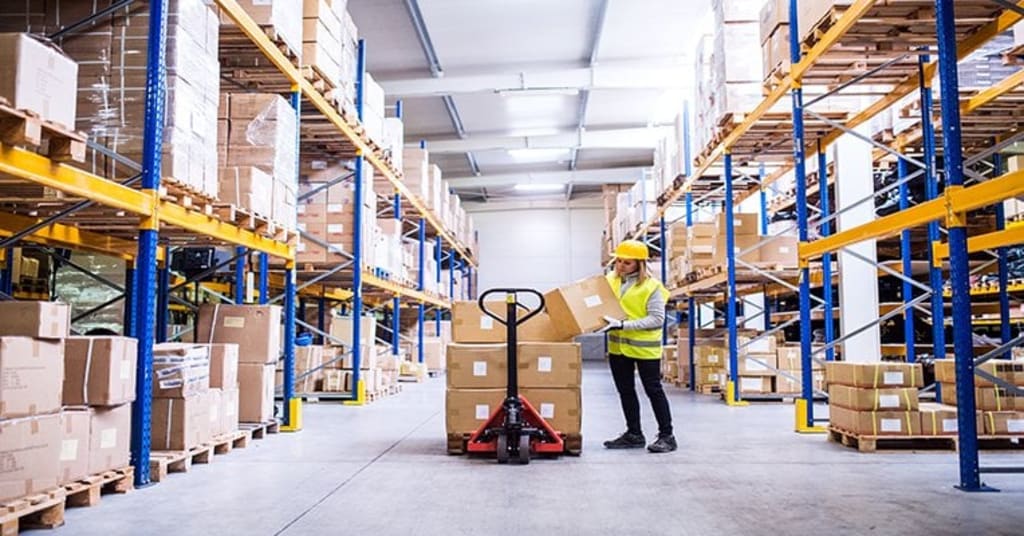
According to IMARC Group's latest research publication, Saudi Arabia third-party logistics (3PL) market size reached USD 14.5 Billion in 2025. The market is projected to reach USD 24.9 Billion by 2034, exhibiting a growth rate of 6.20% during 2026-2034.
How AI is Reshaping the Future of Saudi Arabia Third-Party Logistics (3PL) Market
- Smart Warehouse Automation: AI-powered autonomous mobile robots (AMRs) and automated storage systems valued at USD 1.2 billion transform warehouse operations, reducing picking errors by 99.9% while processing shipments 40% faster across Riyadh, Jeddah, and Dammam's 70 million square meters of warehousing space.
- Predictive Route Optimization: Machine learning algorithms analyze real-time traffic, weather, and delivery patterns to optimize last-mile routes, reducing delivery delays by 25% and fuel consumption by up to 18%, critical for Saudi Arabia's extreme climate conditions and expanding road network.
- Intelligent Demand Forecasting: AI systems process historical data and market trends to predict inventory needs with 95% accuracy, enabling 3PL providers to optimize stock levels, reduce warehousing costs, and ensure product availability for e-commerce platforms reaching USD 20 billion by 2030.
- Real-Time IoT Tracking: Internet of Things sensors enable continuous cargo monitoring across temperatures ranging from -40°C to 50°C, essential for pharmaceutical cold chains and food logistics, providing real-time visibility that reduces spoilage by 30% in temperature-sensitive shipments.
- Automated Customs Processing: AI-driven document processing and blockchain integration through Saudi Arabia's Single Window platform streamline customs clearance, reducing processing time from days to hours while ensuring 100% compliance with ZATCA regulations and improving cross-border efficiency.
How Vision 2030 is Revolutionizing Saudi Arabia Third-Party Logistics (3PL) Industry
Vision 2030 is transforming Saudi Arabia into a global logistics powerhouse through unprecedented investments exceeding USD 100 billion in transportation infrastructure and strategic initiatives targeting 10% GDP contribution by 2030, up from 6% in 2022. The National Industrial Development and Logistics Program (NIDLP) drives development of 59 logistics zones across 100 million square meters, attracting USD 10 billion in foreign investment. Flagship mega-projects including NEOM's Oxagon port—featuring automated cranes and AI-powered intelligent guided vehicles launching Terminal 1 in 2026—and the USD 7 billion Saudi Landbridge railway connecting Jeddah to Dammam revolutionize multimodal connectivity. King Salman International Airport's capacity expansion to 120 million passengers annually, combined with Riyadh Metro's 176-kilometer driverless network, creates integrated transport ecosystems. The government's SR240 billion privatization program, offering 80% of logistics projects to private sector participation, establishes tax incentives, 100% foreign ownership rights, and fast-track licensing. Digital transformation through automated customs, blockchain documentation, and 15 new Authorized Economic Operator incentives reduce clearance times to 4 hours while positioning the Kingdom at the strategic crossroads of Asia, Europe, and Africa for seamless global trade flows.
Saudi Arabia Third-Party Logistics (3PL) Market Trends & Drivers:
E-commerce explosion is fundamentally reshaping 3PL demand as online retail revenues projected to reach USD 20 billion by 2030 drive sophisticated fulfillment requirements. The market is currently growing at 13.5% annually through 2027, with consumers expecting same-day delivery across major cities. This surge necessitates massive investments in last-mile logistics infrastructure, dark stores for rapid grocery fulfillment, and automated sorting facilities capable of processing millions of orders daily. Major platforms like Noon, Amazon, and local players partner with 3PL providers to establish distributed warehouse networks closer to end customers, reducing delivery windows from 48 hours to under 4 hours in urban centers. Cross-border e-commerce further amplifies complexity, requiring integrated customs clearance, reverse logistics for returns management, and multilingual customer service capabilities. The integration of AI-powered inventory management systems enables real-time stock synchronization across channels, preventing stockouts while minimizing excess inventory carrying costs. As digital payment adoption reaches 79% and mobile commerce dominates shopping behaviors among Saudi Arabia's tech-savvy population, 3PL providers invest heavily in technology platforms, delivery fleet expansion, and fulfillment center automation to capture this exponential growth trajectory and meet evolving customer expectations for speed, transparency, and convenience.
Infrastructure mega-projects under Vision 2030 create unprecedented logistics opportunities as construction of NEOM, Red Sea Global, Qiddiya, and urban expansions generate massive material movement requirements. The logistics facilities count has surged 267% since 2021, with the Eastern Province leading expansion to support industrial zones and manufacturing clusters. Port throughput targets of 40 million TEUs by 2030, rail network expansion from 5,300 kilometers to over 8,000 kilometers, and air cargo capacity exceeding 4.5 million tonnes annually establish world-class multimodal infrastructure. Hassan Allam Roads & Bridges' contract for NEOM port roads and paving, combined with automated terminal equipment arriving throughout 2025-2026, demonstrates the scale of construction logistics demand. The Jeddah Islamic Port, handling over 65% of Saudi maritime imports, undergoes AI-driven digitization upgrades improving container tracking and throughput velocity. King Abdullah Port's capacity enhancements and MSC's new "Clanga" shipping service connecting Saudi Arabia with Singapore, Shanghai, and Colombo strengthen East Asian trade corridors. Free economic zones offering tax exemptions, bonded warehouse facilities, and streamlined regulatory processes attract global 3PL players establishing regional distribution centers. This infrastructure transformation reduces transit times, improves reliability, and positions Saudi Arabia as the logistics bridge between continents, enabling 3PL providers to offer integrated end-to-end solutions across maritime, air, rail, and road transport modes.
Warehouse automation adoption accelerates as labor costs rise 15% over three years and labor shortages intensify demand for technology-driven solutions. The Saudi logistics automation market reached USD 595.7 million in 2024, projected to hit USD 1,104.5 million by 2033, reflecting 18.8% sector growth driven by robotics, IoT, and AI integration. Automated Storage and Retrieval Systems (AS/RS) optimize space utilization in facilities where warehousing rents increase due to urban land scarcity, particularly across Riyadh's integrated logistics zones offering pre-built smart warehouses with ICT-ready infrastructure. Geek+'s partnership with Starlinks deploying autonomous mobile robots orchestrated by intelligent software demonstrates how automation liberates workers from repetitive tasks for value-added activities. Electric automated guided vehicles (AGVs) transport goods 24/7 without fatigue, while AI-powered picking robots reduce error rates below 0.1% compared to manual operations. Collaborative robots (cobots) work alongside humans in temperature-controlled cold storage facilities maintaining pharmaceutical product integrity throughout distribution chains. Government allocation of SAR 12 billion for AI initiatives under Vision 2030 incentivizes technology adoption, creating favorable conditions for 3PL providers investing in smart warehousing. The integration of Warehouse Management Systems (WMS) with real-time inventory tracking, predictive maintenance for equipment, and digital twin technology for operational optimization drives efficiency gains of 25-40% while supporting sustainability goals through energy-efficient systems and reduced carbon footprints aligned with Saudi Arabia's net-zero 2060 commitment.
Saudi Arabia Third-Party Logistics (3PL) Market Industry Segmentation:
The report has segmented the market into the following categories:
Service Insights:
- Domestic Transportation Management
- International Transportation Management
- Value-added Warehousing and Distribution
End User Insights:
- Automotive and Manufacturing
- Oil and Gas
- Chemical
- Distributive Trade (Wholesale and Retail Trade, including E-commerce)
- Pharmaceutical and Healthcare
- Construction
- Others
Regional Insights:
- Northern and Central Region
- Western Region
- Eastern Region
- Southern Region
Competitive Landscape:
The market research report has also provided a comprehensive analysis of the competitive landscape. Competitive analysis such as market structure, key player positioning, top winning strategies, competitive dashboard, and company evaluation quadrant has been covered in the report. Also, detailed profiles of all major companies have been provided.
Recent News and Developments in Saudi Arabia Third-Party Logistics (3PL) Market
- February 2026: Honeywell partnered with Kortech to automate critical infrastructure projects across Saudi Arabia, combining global digital expertise with regional engineering to advance AI-driven efficiency in transportation and smart-city logistics operations.
- January 2026: WiseTech Global signed MoU with Elm Company to drive digital transformation in logistics, enhancing automation through advanced software for supply chain optimization and streamlined operations throughout the Kingdom.
- December 2025: Aramex launched automated robotic sorting facility at Jeddah Islamic Port, integrating robotics and AI to boost operational efficiency, scalability, and sustainable practices in port logistics handling 65% of maritime imports.
- August 2025: Geek+ teamed with Starlinks to deploy autonomous mobile robots orchestrated by smart software in Saudi warehouses, enabling workers to focus on strategic activities while robots handle repetitive material movement tasks efficiently.
- July 2025: Port of NEOM announced Egypt-Saudi-Iraq intermodal trade corridor pilot, demonstrating 900-kilometer multimodal route from Cairo through Safaga Port, crossing Red Sea to NEOM, then overland via Arar to Erbil for enhanced regional connectivity.
- June 2025: Port of NEOM received Saudi Arabia's first fully automated, remote-controlled Ship-To-Shore (STS) and Electric Rubber-Tyred Gantry (eRTG) cranes from ZPMC, marking significant milestone in terminal automation with additional equipment scheduled for 2025-2026 delivery.
Note: If you require specific details, data, or insights that are not currently included in the scope of this report, we are happy to accommodate your request. As part of our customization service, we will gather and provide the additional information you need, tailored to your specific requirements. Please let us know your exact needs, and we will ensure the report is updated accordingly to meet your expectations.
About the Creator
Faisal Al-Harbi
Market research professional based in Saudi Arabia (KSA), focused on industry trends, market growth, and economic insights.
Writing data-driven articles on Saudi markets, business outlook, and Vision 2030–driven sectors.
Keep reading
More stories from Faisal Al-Harbi and writers in Futurism and other communities.
Saudi Arabia Construction Market: Mega Projects, Vision 2030 & Growth Outlook
According to IMARC Group's latest research publication, Saudi Arabia construction market size was valued at USD 101.4 Billion in 2025. The market is projected to reach USD 138.4 Billion by 2034, exhibiting a growth rate of 3.52% during 2026-2034.
By Faisal Al-Harbiabout 13 hours ago in Futurism
Singapore Glass Market: Key Trends & Industry Growth Insights
According to IMARC Group's latest research publication, "Singapore Glass Market Size, Share, Trends and Forecast by Type, Application, and Region, 2026-2034", the Singapore glass market size reached USD 1.6 Billion in 2025. Looking forward, IMARC Group expects the market to reach USD 2.4 Billion by 2034, exhibiting a growth rate (CAGR) of 4.51% during 2026-2034.
By Abhishek Dixit8 days ago in Futurism
Top 10 Cross-Platform Mobile App Development Frameworks Across Industries
Understanding Cross-Platform Mobile App Development Mobile applications are now at the heart of digital transformation. From retail and healthcare to finance and everyday consumer services, businesses rely on mobile apps to improve customer experience, streamline operations, and stay competitive. As demand grows, companies are exploring smarter development approaches that balance performance, cost, and speed.
By Daniel Jones2 days ago in Futurism
Bartender
On the heels of grief, pain bears down hard. On the heels of death, pain awakens the quiet place between the end of our own life and now. Feeling anything is like seeing a film and in black and white, slow motion, all sound turned off. Just watching. Gritting teeth, awkward smiles and bloody red eyes move around, scanning the others who are feeling something I don't want to feel, but I do. Escapism is all I have ever known. ~
By ROCK aka Andrea Polla (Simmons)a day ago in Poets


Comments
There are no comments for this story
Be the first to respond and start the conversation.