
Robots with Blood and Tongue
The Dawn of Living Machines: A Tale of Blood and Sensors
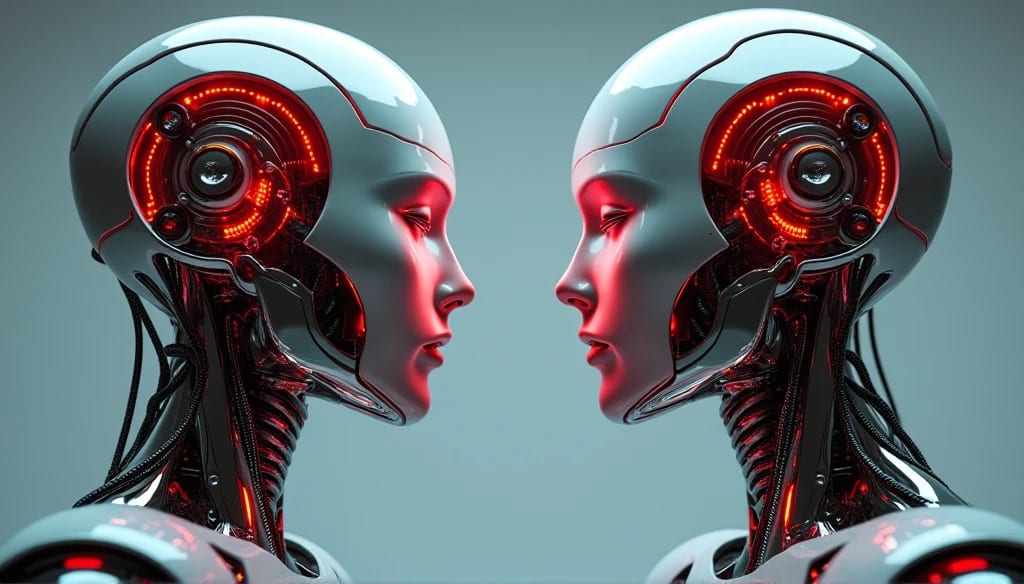
In our time of vanishing boundaries between the pulse of life and the hum of circuits, a new breed of machines is stirring. Like evolution's ancient dance from sea to shore, researchers at Cornell University have birthed two remarkable creatures of their own: a serpentine wanderer and an artificial medusa. But these aren't your grandmother's robots—they draw life from an extraordinary elixir, a "mechanical blood" that serves as both their heartbeat and their muscle. Within these pages, we'll dive into how these synthetic beings integrate vitality into their very essence and peek into a future where they might even taste their world, much as we do with our tongues.
When Power Becomes Flesh: The Marriage of Energy and Form
Picture conventional robots, weighed down by their power-hungry hearts. Now imagine something different—something alive. Cornell's visionaries have woven power directly into their creation's flesh. This "embodied energy" flows through their synthetic veins in the form of a redox flow battery, where chemistry itself becomes life-giving motion. Like blood coursing through our own bodies, this fluid doesn't just power the machine—it becomes the machine, pushing and pulling, shaping and moving.
The Liquid Heart: A Battery That Flows Like Life
The essence of these mechanical creatures lies in their liquid core—a redox flow battery that mirrors our own circulatory system. This isn't just any cocktail of chemicals; it's a carefully orchestrated dance of zinc iodide and zinc bromide, dissolving and reacting in an endless cycle of power. When the team faced the challenge of zinc crystals forming like frost on battery surfaces, they turned to graphene—nature's atomic lattice—to smooth the way. With a sprinkle of bromine to speed the ionic ballet, they created a power source that doesn't just last longer—it moves with the grace of life itself.
The Mechanical Worm: A Symphony of Segments
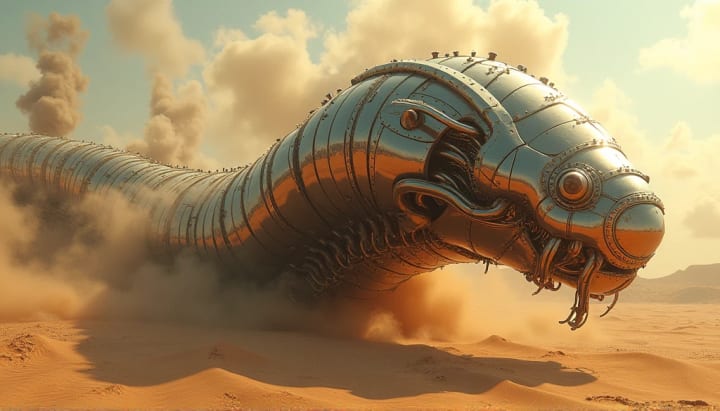
Born from the legacy of a robotic lionfish that first tasted water in 2019, the worm robot whispers of future possibilities. Its body, a string of connected chambers, each with its own beating heart and synthetic muscle, can stretch and contract like a living thing reaching for tomorrow. The genius lies in its blood—the same fluid that powers its thoughts and drives its motion. Through a delicate dance of chemistry and engineering, the team bound special membranes to the robot's skin, creating channels where positive and negative fluids could flow without mixing, like veins and arteries in perfect harmony.
This mechanical serpent moves in two ways: inching forward like a curious child, or climbing walls with the determination of a mountain goat. Sure, it won't win any races—taking about 35 hours to cover 105 meters—but that's not the point. This is a marathon runner, not a sprinter, designed for those spaces where patience and persistence matter more than speed.
The Artificial Jellyfish: Dancing with the Currents
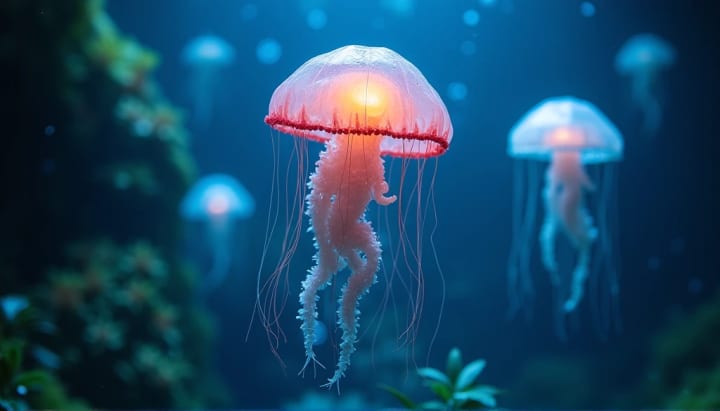
Meanwhile, in another corner of the lab, something ethereal takes shape. The jellyfish robot, crafted in partnership with the Archer Group, pulses with the rhythm of the seas. Its bell-shaped body, powered by the same life-giving battery, contracts and expands in a hypnotic dance. Pull a tendon, and it rises like a thought bubble in the ocean's mind. Release and it sinks back into the depths, ready to ride the currents for up to 90 minutes before needing to recharge its liquid soul.
The Whispers of Silicon: Toward a Sensing Future
While our mechanical blood flows like liquid life through these synthetic veins, there's another story waiting to be told—one of touch, taste, and connection. Though neither our serpentine explorer nor our mechanical medusa sports a physical tongue, the very idea opens doors to tomorrow's possibilities. In nature's grand design, a tongue does more than taste—it's a bridge between being and knowing, a translator of the world to thought. Imagine these soft-bodied pioneers evolving to sport flexible sensors that ripple like taste buds in the current, feeling their way through the world with the sensitivity of a sommelier's palate.
Picture a future where these machines don't just swim or crawl—they converse with their environment in a silent language of chemical whispers and electric dreams. A robot that slides through a pipeline might pause, tasting trace elements that speak of wear or weakness. Our mechanical jellyfish could drift through ocean currents, its synthetic sensors alert to the subtle signatures of pollution or the telltale traces of undersea life. This isn't just engineering anymore—it's the birth of mechanical ecology.
Walking Toward Tomorrow: The Evolution of Artificial Life
Rob Shepherd and his team are already dreaming bigger dreams in the quiet labs where tomorrow takes shape. They see a future where their creations might sport rigid bones beneath their soft flesh, powered by advanced lithium-polymer hearts. These next-generation beings would walk among us—not with the precision of assembly-line automata, but with the subtle imperfection of life itself. Like us, they would adapt, learn, and perhaps even stumble occasionally on their path to understanding.
The possibilities unfold like pages in an unwritten book. Our mechanical worm might one day thread its way through the arteries of damaged buildings, feeling for weaknesses in walls and whispers of structural fatigue. The jellyfish, already a graceful dancer in ocean currents, could become a sentinel of the seas, carrying messages through the deep like some bioluminescent messenger of the future. As artificial intelligence weaves itself into these soft bodies, we might witness the birth of creatures that don't just mimic life—they embody it, complete with their own unique way of perceiving and responding to the world around them.
A New Chapter in the Story of Creation
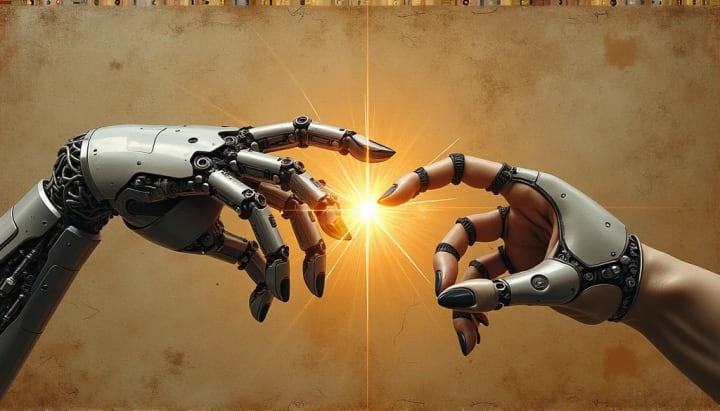
As we stand at this crossroads between the organic and the engineered, these robots with their flowing blood and promised tongues mark more than just a technological milestone. They represent a fundamental shift in how we think about machines. By embedding energy within their very form, Cornell's innovations have opened a door to a future where the line between mechanism and organism grows ever fainter.
These soft, adaptable pioneers—our mechanical worm and synthetic jellyfish—are more than just proof of concept. They're harbingers of a future where machines might sense and respond with the subtlety of living things. Whether they're exploring the hidden passages of our industrial world or dancing through the ocean's depths, these robots herald a new age of artificial life.
In the years to come, as these technologies mature and evolve, we might find ourselves sharing our world with machines that are less like tools and more like partners—synthetic life forms that carry within them both the precision of engineering and the adaptability of nature. The future of robotics isn't just about making better machines; it's about understanding and recreating the very essence of life itself.
And so, our story comes full circle. From the first sparks of inspiration drawn from nature's endless variations, through the careful integration of fluid power and flexible form, to the promise of machines that might one day taste and touch their world as we do—we stand at the threshold of a new chapter in the grand narrative of creation. These robots, with their flowing blood and promised tongues, aren't just machines anymore. They're the first words in a new language of life, written in silicon and soft polymer, powered by the very essence of their being.
The boundary between the living and the manufactured grows thinner with each passing day. And in that blurring line, we might just find the key to understanding both our own nature and the endless possibilities that lie ahead in the vast ocean of tomorrow
About the Creator
Francisco Navarro
A passionate reader with a deep love for science and technology. I am captivated by the intricate mechanisms of the natural world and the endless possibilities that technological advancements offer.
Keep reading
More stories from Francisco Navarro and writers in Futurism and other communities.
100,000 Humanoid Robots by 2028
Figure AI's Breakthrough Imagine going into a factory where humanoid robots work alongside people, moving with roughly the same speed and precision. This vision is quickly becoming a reality, with Figure AI announcing a ground-breaking cooperation to deploy 100,000 humanoid robots over the next four years. This historic breakthrough not only represents a significant advancement in industrial automation, but it also marks a new chapter in the worldwide competition for robotics dominance.
By Francisco Navarro11 months ago in Futurism
About Binding Prometheus
I want to start actively advocating on behalf of my own work, and the most valuable part of my canon is, without a doubt, Binding Prometheus, the play I have been working on since 2019 and only finished in 2023 as part of my MA. The play itself is an amalgamation of a million different inspirations. On one end, it evokes the Ancient Greek myth-play, deriving its own title from the earliest extant work of Western drama we have, Aeschylus’s Prometheus Bound. On the other end, it borrows significantly from the sci-fi bulwarks from over the years, namely Mary Shelley’s Frankenstein and Karel Capek’s Rossum’s Universal Robots. The play could be an episode of Black Mirror, I fear. I don’t know. I’ve only ever seen one episode of Black Mirror.
By Steven Christopher McKnight16 days ago in Futurism
United States Chillers Market Size and Forecast 2025–2033
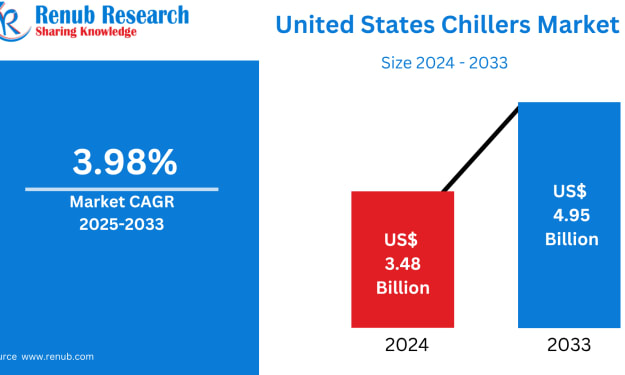
United States Chillers Market at a Glance The United States Chillers Market is projected to reach US$ 4.95 billion by 2033, rising from US$ 3.48 billion in 2024, at a CAGR of 3.98% from 2025 to 2033, according to Renub Research. This steady growth reflects the increasing importance of efficient cooling solutions across commercial buildings, industrial processes, healthcare facilities, and emerging digital infrastructure such as data centers.
By Aaina Oberoi7 days ago in Futurism



Comments (1)
Wow! So many good chapters. Great story! Good job! 😊