
Revolutionizing Healthcare: How 5G Technology is Transforming Remote Patient Monitoring and Telemedicine
5G Transforms Healthcare


In the ever-evolving landscape of healthcare, technology plays a pivotal role in shaping the future of patient care and medical services. Among the latest innovations, the integration of 5G technology stands out as a game-changer. This article explores how 5G technology is revolutionizing healthcare, with a particular focus on its transformative impact on remote patient monitoring (RPM) and telemedicine.
Understanding Remote Patient Monitoring (RPM)
Remote patient monitoring (RPM) has emerged as a crucial component of modern healthcare. It involves the use of technology to collect patient data, typically vital signs and other health metrics, from a distance. The goal is to keep tabs on a patient's health status, even when they are not physically present in a healthcare facility. RPM allows for early detection of health issues, reduces hospital readmissions, and improves the overall quality of care.
However, traditional RPM systems have faced challenges such as limited data transmission capabilities and latency issues. This is where 5G technology steps in to revolutionize the field.
The Telemedicine Revolution with 5G
Telemedicine has seen a significant surge in adoption in recent years, driven by the need for remote healthcare access and the convenience it offers. Patients can now consult with healthcare providers via video calls, receive medical advice, and even have prescriptions filled online. However, the effectiveness of telemedicine has been hindered by bandwidth limitations and connectivity issues.
Enter 5G technology, which provides high-speed, low-latency connectivity. With 5G, telemedicine becomes more accessible and reliable, ensuring seamless communication between patients and healthcare professionals. The real-time transmission of high-quality audio and video, coupled with rapid data exchange, enhances the telemedicine experience.
Benefits of 5G in Healthcare
The benefits of 5G in healthcare are manifold:
Improved Data Transmission: 5G networks can handle vast amounts of data simultaneously, ensuring that patient information is transmitted quickly and accurately.
Lower Latency: The low latency of 5G networks allows for real-time monitoring and interaction between patients and healthcare providers, mimicking an in-person consultation.
Higher Reliability: The reliability of 5G reduces the risk of dropped calls or interrupted video conferences during telehealth sessions.
Case Studies
Let's take a look at some real-world examples to illustrate the transformative impact of 5G in healthcare:
1. Remote Patient Monitoring in Chronic Disease Management
Healthcare providers are using 5G-enabled RPM devices to monitor patients with chronic diseases, such as diabetes and hypertension. These devices continuously transmit data to healthcare professionals, allowing for early intervention and personalized care plans.
2. Emergency Telemedicine
In emergency situations, every second counts. 5G-equipped ambulances can transmit patient data to the receiving hospital in real time, ensuring that medical teams are prepared for the patient's arrival.
3. Telemedicine in Rural Areas
5G technology is bridging the healthcare gap in rural and underserved areas. Patients in remote locations can access specialized care from urban healthcare facilities through telemedicine, thanks to the high-speed connectivity provided by 5G networks.
Addressing Security and Privacy Concerns
While the benefits of 5G in healthcare are evident, it's crucial to address security and privacy concerns. Healthcare data is sensitive, and protecting patient information is paramount. 5G networks incorporate robust security measures to safeguard patient data during transmission. Healthcare organizations must also adhere to regulatory guidelines and implement encryption and authentication protocols to maintain data security.
Future Possibilities and Innovations
The future of healthcare with 5G technology holds exciting possibilities. Augmented reality (AR) and virtual reality (VR) are poised to revolutionize medical education and training. Surgeons can perform complex procedures remotely, guided by immersive 5G-powered AR interfaces. Moreover, wearable medical devices connected to 5G networks will provide continuous health monitoring, allowing for early detection of health issues and personalized interventions.
Challenges and Considerations
As with any technological advancement, challenges and considerations exist. Regulatory and policy frameworks need to adapt to accommodate the integration of 5G into healthcare. Additionally, healthcare organizations must invest in the necessary infrastructure and training to leverage 5G's full potential. It's imperative to ensure equitable access to 5G-enabled healthcare services, especially in underserved communities.
Conclusion
In conclusion, 5G technology is ushering in a new era of healthcare, where remote patient monitoring and telemedicine are becoming more efficient, effective, and accessible. The transformative potential of 5G in healthcare is not only enhancing patient care but also revolutionizing the way healthcare professionals deliver services. As we move forward, it's essential for healthcare providers, policymakers, and technology innovators to work collaboratively to harness the full capabilities of 5G for the benefit of all.
Call to Action
Stay informed about the evolving landscape of healthcare technology and the role of 5G by exploring further resources and staying up-to-date with the latest developments in the field.
About the Creator
Ayla Naseer
As an avid gamer with two years of blogging experience, I've not only built comprehensive gaming guides but also contributed to fitness blogs. My diverse expertise spans gaming strategies and health insight.
Keep reading
More stories from Ayla Naseer and writers in Futurism and other communities.
The Impact of 5G on IoT: A Complete Revoloution
The Internet of Things (IoT) has rapidly become an integral part of our daily lives. From smart thermostats and wearable fitness trackers to connected cars and industrial sensors, IoT devices are everywhere, providing us with convenience, efficiency, and valuable data.
By Ayla Naseer2 years ago in Futurism
About Binding Prometheus
I want to start actively advocating on behalf of my own work, and the most valuable part of my canon is, without a doubt, Binding Prometheus, the play I have been working on since 2019 and only finished in 2023 as part of my MA. The play itself is an amalgamation of a million different inspirations. On one end, it evokes the Ancient Greek myth-play, deriving its own title from the earliest extant work of Western drama we have, Aeschylus’s Prometheus Bound. On the other end, it borrows significantly from the sci-fi bulwarks from over the years, namely Mary Shelley’s Frankenstein and Karel Capek’s Rossum’s Universal Robots. The play could be an episode of Black Mirror, I fear. I don’t know. I’ve only ever seen one episode of Black Mirror.
By Steven Christopher McKnight11 days ago in Futurism
Power Market in Saudi Arabia: Renewable Integration, Demand Growth & Infrastructure Upgrades Under Vision 2030
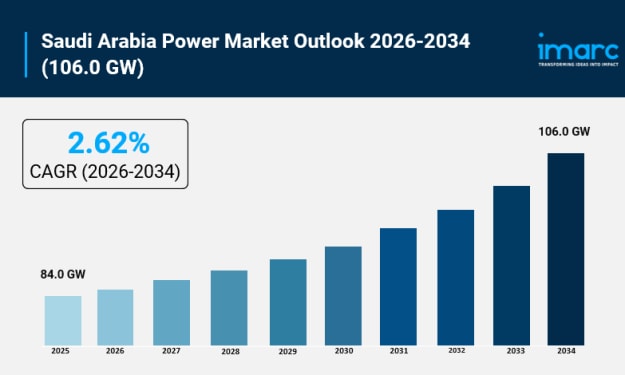
According to IMARC Group's latest research publication, the Saudi Arabia power market size reached 84.0 GW in 2025. Looking forward, IMARC Group estimates the market to reach 106.0 GW by 2034, exhibiting a CAGR of 2.62% from 2026-2034.
By Jeffrey Wilson3 days ago in Futurism



Comments (1)
This is great’! Also, first comment! Yay!