
Reimagining the American Dream
Unity, Innovation, and Diversity in 2050


In 2050, the world looked nothing like it had at the dawn of the 21st century. Cities sparkled with clean, sustainable energy. Skyscrapers were adorned with vertical gardens that not only improved air quality but symbolized a profound shift in humanity’s relationship with nature. Hovering drones zipped silently through the air, delivering goods while avoiding harm to birds and insects. The hum of innovation resonated everywhere, but what stood out most was the palpable sense of unity and progress in human society.
This unity had not come easily. The first decades of the 21st century, marked by polarization and divisiveness, had tested humanity’s resilience. The Trump administration, a time of deep political and cultural strife, had left an indelible mark, sparking debates on truth, accountability, and the fragility of democratic systems. It became a catalyst for collective reflection. The years that followed saw a groundswell of movements demanding accountability, equity, and truth. These movements taught humanity to listen more deeply and to cherish the ideals of diversity and inclusion.
By 2050, those lessons had borne fruit. Artificial intelligence and machine learning played pivotal roles in dismantling systemic inequities. Predictive algorithms, once criticized for perpetuating biases, were redesigned by diverse teams composed of technologists, ethicists, and community leaders to identify and address social disparities, overcoming significant challenges in ensuring fairness and inclusivity. For example, in education, personalized AI tutors catered to students' individual needs, ensuring that everyone, regardless of background, had access to world-class learning opportunities. Schools that once reflected the inequities of their neighborhoods now served as beacons of equality, offering cutting-edge technology and resources to all.
Healthcare had undergone a similar transformation, driven by advancements in gene editing, telemedicine, and AI diagnostics that enabled tailored treatments for individuals. Drawing from lessons learned during the COVID-19 pandemic, the medical system became more proactive than reactive. Smart devices continuously monitored individuals’ health, predicting and preventing illnesses before they arose. Access to healthcare was universal, a realization of the long-debated ideal. This shift was powered by breakthroughs in biotechnology and a global commitment to collaboration, spurred by the harsh lessons of the early 21st century.
Diversity was no longer a talking point; it was a celebrated reality, achieved through targeted policies like equitable hiring practices, inclusive education reforms, and comprehensive anti-discrimination laws. Governments, corporations, and communities operated with inclusion at their core. Policies ensured representation across gender, race, sexuality, ethnicity, and neurodiversity in decision-making spaces. Innovations in technology ensured that marginalized voices were amplified. Virtual reality platforms allowed people from all walks of life to engage with and understand cultures, fostering empathy and collaboration on a scale never before imagined.
Technology, a double-edged sword in earlier decades, became a tool for hope and empowerment. Blockchain ensured transparent governance, eliminating corruption and rebuilding trust in institutions. Renewable energy innovations eliminated dependence on fossil fuels, leading to cleaner air and a stabilized climate. Advances in quantum computing solved problems once deemed insurmountable, including global food security and water scarcity.
Perhaps the most unexpected change was the rebirth of the American Dream. No longer confined to the economic success of the few, it expanded to encompass a holistic vision of “life, liberty, and the pursuit of happiness” for all. Work-life balance became a priority, with four-day workweeks and universal basic income allowing individuals to pursue passions without fear of financial ruin. Communities flourished as people dedicated time to art, science, and social causes.
The cultural shift was profound, exemplified by intergenerational projects where elders shared stories through augmented reality, and children collaborated across continents on environmental and social initiatives. Books, films, and virtual experiences from the mid-21st century explored humanity’s triumphs over its darkest hours. School curriculums openly examined the mistakes of the past, including the divisive politics of the 2010s and 2020s. Children grew up with a clear understanding of their shared responsibility to each other and the planet.
Standing in the heart of a bustling, green San Francisco, Maya looked up at the digital billboard displaying a mosaic of faces. It was a visual representation of the year’s innovations, all credited to global collaborations. Maya, a climate scientist of African and South Asian descent, felt immense pride. Her team’s recent breakthrough in carbon capture technology had been celebrated worldwide. What thrilled her most, though, was the diverse team that had made it happen: scientists from every continent, united by a shared goal.
As Maya walked home, she passed children playing with holographic animals and elders sharing stories through augmented reality headsets. She thought about how far humanity had come. The journey had been long and fraught with challenges, but in 2050, hope and innovation prevailed. Humanity had finally begun to grasp the true meaning of the American Dream, transforming it into a reality that embraced everyone.
#Future2050 #Innovation #DiversityAndInclusion #AmericanDream #SustainableLiving #AIForGood #HealthcareRevolution #GlobalCollaboration #EmpathyThroughTechnology #LessonsFromThePast
About the Creator
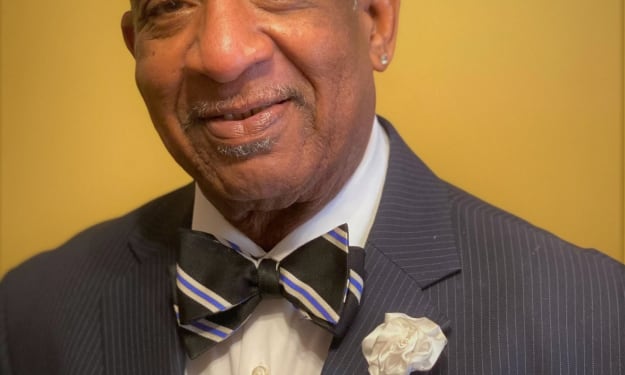
Dr William M White
William M. White, Ed D MLE, earned a Doctorate in Leadership from Fielding Graduate University and Harvard's MLE certificate. He is a leadership researcher, professor, executive, author, and co-founded of National Diversity Collaborative.
Keep reading
More stories from Dr William M White and writers in Futurism and other communities.
The Legacy of the Divine Nine
During Vice President Kamala Harris's historic campaign for the presidency, many Americans and people across the globe were introduced to a cornerstone of Black culture and achievement: the Divine Nine. These nine historically Black Greek-letter organizations have long served as pillars of excellence, community, faith, and resilience, particularly during the era of Jim Crow and beyond. As a proud member of Kappa Alpha Psi Fraternity, Inc. for over 55 years, and on this special Founders Day marking the founding of Kappa Alpha Psi in 1911, I am inspired to reflect on the history, philosophy, and enduring impact of the Divine Nine.
By Dr William M Whiteabout a year ago in FYI
About Binding Prometheus
I want to start actively advocating on behalf of my own work, and the most valuable part of my canon is, without a doubt, Binding Prometheus, the play I have been working on since 2019 and only finished in 2023 as part of my MA. The play itself is an amalgamation of a million different inspirations. On one end, it evokes the Ancient Greek myth-play, deriving its own title from the earliest extant work of Western drama we have, Aeschylus’s Prometheus Bound. On the other end, it borrows significantly from the sci-fi bulwarks from over the years, namely Mary Shelley’s Frankenstein and Karel Capek’s Rossum’s Universal Robots. The play could be an episode of Black Mirror, I fear. I don’t know. I’ve only ever seen one episode of Black Mirror.
By Steven Christopher McKnight11 days ago in Futurism
United States Truffle Market Size and Forecast 2025–2033
United States Truffle Market at a Glance The United States Truffle Market is expected to reach US$ 324.59 million by 2033, rising from US$ 177.75 million in 2024, at a CAGR of 6.92% from 2025 to 2033. Growth is driven by increasing consumer demand for gourmet food, the expansion of fine-dining and luxury restaurants, rising interest in premium and exotic ingredients, innovation in truffle-based products, and the growing influence of culinary tourism.
By jaiklin Fanandish2 days ago in Futurism


Comments
There are no comments for this story
Be the first to respond and start the conversation.