
Ranking in ChatGPT: The New Goal of Expert SEO Services in 2027
The day search stopped being a list — and started becoming an answer

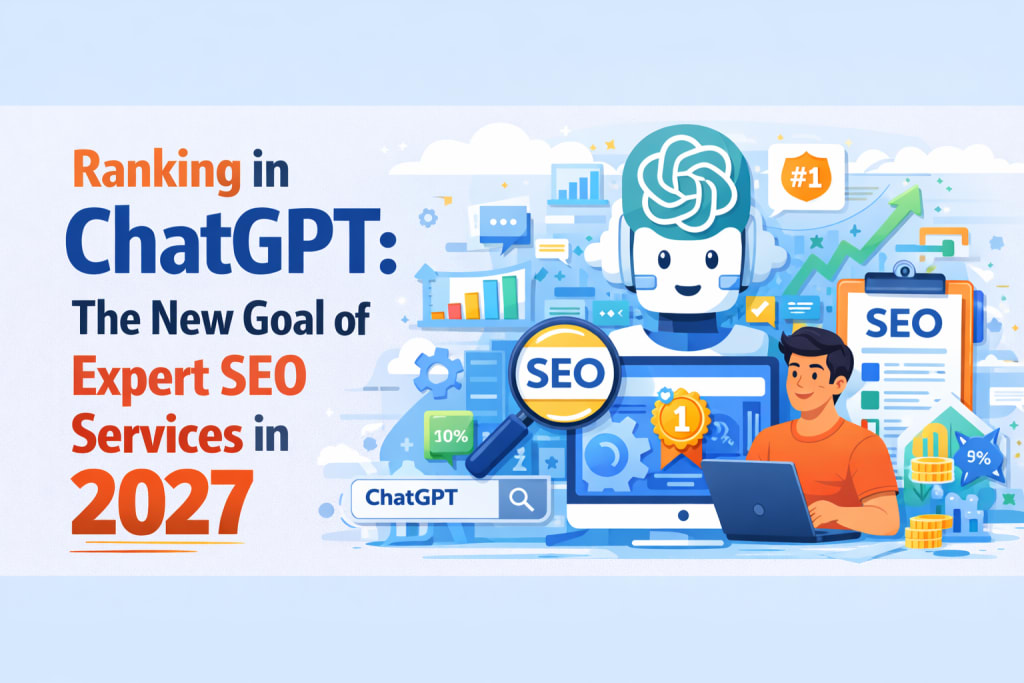
For decades, digital visibility followed a simple rule: if your website ranked high on search engines, users would find you. Businesses invested heavily in search engine optimization, chasing page-one rankings and carefully studying algorithm updates.
But somewhere along the way, the nature of discovery changed.
Instead of scanning pages of links, users began asking questions directly to AI-powered platforms. The experience shifted from exploration to conversation. Rather than navigating websites, people received summarized answers — curated, contextual, and immediate.
By 2027, this transformation is redefining what it means to “rank” online. The goal is no longer just appearing in search results but becoming part of the answers themselves.
This shift is forcing marketers, businesses, and technology teams to rethink how visibility works in an era where artificial intelligence mediates information.
Why traditional SEO goals are evolving
Search engine optimization has historically focused on improving rankings within structured results pages. Strategies emphasized keyword targeting, backlink building, technical optimization, and content authority.
While these practices remain relevant, AI-driven interfaces introduce new dynamics.
Studies suggest that a significant percentage of informational queries now generate AI summaries before users view traditional results. In some cases, users complete tasks without clicking external links at all.
This evolution changes the metrics of success. Instead of measuring visibility solely through traffic, businesses increasingly evaluate:
- Inclusion within AI-generated responses.
- Brand authority across knowledge ecosystems.
- Content clarity enabling machine understanding.
As Microsoft CEO Satya Nadella has noted, conversational AI represents “a new paradigm for interacting with information,” fundamentally altering how discovery happens online.
Understanding how AI platforms evaluate content authority
Unlike traditional search algorithms that rely heavily on link structures and keyword density, AI systems evaluate content differently.
Key factors influencing visibility include:
- Clear explanations aligned with user intent.
- Structured information that can be interpreted easily.
- Consistency across multiple authoritative sources.
- Contextual relevance rather than isolated keywords.
AI models synthesize information rather than merely ranking pages, meaning businesses must focus on building holistic expertise rather than optimizing individual posts.
This shift encourages deeper, more informative content designed to educate rather than simply attract clicks.
Why conversational search changes marketing strategy
Traditional search journeys involved multiple steps: searching, comparing options, evaluating sources, and making decisions. Conversational AI compresses these steps into a single interaction.
For businesses, this creates both opportunity and risk.
Opportunity arises because high-quality content can gain prominence quickly if AI systems identify it as trustworthy. Risk emerges because weaker or overly promotional content may be ignored entirely.
Research indicates that users trust conversational AI responses when they appear informative and unbiased, emphasizing the importance of educational content strategies.
An experienced strategist recently summarized the change: “Marketing is shifting from persuasion-first to expertise-first.”
The growing importance of semantic clarity
AI systems interpret meaning rather than simply matching keywords. Content clarity becomes essential, requiring:
- Logical structure.
- Clear headings.
- Context-rich explanations.
- Natural language that mirrors real user questions.
Instead of optimizing for specific phrases repeatedly, successful strategies focus on answering topics comprehensively.
This evolution aligns closely with human expectations. Readers value clarity and depth, and AI systems reward content that delivers both.
Why expert are shifting toward knowledge engineering
As AI reshapes discovery, SEO professionals are adopting new roles that extend beyond technical optimization.
Modern strategies include:
- Structuring content for machine comprehension.
- Building topic clusters demonstrating authority.
- Enhancing brand presence across multiple platforms.
- Monitoring how AI systems interpret and summarize content.
Some experts describe this transformation as “knowledge engineering,” where the goal is to ensure information is understood accurately by both humans and AI systems.
Industry surveys suggest that businesses investing in advanced optimization strategies experience improved visibility even as traditional traffic patterns evolve.
The role of experts in navigating AI-driven discovery
Many organizations struggle to adapt quickly to evolving search behaviors. Experienced digital marketing agency teams provide strategic guidance, helping businesses restructure content and messaging for conversational environments.
Key capabilities include:
Understanding semantic search principles.
Designing content aligned with user intent.
Integrating analytics to monitor AI visibility trends.
Rather than focusing solely on rankings, agencies increasingly prioritize positioning brands as authoritative sources within broader knowledge ecosystems.
Data-driven strategies replacing guesswork
AI-driven marketing emphasizes data analysis over intuition. Marketers analyze patterns in user questions, conversation trends, and emerging topics to create content that aligns with real needs.
Analytics tools powered by machine learning provide insights such as:
- Which topics generate the most engagement.
- How users phrase queries conversationally.
- Which content structures perform best.
Studies suggest that data-driven marketing strategies improve engagement rates significantly compared to traditional keyword-focused approaches.
Why digital marketing are becoming more interdisciplinary
The rise of conversational AI blurs the boundaries between SEO, content marketing, user experience design, and data science.
Modern DM increasingly integrate:
- Content strategy.
- AI optimization techniques.
- Technical performance improvements.
- Brand storytelling.
This interdisciplinary approach reflects the complexity of AI-driven ecosystems where visibility depends on multiple factors working together.
Challenges businesses face when adapting to AI-driven ranking systems
Despite the opportunities, transitioning to AI-focused strategies presents challenges.
Common obstacles include:
- Overreliance on outdated SEO tactics.
- Lack of understanding about how AI synthesizes information.
- Difficulty measuring success using traditional metrics.
Businesses must adopt flexible strategies, recognizing that visibility evolves continuously as AI systems improve.
Ethical considerations shaping AI-era SEO
As AI platforms influence information access, ethical considerations become increasingly important.
Content creators must balance optimization with authenticity, avoiding manipulation that could degrade trust.
Experts emphasize transparency, accuracy, and user value as guiding principles for sustainable visibility.
A leading AI ethicist recently stated, “The future of search depends on credibility. If users lose trust, the entire ecosystem suffers.”
Looking ahead: ranking as becoming part of the conversation
The future of digital visibility may not revolve around ranking positions but around participation in knowledge ecosystems.
Businesses that focus on providing clear, valuable insights — rather than chasing algorithm shortcuts — position themselves for long-term success.
In 2027, ranking in AI platforms represents more than a technical achievement; it reflects recognition as a trusted authority capable of contributing meaningfully to conversations shaping how people understand the world.
As the digital landscape evolves, expert seo services may shift from optimizing pages to optimizing knowledge itself — ensuring that when questions arise, trusted answers lead the way.
About the Creator
Jane Smith
Jane Smith is a content writer and strategist with 10+ years of experience in tech, lifestyle, and business. She specializes in digital marketing, SEO, HubSpot, Salesforce, web development, and marketing automation.
Keep reading
More stories from Jane Smith and writers in Futurism and other communities.
How to Move from Zoho to HubSpot Without Losing Data in 2026?
CRM migrations often begin with optimism. A company decides it has outgrown its existing platform, leadership agrees on a new direction, and teams anticipate smoother workflows and better automation. Yet despite careful planning, many migrations encounter unexpected challenges: missing contact records, broken automation workflows, inaccurate reporting, or disrupted sales pipelines.
By Jane Smitha day ago in Futurism
Wearable Medical Devices Market Trends: Remote Patient Monitoring, AI Integration & Forecast to 2033
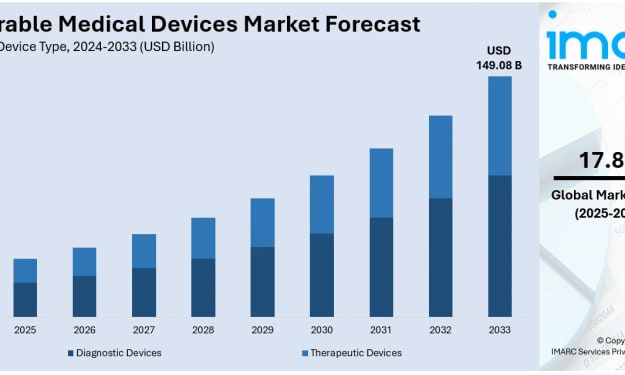
Rising prevalence of chronic diseases, accelerating shift toward remote patient monitoring and telehealth services, and rapid advances in sensor technology, wireless connectivity, and AI-driven analytics are driving explosive growth in wearable medical devices, supported by expanded reimbursement policies and increasing consumer health awareness. According to IMARC Group's latest data, the global wearable medical devices market size was valued at USD 33.58 Billion in 2024. Looking forward, IMARC Group estimates the market to reach USD 149.08 Billion by 2033.
By Andrew Sullivan3 days ago in Futurism
Global Seeds Market Analysis: Crop Diversification, Precision Agriculture & Forecast to 2034
The world's farms are facing a fundamental challenge: feeding more than 9 billion people by 2050 while dealing with climate uncertainty, shrinking arable land, and a growing appetite for sustainable solutions. Seeds sit at the very heart of this equation. According to IMARC Group's latest data, the global seeds market was valued at USD 46.7 Billion in 2025. Looking forward, IMARC Group estimates the market will reach USD 53.2 Billion by 2034.
By Andrew Sullivan7 days ago in Futurism
If You Write A Book, Don’t Tell Anyone
There are days when I’m grateful Amazon doesn’t tell me specifically who has bought my book and who hasn’t. If they did, I would be heartbroken when I read the list and noticed all the important names in my life were not on my list of customers.
By Ellen Frances5 days ago in Writers



Comments
There are no comments for this story
Be the first to respond and start the conversation.