
Global Seeds Market Analysis: Crop Diversification, Precision Agriculture & Forecast to 2034
How climate-resilient seed varieties, precision farming practices, and supportive government policies are reshaping cultivation patterns across major agricultural economies.

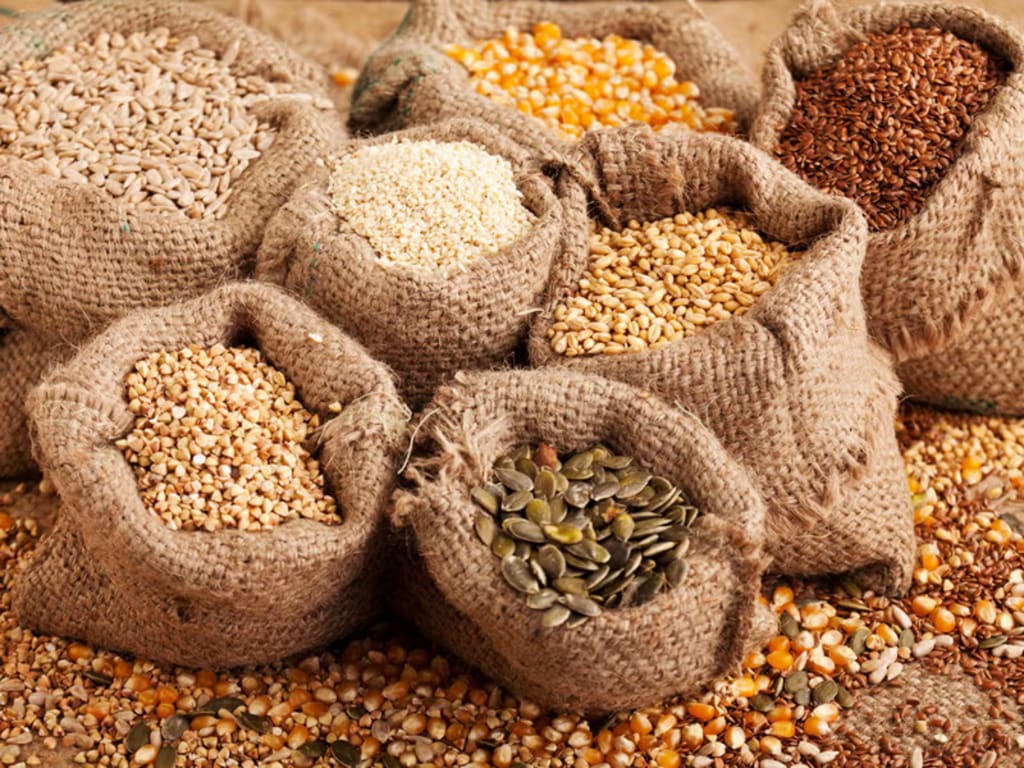
The world's farms are facing a fundamental challenge: feeding more than 9 billion people by 2050 while dealing with climate uncertainty, shrinking arable land, and a growing appetite for sustainable solutions. Seeds sit at the very heart of this equation. According to IMARC Group's latest data, the global seeds market was valued at USD 46.7 Billion in 2025. Looking forward, IMARC Group estimates the market will reach USD 53.2 Billion by 2034.
What's driving growth isn't just population numbers. It's a combination of factors: farmers worldwide are increasingly turning to genetically modified and hybrid seeds that promise better yields and stronger pest resistance. There's a clear shift toward sustainable farming practices that prioritize soil health and resource efficiency. And perhaps most importantly, advances in seed technology—from precision breeding to CRISPR gene editing are delivering varieties that can withstand drought, resist disease, and adapt to rapidly changing climate conditions.
- Technology-Driven Seed Innovation Reshaping Agriculture
Farmers today have access to seed technologies that would have seemed like science fiction just a decade ago. Genetically modified crops now cover roughly 209.8 million hectares worldwide—that's nearly 30% of total global crop area. In the United States alone, adoption rates tell a compelling story: 94% of soybeans, 92% of corn, and 96% of upland cotton are now genetically engineered with traits like herbicide tolerance or insect resistance. These aren't just incremental improvements. Advanced breeding techniques, including CRISPR-Cas9 gene editing and precision phenotyping, are delivering seed varieties that can boost yields by 15-30% while requiring fewer chemical inputs.
- Climate Resilience Becomes Non-Negotiable
Weather patterns are becoming less predictable, and farmers are feeling it firsthand. Drought-tolerant corn varieties that can maintain yields even when rainfall drops by 20% aren't a luxury anymore—they're essential insurance. Heat-resistant wheat that can handle temperature spikes during critical growing periods is gaining ground across regions that traditionally relied on conventional varieties. India alone has mobilized 4.43 million organic farmers cultivating 1.7 million hectares, reflecting a massive pivot toward resilient, sustainable cropping systems. Seed companies are responding by investing heavily in varieties designed for specific climate stresses.
- Food Security Pressures Meet Population Growth
The math is straightforward but daunting: global population is projected to hit 9 billion by 2050, and agricultural land isn't expanding to match. In the United States, corn production hit a record 15.3 billion bushels in 2023—up 12% from the previous year thanks largely to improved seed genetics. This productivity leap wasn't accidental. It came from deploying hybrid and GM seeds that extract more value from every acre. Governments worldwide are recognizing this reality. Brazil's agricultural sector has grown from USD 170 billion in 2000 to USD 425 billion in 2021, with high-quality seeds playing a central role in that transformation.
Seeds Market Trends:
- Sustainable Agriculture Becomes Mainstream Practice
Sustainability has moved from marketing buzzword to operational reality. The EU now dedicates 16.9 million hectares to organic farmland, and that acreage continues climbing as regulatory frameworks tighten and consumer demand shifts. Farmers are actively seeking seed varieties that fit into integrated pest management systems, reduce dependence on synthetic inputs, and improve soil health over multiple growing seasons. This isn't just about environmental responsibilityvit's about long-term economic viability. Seed companies are responding with varieties bred specifically for organic systems, offering natural disease resistance and better nitrogen fixation.
- Digital Agriculture Integration Accelerates Seed Deployment
Precision agriculture is changing how seeds are selected, planted, and managed throughout the growing season. Platforms like Corteva's Granular Insights and Bayer's digital agriculture tools now help farmers match seed varieties to specific field conditions down to the sub-acre level. Machine learning algorithms analyze soil composition, historical yield data, and weather forecasts to recommend optimal seed placement and planting density. In 2024, U.S. plant seed exports reached USD 1.7 billion across 658,896 metric tons, indicating strong global demand for technologically advanced varieties that integrate seamlessly with precision farming equipment.
Start with a Free “Global Seeds Market” Research Sample Download
- Industry Consolidation Creates Specialized Innovation Paths
The seed industry is undergoing significant structural shifts. Corteva recently announced plans to split its crop protection and seeds businesses into two separate companies a reversal of decades of integrated operations. This move signals a broader trend: companies are betting that focused operations can innovate faster than diversified giants. Meanwhile, major players like Bayer, Syngenta, and BASF collectively control substantial market share in both seeds and agrochemicals, creating distinct competitive dynamics. Smaller specialized firms are carving out niches in vegetable seeds, organic varieties, and region-specific hybrids where innovation cycles are faster and regulatory barriers lower.
Recent News and Developments in Seeds Market
- November 2024: Corteva announced a breakthrough in non-GMO hybrid wheat technology that could increase yield potential by up to 10%, with drought conditions showing potential yield improvements of up to 20%. The company plans to launch this proprietary technology by 2027, promising faster genetic gain and greater market scalability while improving food security and climate change adaptation.
- September 2024: DLF Seeds A/S and Groupe Florimond Desprez agreed to combine their sugar beet, fodder beet, and industrial chicory seed businesses into a new entity called United Beet Seeds (UBS). This strategic partnership aims to drive innovation in the global beet seed market with research-based solutions designed to address climate change challenges and evolving market conditions.
- March 2024: Syngenta Vegetable Seeds opened a state-of-the-art Seed Health Lab in Hyderabad, India. The USD 2.4 million facility supports global seed quality control, processing approximately 12,000 virus and bacterial tests annually. The lab aligns with international accreditation programs and strengthens Syngenta's commitment to producing healthy, disease-free seeds, contributing to India's agricultural growth and export ambitions.
Note: If you require specific details, data, or insights that are not currently included in the scope of this report, we are happy to accommodate your request. As part of our customization service, we will gather and provide the additional information you need, tailored to your specific requirements. Please let us know your exact needs, and we will ensure the report is updated accordingly to meet your expectations.
About the Creator
Andrew Sullivan
Hello, I’m Andrew Sullivan. I have over 9+ years of experience as a market research specialist.
Keep reading
More stories from Andrew Sullivan and writers in Futurism and other communities.
Companion Diagnostics Market Trends: AI-Powered Testing, Data-Driven Decisions & Industry Outlook to 2033
The global companion diagnostics market is experiencing robust growth, fueled by personalized medicine, technological innovation, and the widespread adoption of targeted therapies. According to IMARC Group's recent analysis, the market reached USD 7.6 Billion in 2024. Looking ahead, IMARC Group projects the market will reach USD 22.3 Billion by 2033, demonstrating steady expansion during 2025-2033.
By Andrew Sullivan2 days ago in Futurism
Egypt Natural Gas Market: Industry Overview, Key Players & Future Outlook
According to IMARC Group's latest research publication, Egypt natural gas market size reached USD 3.8 Billion in 2025. The market is projected to reach USD 7.1 Billion by 2034, exhibiting a growth rate of 6.69% during 2026-2034.
By Abhay Rajput4 days ago in Futurism
UAE Commercial Insurance Market Analysis: Industry Overview, Key Players & Future Outlook
According to IMARC Group's latest research publication, UAE commercial insurance market size reached USD 4.61 Billion in 2024. The market is projected to reach USD 8.46 Billion by 2033, exhibiting a growth rate (CAGR) of 6.25% during 2025-2033.
By Abhay Rajput3 days ago in Futurism



Comments
There are no comments for this story
Be the first to respond and start the conversation.