
Preventing Armageddon: How to Avert a Third World War
Diplomacy, Deterrence, and Global Unity in an Age of Rising Tensions

Introduction: The Specter of Global Conflict
The world stands at a precarious crossroads. With escalating geopolitical rivalries, nuclear posturing, and the erosion of international treaties, the threat of a Third World War (WW3) looms larger than at any time since the Cold War. Unlike past global conflicts, a modern war would involve cyberattacks, AI-driven warfare, and potentially nuclear devastation, making prevention not just ideal—but imperative for human survival.
This article explores four key strategies to prevent WW3:
Reinforcing Diplomatic Channels
Strengthening Economic Interdependence
Controlling Emerging Technologies
Mobilizing Global Civil Society
By addressing these pillars, humanity can navigate away from catastrophe and toward a more stable future.
1. Diplomacy: The First Line of Defense
The Failure of Post-Cold War Institutions
The United Nations (UN), NATO, and other post-WW2 institutions were designed to prevent large-scale conflict, but they are struggling to adapt to 21st-century threats. Rising powers like China and resurgent Russia challenge the U.S.-led order, while smaller nations exploit divisions for leverage.
Rebuilding Trust Through Dialogue
Reviving Arms Control Treaties (e.g., New START, Nuclear Non-Proliferation Treaty)
Neutral Mediation in Flashpoints (Ukraine, Taiwan, Kashmir)
Track II Diplomacy (Unofficial backchannel negotiations between adversarial nations)
Case Study: The Cuban Missile Crisis (1962)
Kennedy and Khrushchev avoided nuclear war through secret talks, proving that even bitter enemies can de-escalate with pragmatic diplomacy.
2. Economic Interdependence: War as Bad Business
The Capitalist Peace Theory
Nations deeply integrated through trade, supply chains, and mutual investments are less likely to go to war. The EU’s success in preventing intra-European conflict since 1945 is a prime example.
Strategies to Strengthen Economic Ties
Expanding Multilateral Trade Pacts (e.g., RCEP, CPTPP)
Sanctions as a Deterrent (But avoiding overuse, which can backfire)
Resource Collaboration (Shared green energy projects, rare mineral agreements)
The Risk of Decoupling
The U.S.-China trade war shows that economic separation increases hostility. Instead, "Coopetition" (cooperation + competition) should be encouraged.
3. Controlling Emerging Technologies: The New Battlefield
AI, Cyberwarfare, and Autonomous Weapons
AI-Driven Disinformation (Deepfake propaganda inflaming tensions)
Autonomous Drones & Swarms (Risk of accidental escalation)
Cyberattacks on Critical Infrastructure (Could trigger real-world retaliation)
Preventing a Digital Arms Race
Global AI Warfare Ban (Modeled on chemical weapons treaties)
Cyberwarfare Rules of Engagement (UN-backed "Red Lines")
Tech Firm Accountability (Regulating dual-use AI research)
Case Study: Stuxnet (2010)
The U.S.-Israeli cyberattack on Iran’s nuclear facilities nearly triggered a wider war—showing how uncontrolled cyberwarfare risks spiraling conflict.
4. Mobilizing Global Civil Society: The People’s Shield
Grassroots Movements for Peace
Youth-Led Activism (Climate strikes show generational influence)
Cultural Exchange Programs (Soft power to reduce xenophobia)
Whistleblower Protections (Encouraging insider leaks to expose war-mongering)
The Media’s Role in Escalation or De-Escalation
Responsible Journalism (Avoiding sensationalism in conflict reporting)
Social Media Regulation (Curbing algorithm-driven radicalization)
Example: The Anti-Nuclear Movement (1980s)
Mass protests pressured governments into nuclear disarmament talks, proving public pressure works.
Conclusion: Choosing Wisdom Over War
The path to preventing WW3 is neither simple nor guaranteed. However, by revitalizing diplomacy, deepening economic ties, regulating dangerous tech, and empowering civil society, humanity can steer away from self-destruction.
Final Thought:
"The choice is not between war and peace, but between wisdom and oblivion."
About the Creator
Umar zeb
Hi, I'm U zeb, a passionate writer and lifelong learner with a love for exploring new topics and sharing knowledge. On Vocal Media, I write about [topics you're interested in, e.g., personal development, technology, etc
Australia Oral Care Market: Preventive Hygiene, Consumer Awareness & Product Innovation
According to IMARC Group, the Australia oral care market reached USD 1.1 Billion in 2025 and is projected to grow to USD 2.3 Billion by 2034, exhibiting a compound annual growth rate (CAGR) of 7.74% during 2026–2034. The market’s rapid expansion reflects rising awareness of oral hygiene and its connection to overall wellness across Australia. Consumers are increasingly investing in preventive dental care, advanced hygiene tools, and cosmetic oral products. Technological innovations such as electric and smart toothbrushes, along with demand for natural and eco-friendly solutions, are reshaping product portfolios and strengthening Australia oral care market share.
By Kevin Cooper6 days ago in Futurism
The Fusion Shift: 5 Game-Changing Secrets Behind Apple’s M5 Pro and M5 Max
1. Introduction: The Death of the Pro-User Bottleneck For years, the professional workflow has been a negotiation with the laws of physics. We have lived with thermal ceilings that throttle our 4K exports and the frustrating stutter of memory swapping during heavy 3D renders. Even the transition to Apple Silicon, as transformative as it was, eventually hit the limits of traditional monolithic chip design.
By Tech Horizons2 days ago in Futurism
Early March 2026: 4 Goals Accomplished
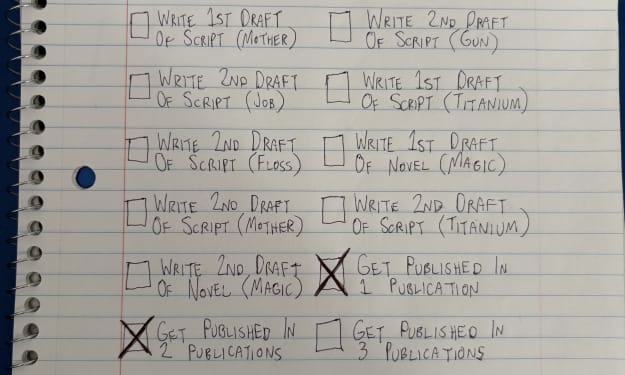
It's early March and I've now accomplished my 4th writing goal for the year of 2026. Before diving into the behind-the-scenes of it... why not tell you up front what that accomplishment was? I was published in a 2nd publication for this year. Published in Helix Literary Magazine out of Central Connecticut State University. You can read it for free right now!
By Stephen Kramer Avitabilea day ago in Writers



Comments
There are no comments for this story
Be the first to respond and start the conversation.