
Precision Medicine Market Size and Forecast 2025–2033
Genomics, AI, and Personalized Healthcare Push the Market Toward US$ 212.65 Billion by 2033


Global Precision Medicine Market Overview
The global precision medicine market is experiencing one of the most transformative periods in modern healthcare. According to Renub Research, the industry is projected to grow from US$ 88.29 billion in 2024 to US$ 212.65 billion by 2033, expanding at a CAGR of 10.26% from 2025 to 2033. This growth is fueled by groundbreaking advancements in genomics, accelerated adoption of healthcare personalization, rising chronic disease prevalence, and strong investment in research and development.
Precision medicine—often called “personalized medicine”—focuses on tailoring treatments to each patient’s genetic makeup, environment, and lifestyle. This highly targeted approach boosts treatment efficacy, reduces unnecessary side effects, and improves overall clinical outcomes. Its rapid evolution has been made possible by affordable gene sequencing, sophisticated data analytics tools, and widespread digitization of healthcare systems.
The combination of AI, machine learning, big data integration, and next-generation genomic tools has significantly improved diagnostic accuracy, drug discovery workflows, and therapeutic targeting. Oncology remains the market’s largest and fastest-growing area, but personalized care is also expanding into neurology, immunology, respiratory medicine, infectious diseases, and various rare disorders.
Despite promising progress, the sector still faces notable challenges—particularly around regulatory hurdles, data privacy concerns, and uneven reimbursement frameworks. Yet, the long-term outlook remains overwhelmingly positive as precision medicine shifts healthcare from a reactionary model to a proactive, predictive, and highly individualized standard of care.
Market Drivers: The Forces Accelerating Precision Medicine
1. Rising Global Burden of Chronic Diseases
The world is witnessing a sharp rise in chronic illnesses—cancer, diabetes, cardiovascular diseases, neurological conditions, and autoimmune disorders—placing an immense strain on healthcare systems. Precision medicine offers a powerful alternative to conventional, one-size-fits-all treatments.
By tailoring therapies to patients’ genetic and biological characteristics, precision medicine improves success rates and reduces severe drug reactions. Globocan estimates 21.8 million new cancer cases by 2025, which will significantly increase demand for personalized oncology solutions such as targeted therapies, gene sequencing, companion diagnostics, and biomarker discovery. As chronic disease rates climb, so too does the urgency for precise, individualized healthcare approaches.
2. Growing Investments in Research and Development
R&D is at the core of precision medicine’s progression. Governments, pharmaceutical companies, academic institutions, and private foundations are rapidly increasing investment to identify new biomarkers, therapeutic targets, and diagnostic tools. Research funding supports areas like gene editing, multi-omics analysis, AI-based drug discovery, and advanced analytics platforms.
This expanding R&D ecosystem enables quicker translation of scientific breakthroughs into real-world clinical applications. From companion diagnostics to immunotherapies and personalized drug regimens, continuous investment is solidifying precision medicine as a central pillar of future healthcare.
3. Technological Advancements in Genomics and Bioinformatics
Major innovations across gene sequencing, bioinformatics, big data analytics, cloud computing, and wearable medical devices are strengthening the precision medicine landscape. High-throughput sequencing has become more affordable and accessible, making genetic testing a mainstream clinical tool.
AI and machine learning now assist with predicting treatment responses, understanding disease pathways, and generating individualized treatment plans. These technologies empower clinicians with scalable, real-time insights, making personalized care more accurate and impactful than ever before.
Market Challenges: What Still Holds the Industry Back?
1. Regulatory and Reimbursement Barriers
Precision medicine products—whether drugs, diagnostics, or gene-based tools—face complex regulatory environments that vary widely by country. Approval processes for genomic technologies and personalized therapeutics are often lengthy, ambiguous, and inconsistent.
Equally challenging is reimbursement. Many insurers remain hesitant to cover costly genomic tests or tailored therapies due to uncertain long-term cost-benefit evidence. This slows adoption, especially in developing markets.
2. Limited Awareness and Lack of Specialized Training
Many clinicians still lack adequate training in interpreting genetic data or applying precision-based treatment protocols. Patients, too, often remain unaware of the benefits of precision medicine or how it works. This lack of education can reduce adoption rates and widen the gap between scientific progress and clinical implementation.
3. High Cost of Treatment and Testing
Although sequencing costs have fallen dramatically, precision therapies and genomic tests remain expensive for many populations. Developing countries continue to face affordability and accessibility challenges due to limited infrastructure, skilled workforce shortages, and heavy reliance on imported technologies.
Regional Market Insights
United States
The United States leads the global precision medicine market thanks to its strong genomic infrastructure, robust biotechnology sector, and aggressive government-backed initiatives such as the Precision Medicine Initiative. High disease prevalence, strong reimbursement structures, and thriving research networks also support market growth. However, high treatment costs and complex regulations remain persistent challenges.
United Kingdom
The UK is rapidly strengthening its foothold in personalized healthcare, driven by large-scale initiatives like the 100,000 Genomes Project and NHS integration of genomics services. With growing adoption across oncology, cardiology, and rare diseases, the UK is becoming a key European hub. However, reimbursement delays and regulatory complexities still hinder widespread implementation.
India
India’s precision medicine market is expanding quickly, supported by digital health transformation and growing genomic research capacity. Government-backed initiatives, affordability-focused innovations, and a massive population base provide substantial long-term potential. Yet, limited awareness, high cost barriers, and restricted genomic testing availability remain significant challenges.
Saudi Arabia
Driven by Vision 2030, Saudi Arabia is making major investments in genomic research, AI-powered healthcare, and biotechnology. While oncology and genetic disorders remain initial focus areas, the market still suffers from limited awareness and the high cost of precision therapies. However, expanding collaborations and infrastructure modernization efforts position the country for strong future growth.
Market Segmentation
By Product
Consumables
Instruments
Services
By Technology
Big Data Analytics
Bioinformatics
Gene Sequencing
Drug Discovery
Companion Diagnostics
Others
By Application
Oncology
Central Nervous System (CNS)
Immunology
Respiratory Medicine
Infections
Others
By End User
Hospitals & Clinics
Diagnostic Centers
Pharma & Biotech Companies
Healthcare IT Firms
Others
Geographical Coverage
North America
United States
Canada
Europe
France, Germany, Italy, Spain, UK, Belgium, Netherlands, Turkey
Asia-Pacific
China, Japan, India, Australia, South Korea, Thailand, Malaysia, Indonesia, New Zealand
Latin America
Brazil, Mexico, Argentina
Middle East & Africa
South Africa, Saudi Arabia, UAE
Competitive Landscape: Leading Companies
Companies shaping the precision medicine market include:
AstraZeneca plc
Bayer AG
bioMérieux SA
Bristol-Myers Squibb Company
Eli Lilly and Company
F. Hoffmann-La Roche AG
Illumina Inc.
Laboratory Corporation of America Holdings (LabCorp)
Merck KGaA
Novartis AG
Pfizer Inc.
Qiagen N.V.
Quest Diagnostics Incorporated
Thermo Fisher Scientific Inc.
These organizations continue to invest heavily in biomarker discovery, genomic sequencing, drug development, and advanced diagnostic technologies. Their strategies focus on partnerships, acquisitions, product launches, and multi-omics innovation to stay competitive in an evolving landscape.
Final Thoughts
Precision medicine is no longer a futuristic concept—it is becoming a central element of modern healthcare. With its ability to tailor treatments to individual patients, reduce trial-and-error therapy, and enhance clinical outcomes, precision medicine is set to revolutionize the global healthcare system.
While challenges like high costs, regulatory barriers, and limited awareness persist, technological breakthroughs and rising R&D investments are paving the way for rapid expansion. As the market advances toward US$ 212.65 billion by 2033, precision medicine is poised to reshape how diseases are diagnosed, treated, and prevented—ushering in a future of highly personalized and data-driven healthcare.
About the Creator
Diya Dey
Market Analyst
About Binding Prometheus
I want to start actively advocating on behalf of my own work, and the most valuable part of my canon is, without a doubt, Binding Prometheus, the play I have been working on since 2019 and only finished in 2023 as part of my MA. The play itself is an amalgamation of a million different inspirations. On one end, it evokes the Ancient Greek myth-play, deriving its own title from the earliest extant work of Western drama we have, Aeschylus’s Prometheus Bound. On the other end, it borrows significantly from the sci-fi bulwarks from over the years, namely Mary Shelley’s Frankenstein and Karel Capek’s Rossum’s Universal Robots. The play could be an episode of Black Mirror, I fear. I don’t know. I’ve only ever seen one episode of Black Mirror.
By Steven Christopher McKnight16 days ago in Futurism
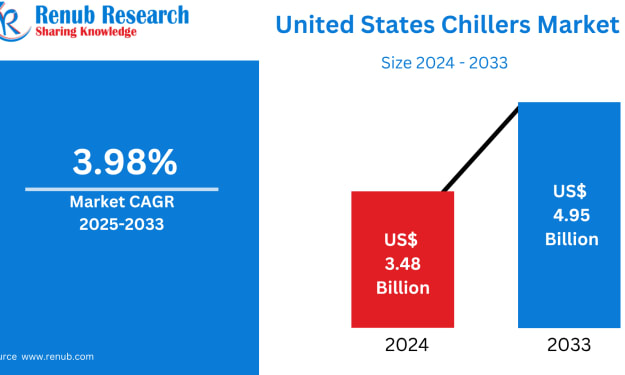
United States Chillers Market Size and Forecast 2025–2033
United States Chillers Market at a Glance The United States Chillers Market is projected to reach US$ 4.95 billion by 2033, rising from US$ 3.48 billion in 2024, at a CAGR of 3.98% from 2025 to 2033, according to Renub Research. This steady growth reflects the increasing importance of efficient cooling solutions across commercial buildings, industrial processes, healthcare facilities, and emerging digital infrastructure such as data centers.
By Aaina Oberoi7 days ago in Futurism



Comments
There are no comments for this story
Be the first to respond and start the conversation.