
Planets Covered in Liquid Metal: Science Fiction Becoming Reality
Space

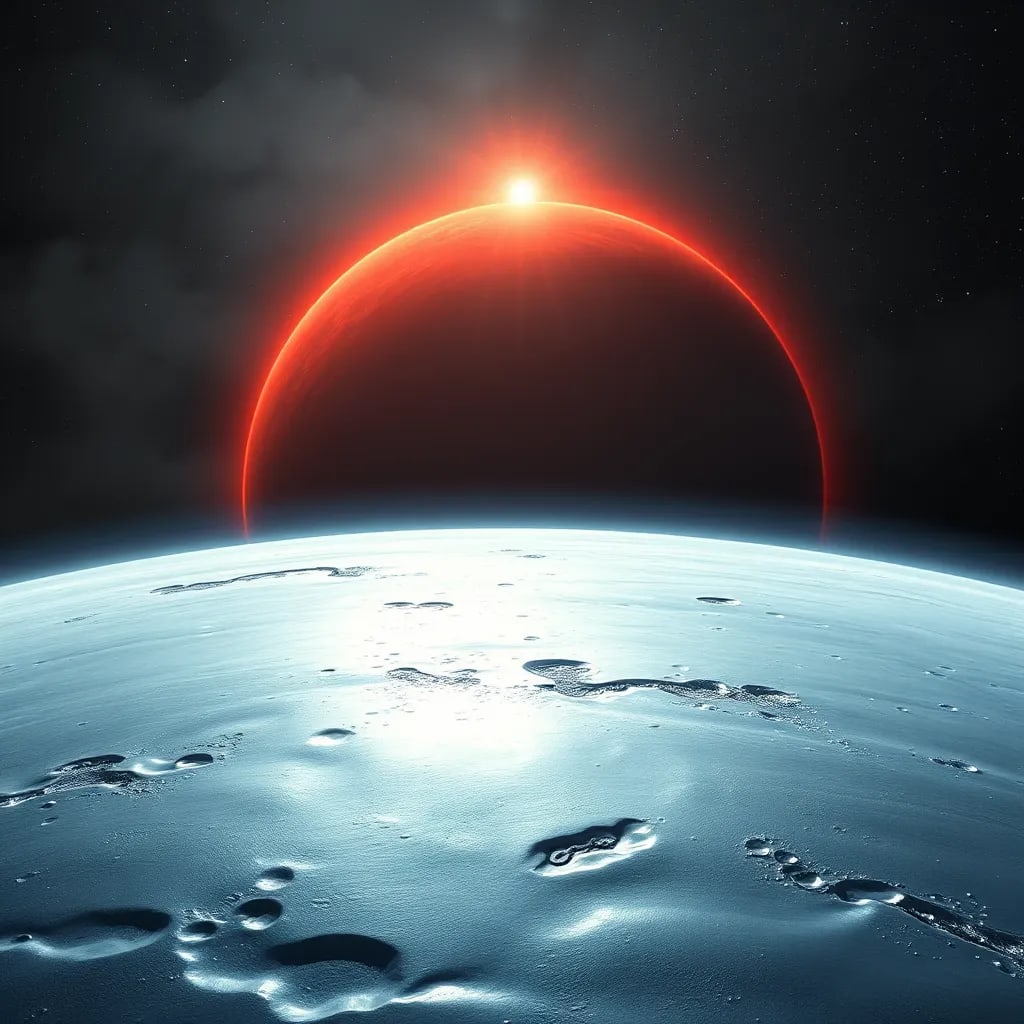
Imagine standing on the shore of a planet where oceans shimmer not with water, but with molten iron, zinc, or sodium. The air is thick with metallic vapors. A red, swollen star hangs overhead, casting eerie reflections across a glowing mercury sea. It sounds like a scene from a futuristic movie, but recent scientific discoveries suggest such planets might not only exist—they may already be within our reach.
What Are Liquid Metal Planets?
Liquid metal planets are not made entirely of metal, but they host seas or even global oceans composed of molten metallic elements. These extraordinary worlds form in extreme environments, usually orbiting incredibly close to their host stars. Temperatures on their surfaces soar past 1000°C (1832°F), and in some cases, exceed 3000°C (5432°F). At these extremes, metals that are solid on Earth become liquid and start behaving more like lava—or water.
Take K2-141b, for example—a real exoplanet located about 202 light-years away in the constellation Aquarius. This rocky planet is tidally locked, meaning one side constantly faces its star while the other remains in permanent darkness. On the sun-facing side, temperatures reach over 3000°C, hot enough to vaporize rock and metal. The result? A landscape dominated by oceans of molten rock and metallic compounds, surrounded by an atmosphere rich in silicon and iron vapor.
Iron Rain and Metal Storms
The weather on such planets is as bizarre as their composition. Because of the extreme temperature difference between the day and night sides, powerful supersonic winds carry vaporized metal from the scorching side to the cooler dark side. There, it condenses and falls—literally—as iron rain.
Imagine watching droplets of molten iron falling from a smoky sky, hissing as they cool and solidify upon impact. On Earth, such conditions would be instantly lethal, but on a planet like K2-141b, this might be part of a daily weather cycle. Scientists suspect that on some of these worlds, metal clouds swirl across the atmosphere, generating lightning storms of molten metal, where charged particles and intense heat create spectacular electrical displays.
Why Scientists Are Fascinated
These extreme planets are more than cosmic oddities—they’re natural laboratories. Understanding how liquid metals behave on a planetary scale helps scientists model the interiors of rocky planets, including Earth. Our planet has a molten iron outer core, which generates its magnetic field. By studying planets like K2-141b, scientists can test theories about magnetic field formation, mantle dynamics, and the early stages of planetary evolution.
Additionally, these worlds challenge the way we define habitability and planetary classification. Traditionally, planets were split into gas giants, ice giants, and terrestrial planets. But liquid metal worlds defy these neat categories, existing as hybrids—rocky, but fluid; hostile, but rich in physical processes.
Could Life Exist There?
Not likely—at least not life as we know it. With temperatures high enough to vaporize entire mountain ranges, and oceans made of boiling metals, these worlds are far too extreme to support biological organisms. However, they force us to ask bigger questions: What if life doesn’t require Earth-like conditions? What if there are forms of existence built on principles we haven't even imagined yet?
Even without life, these planets are crucial to understanding how planetary systems form and evolve. They represent one end of the planetary spectrum—a glimpse into the raw, volatile processes that shape celestial bodies.
The Mirror Planets of the Future
Somewhere out there, a planet may exist where the landscape gleams like a mirror, reflecting the light of its sun off vast oceans of liquid titanium. These worlds are alien beyond comprehension—more alien, perhaps, than anything in our fiction. Yet science is catching up with imagination. Every new exoplanet we discover expands the boundaries of what we think is possible.
Once, oceans of liquid metal were purely the stuff of science fiction. Today, they are targets of telescopic observation and astrophysical models. Tomorrow, they may be destinations for robotic explorers or the subjects of close-range spectroscopic analysis.
In the end, liquid metal planets remind us that the universe is not limited by human imagination—but enriched by it. What we once saw in dreams and stories is slowly taking shape in the telescopic lens. And perhaps, one day, we’ll witness a sunset over a sea of molten iron—not through fiction, but through science.
About the Creator
Keep reading
More stories from Holianyk Ihor and writers in Futurism and other communities.
The Cosmic Vacuum: How It Affects Matter
When we hear the word "vacuum," our minds often picture emptiness, absolute silence, and a complete absence of life. The cosmic vacuum truly fits this image — it’s almost a perfect void, where matter is nearly nonexistent, pressure drops to nearly zero, and temperatures can swing wildly from extreme cold to blistering heat. But what actually happens to matter when it encounters this harsh and alien environment? The answer is fascinating, complex, and full of surprising scientific insights.
By Holianyk Ihor7 months ago in Futurism
About Binding Prometheus
I want to start actively advocating on behalf of my own work, and the most valuable part of my canon is, without a doubt, Binding Prometheus, the play I have been working on since 2019 and only finished in 2023 as part of my MA. The play itself is an amalgamation of a million different inspirations. On one end, it evokes the Ancient Greek myth-play, deriving its own title from the earliest extant work of Western drama we have, Aeschylus’s Prometheus Bound. On the other end, it borrows significantly from the sci-fi bulwarks from over the years, namely Mary Shelley’s Frankenstein and Karel Capek’s Rossum’s Universal Robots. The play could be an episode of Black Mirror, I fear. I don’t know. I’ve only ever seen one episode of Black Mirror.
By Steven Christopher McKnight11 days ago in Futurism
Telemedicine Market: Remote Healthcare Delivery & Market Momentum
According to IMARC Group's latest research publication, The global telemedicine market size was valued at USD 111.4 Billion in 2025. Looking forward, IMARC Group estimates the market to reach USD 602.1 Billion by 2034, exhibiting a CAGR of 20.62% from 2026-2034
By James Whitman4 days ago in Futurism
The steps to losing a child
Step One: Lose a child. Not what anyone wants to happen and nothing you can do to change it, but you can go through steps to becoming happy again. You can go through steps to loving again. You can go through steps to become a new you because after losing a child you will never be the same person you once were.
By Tabitha Hinkley3 days ago in Fiction


Comments (1)
This is mind-blowing! The idea of liquid metal planets is crazy. I can't imagine standing on a planet with molten metal seas. How do you think life could exist in such extreme conditions? And what would it be like to witness iron rain? It's fascinating how these planets form so close to their stars. I wonder if we'll ever be able to study them up close. Maybe we'll find some new forms of matter or energy. What do you think are the biggest challenges in exploring these planets?