

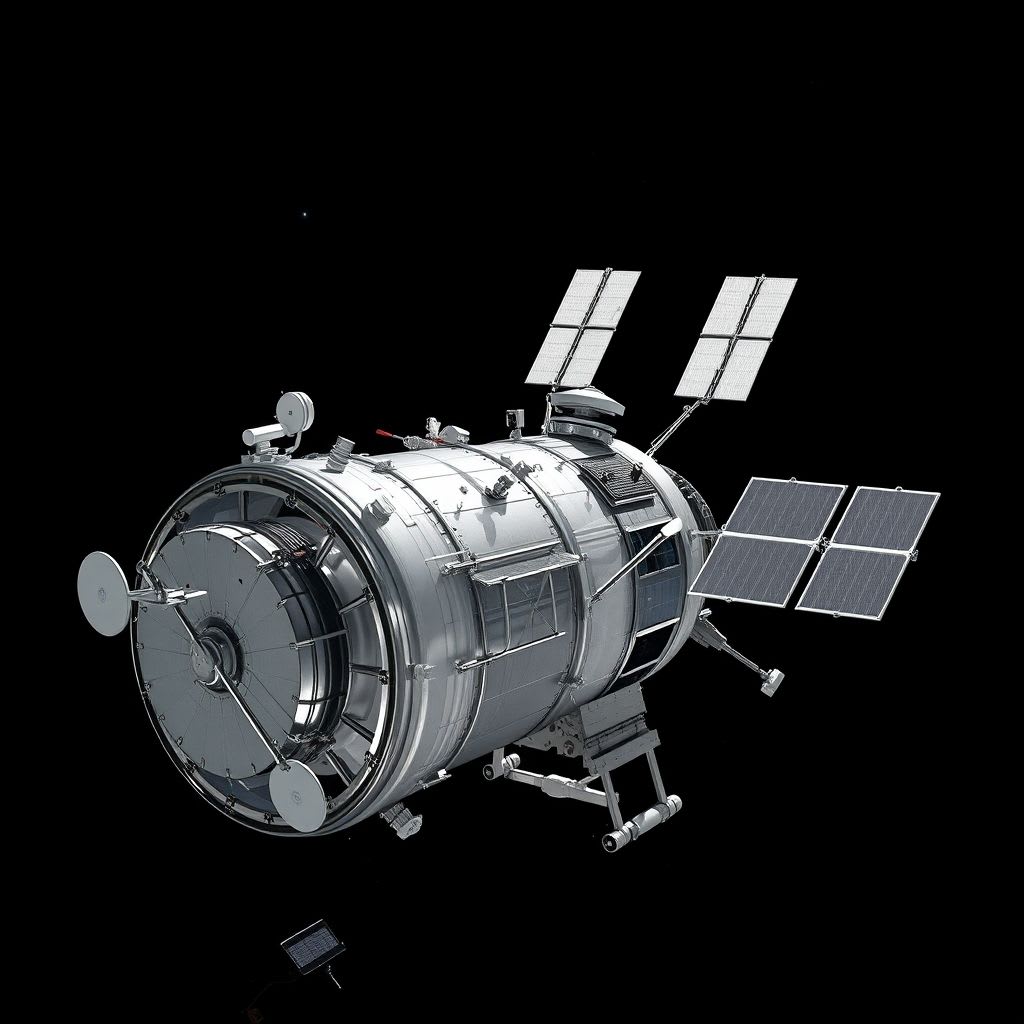
When we hear the word "vacuum," our minds often picture emptiness, absolute silence, and a complete absence of life. The cosmic vacuum truly fits this image — it’s almost a perfect void, where matter is nearly nonexistent, pressure drops to nearly zero, and temperatures can swing wildly from extreme cold to blistering heat. But what actually happens to matter when it encounters this harsh and alien environment? The answer is fascinating, complex, and full of surprising scientific insights.
What Is the Cosmic Vacuum?
The cosmic vacuum is far from being just "nothing." It’s a region of space where the pressure and density of matter are incredibly low. In interstellar space, for example, you might find just a handful of atoms per cubic meter — so few that by Earth’s standards, it might as well be empty. Yet, even in this near-nothingness, the laws of physics apply, and they can be ruthless toward matter.
The Vacuum’s Destructive Impact on Matter
Matter, especially living organisms and materials accustomed to Earth’s conditions, face brutal challenges in space. The vacuum environment is almost like a torturous test for anything exposed to it.
Lack of Pressure
Here on Earth, we’re surrounded by atmospheric pressure of about 101 kilopascals (kPa). In space, pressure plummets toward zero. This causes liquids in the human body or materials to start boiling almost instantly. Blood doesn’t boil because blood vessels maintain internal pressure, but saliva, tears, and lung fluids can start to evaporate rapidly. Even spacecraft materials suffer — tiny gaps or imperfections can cause lubricants to evaporate or seals to fail, jeopardizing the integrity of the entire craft.
Extreme Temperatures
Space doesn’t have air to transfer heat by convection. That means temperatures can be extreme: on the sunlit side of an object, it might soar to +120°C (248°F), while in shadow, temperatures can plummet to –150°C (–238°F). Metals and other materials expand and contract in response to these swings, which can cause micro-cracks and eventual material fatigue — a serious problem for spacecraft and spacesuit design.
Sublimation and Evaporation
Some substances don’t behave as expected in vacuum. Ice, for example, doesn’t melt in space; it sublimates — changing directly from solid to gas. This process is responsible for the tails of comets, which lose mass as they approach the Sun. Over time, even rocks and dust in deep space can slowly evaporate due to solar wind and cosmic radiation.
Changes to Material Microstructure
Modern materials like plastics and polymers can undergo significant changes in vacuum. They might lose flexibility, crack, or become brittle. This degradation poses challenges for the outer layers of spacecraft and spacesuits, which must remain reliable despite exposure to the vacuum.
Vacuum and Living Organisms
Humans cannot survive in open space without protective gear. Loss of consciousness happens within 10 to 15 seconds due to oxygen deprivation, and irreversible tissue damage follows within about 90 seconds. Yet, some tiny organisms, such as tardigrades (water bears), can survive the vacuum of space. This incredible resilience inspires scientists to search for life forms capable of thriving in extreme environments — perhaps even beyond Earth.
Vacuum: Not Just an Enemy
Interestingly, the cosmic vacuum isn’t just a hostile force. It’s also a valuable tool. Many scientific instruments, satellites, and industrial processes rely on artificially created vacuum conditions. For example, vacuum environments are crucial in semiconductor manufacturing, where even the tiniest particle can ruin a microchip.
Conclusion
The cosmic vacuum is far more than empty space — it’s an active, aggressive environment capable of transforming, damaging, or even destroying matter. It affects everything from individual atoms to entire star systems. Understanding the nature of vacuum is key not only to surviving in space but also to developing technologies that can withstand, and even harness, its unique conditions. In the vast emptiness of the cosmos, vacuum is a powerful force shaping the universe and our future among the stars.
About the Creator
Keep reading
More stories from Holianyk Ihor and writers in Futurism and other communities.
Intergalactic Space: What’s Really Out There Beyond the Void?
When we picture outer space, most of us imagine dazzling stars, swirling galaxies, colorful nebulae, and the familiar planets of our solar system. But between those brilliant cosmic landmarks lies an immense stretch of emptiness — the intergalactic space. At first glance, it might seem like a vast, lifeless void, completely devoid of matter or meaning. Yet, this seemingly empty realm is far more intriguing and complex than it appears. So, what exactly exists in that dark gulf between galaxies?
By Holianyk Ihor8 months ago in Futurism
About Binding Prometheus
I want to start actively advocating on behalf of my own work, and the most valuable part of my canon is, without a doubt, Binding Prometheus, the play I have been working on since 2019 and only finished in 2023 as part of my MA. The play itself is an amalgamation of a million different inspirations. On one end, it evokes the Ancient Greek myth-play, deriving its own title from the earliest extant work of Western drama we have, Aeschylus’s Prometheus Bound. On the other end, it borrows significantly from the sci-fi bulwarks from over the years, namely Mary Shelley’s Frankenstein and Karel Capek’s Rossum’s Universal Robots. The play could be an episode of Black Mirror, I fear. I don’t know. I’ve only ever seen one episode of Black Mirror.
By Steven Christopher McKnight12 days ago in Futurism
Telemedicine Market: Remote Healthcare Delivery & Market Momentum
According to IMARC Group's latest research publication, The global telemedicine market size was valued at USD 111.4 Billion in 2025. Looking forward, IMARC Group estimates the market to reach USD 602.1 Billion by 2034, exhibiting a CAGR of 20.62% from 2026-2034
By James Whitman5 days ago in Futurism
The steps to losing a child
Step One: Lose a child. Not what anyone wants to happen and nothing you can do to change it, but you can go through steps to becoming happy again. You can go through steps to loving again. You can go through steps to become a new you because after losing a child you will never be the same person you once were.
By Tabitha Hinkley4 days ago in Fiction


Comments (1)
The article really makes you think about the harshness of the cosmic vacuum. I've always been curious about how matter behaves in such extreme conditions. It's crazy how quickly liquids can boil due to the lack of pressure. And those extreme temperature swings! I wonder how spacecraft are designed to withstand all that. Do they use special materials or have unique insulation techniques? It's fascinating to consider the engineering challenges of exploring the vacuum of space.