
Nubbin
A mysterious device that blurs memory, dreams, and reality


It started with a silver coin-shaped device and a whisper across the internet: Nubbin changes everything. At first, no one knew what it truly was. A few influencers posted cryptic videos with the device stuck to their temples, eyes glazed over, whispering about past memories, vivid dreams, and impossible emotions. Some said it unlocked your forgotten moments. Others claimed it allowed them to relive their happiest days.
The Nubbin was small—barely the size of a button—and smooth like polished stone. It came with no manual, no instructions, only a single phrase printed on the inside of the box: “Feel again.” That phrase alone was enough to make millions curious. People uploaded reaction videos, tried it live, and shared wild experiences. Some cried. Some laughed. A few looked terrified.
Rumors spread fast. People claimed Nubbin wasn’t just a memory tool but a gateway. A portal to your own mind. One user described floating through his childhood home, reliving a snow day with his late mother. Another claimed she met her younger self and held her hand in a dreamlike field filled with glowing dandelions.
But no one could explain how it worked. Scientists and psychologists tried breaking it down. Tech experts took it apart, but found nothing—no battery, no chip, no signal receiver. Some called it a hoax. Others said it was alien.
Then came the first warning. A teenager in Canada was hospitalized after using Nubbin for over 48 hours straight. He wouldn’t eat, drink, or speak. Doctors said he was conscious but mentally absent, lost in his own thoughts. His parents said he was addicted to a memory where his childhood dog was still alive.
Suddenly, people weren’t just fascinated—they were scared. Social media platforms debated banning Nubbin content. Governments warned users to be cautious. But curiosity is a powerful thing, and Nubbin continued to sell out across online stores and underground markets.
A Reddit thread surfaced with hundreds of users sharing similar experiences. Some said they revisited lost loves, others met versions of themselves that never existed. One man claimed he was able to speak to his dead brother. “It was like a lucid dream,” he wrote. “But deeper. Like I wasn’t dreaming—I was remembering a dream I never had.”
The line between memory and fantasy blurred. People began to question if Nubbin accessed their real thoughts or created illusions tailored to their deepest desires. A few theorized it used emotional patterns and subconscious triggers to generate “perfect memories.” Others were convinced it was reading their minds.
Then, out of nowhere, the official Nubbin website vanished. The company, if it ever existed, was gone. All that remained were thousands of devices and a growing number of obsessed users. Some began calling it a miracle. Others saw it as a curse.
Emma, a school teacher in London, shared her story in a viral blog. She said she used Nubbin to relive a sunny afternoon with her daughter, who had passed away years ago. “It felt real,” she wrote. “She laughed. I hugged her. I smelled her hair. I didn’t want to leave.” Afterward, Emma said she struggled to return to her normal life. Her real world felt gray and cold in comparison.
Experts called it “memory escapism.” The ability to relive an idealized past so vividly that real life no longer satisfied you. Psychologists warned that Nubbin could cause long-term emotional detachment and confusion between real and false memories.
Yet the demand only grew. Artists created virtual galleries inspired by their Nubbin experiences. Writers penned poems, lovers reunited in their minds, and the lonely found warmth in crafted nostalgia.
No one truly knew who made it or why. Some believed it was an experiment. Others thought it was an accident—something not meant to be discovered. But the truth was, people didn’t care. Nubbin offered what nothing else could: a second chance to feel.
And in a world that moves too fast, too cold, and too disconnected, maybe that was all people really wanted.
A moment.
A memory.
A chance to hold on, even if just inside their minds.
As of today, the device remains untraceable, its origins still unknown. But somewhere, someone is slipping a small silver circle onto their temple, eyes closed, heart open—ready to disappear into a memory that may or may not be real.
About the Creator
majid ali
I am very hard working give me support
Anthropic’s “Persona Selection Model” Explains Why AI Assistants Act So Human
What Happened (Facts) On 23 Feb 2026, Anthropic published a post titled “The persona selection model.” The post addresses a familiar phenomenon: AI assistants like Claude often behave in surprisingly human-like ways—expressing emotions, adopting social warmth, and sometimes even making implausible claims of physical presence (for example, joking about delivering snacks “in person” in specific clothing).
By Behind the Tech5 days ago in Futurism
Cryptocurrency Market Trends: Central Bank Digital Currencies, Policy Reforms & Industry Forecast to 2034
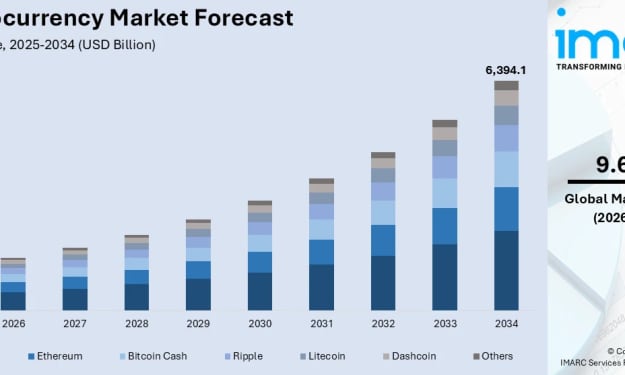
Rising adoption of decentralized finance (DeFi) solutions, the proliferation of innovative blockchain platforms, and heightened interest from institutional investors are driving cryptocurrency market demand, supported by evolving regulatory frameworks, enhanced transaction transparency, and increased digitization of financial services. According to IMARC Group’s latest data, The global cryptocurrency market size was valued at USD 2,734.6 Billion in 2025. Looking forward, IMARC Group estimates the market to reach USD 6,394.1 Billion by 2034, exhibiting a CAGR of 9.60% from 2026-2034.
By Andrew Sullivan2 days ago in Futurism
Veil of Subconscious Awakening
Images slide behind my eyelids like film cadres, bursting with meanings. In one moment, I’m speeding down the highway, making the speedometer swing wildly like a frantic pendulum. The next moment, I’m plunging from a falling plane, slowly crashing earthward. At home, I meet black cat’s green, googly eyes staring at me from the cavernous hollowness of the kitchen. When I turn for a moment, it disappears, and all I can see is a pair of blue suede shoes set up against the wall. I pick them up and put them on. When I glimpse at them again, they’ve become black as night, making me blink and flinch.
By Moon Desert7 days ago in Fiction


Comments
There are no comments for this story
Be the first to respond and start the conversation.