
North America Human Microbiome Market Set to Surge at 32.2% CAGR, Reaching USD 4.15 Billion by 2031
Strategic partnerships, technology-driven innovation, and rising demand for personalized medicine are reshaping the future of microbiome-based therapeutics and diagnostics
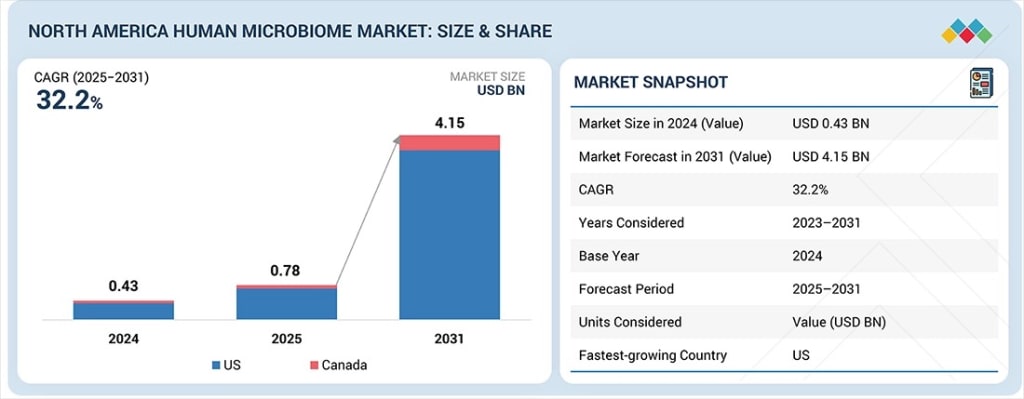
The North America human microbiome market is entering a decisive growth phase as healthcare systems, biotechnology leaders, and research institutions accelerate investments in next-generation, microbiome-based solutions. Valued at USD 0.43 billion in 2024 and rising sharply to USD 0.78 billion in 2025, the market is projected to expand at a robust CAGR of 32.2% from 2025 to 2031, reaching an estimated USD 4.15 billion by the end of the forecast period.
Download PDF Brochure of North America Human Microbiome Market Report
What is driving this growth, and why does it matter now?
The market’s rapid expansion is being fueled by advancements in microbiome-based drugs, diagnostics, and therapeutic platforms, underpinned by deepening collaborations between biotechnology companies, academic institutions, and clinical research centers. As chronic and lifestyle-related diseases continue to rise across North America, microbiome science is emerging as a critical pillar in preventive care, precision medicine, and disease management—making this a timely inflection point for industry stakeholders and decision-makers.
Market Momentum and Regional Leadership
The United States remains the undisputed leader, accounting for 86.6% of the North American human microbiome market in 2024. Driven by strong research infrastructure, favorable funding environments, and growing government and private-sector initiatives, the U.S. is expected to register the fastest growth through 2031. Canada continues to complement this momentum with a vibrant startup ecosystem supporting innovation in microbiome therapeutics and diagnostics.
How is the market evolving by product, route, and disease focus?
From a product perspective, microbiome drugs are expected to record the highest CAGR of 35.3%, supported by a growing development pipeline and increased funding for drug discovery and clinical validation. While microbiome supplements led the market in 2024 due to widespread consumer adoption and over-the-counter availability, the strategic shift toward prescription-grade therapeutics is reshaping competitive priorities.
By route of administration, oral delivery dominated the market in 2024 due to convenience, affordability, and patient compliance. However, the rectal route is projected to grow at the fastest pace from 2025 to 2031, reflecting its clinical relevance in targeted gastrointestinal treatments.
From a disease standpoint, gastrointestinal disorders accounted for 58.4% of total market revenue in 2024, underscoring the strong correlation between gut microbiome imbalance and digestive health. This segment continues to attract the majority of R&D investments and clinical trials.
Technology Trends and Customer-Level Disruptions
Revenue growth in the North America human microbiome market is shifting away from traditional probiotics and diagnostics toward advanced, technology-enabled solutions. AI-powered microbiome analytics, metagenomic sequencing, multi-omics integration, and personalized nutrition programs are redefining how hospitals, clinics, specialty care centers, and diagnostic laboratories operate. These innovations are improving predictive accuracy, reducing operational costs, enhancing patient stratification, and accelerating the development of reproducible, scalable microbiome-based therapies.
Market Dynamics: Drivers, Restraints, Opportunities, and Challenges
The primary driver remains the rising prevalence of obesity, diabetes, autoimmune disorders, and inflammatory bowel diseases, which is intensifying interest in microbiome-informed interventions. Advancements in sequencing and bioinformatics technologies further amplify this impact.
However, the market faces notable restraints, including the lack of standardized protocols and evolving regulatory frameworks, which create development inconsistencies and slow commercialization. High therapy costs also remain a barrier.
At the same time, opportunities are expanding rapidly. The growing demand for personalized medicine and the emergence of postbiotics present high-value growth avenues, particularly in immune, metabolic, and gastrointestinal applications. Challenges persist around slow patient adoption, limited awareness, and the inherent complexity of developing and administering microbiome-based therapies at scale.
Competitive Landscape and Ecosystem Strength
Established players such as International Flavors & Fragrances Inc., Seed Health, Inc., and Seres Therapeutics continue to lead with strong market presence and diversified portfolios. Emerging innovators including AOBiome, Vedanta Biosciences, Inc., and Synlogic are gaining traction by addressing niche therapeutic areas.
The broader ecosystem—comprising manufacturers, regulatory bodies, raw material suppliers, and end users such as hospitals and academic institutions—plays a critical role in translating research into clinical and commercial outcomes. Strategic CDMO partnerships, exemplified by recent collaborations in oral care probiotics, highlight how companies are accelerating time-to-market while optimizing capital efficiency.
Recent Developments Shaping the Market
In February 2025, GluCare Health partnered with Pendulum Therapeutics to assess the impact of probiotic-based glucose control solutions on metabolic health. Earlier, in October 2024, BIOHM Health collaborated with ADM to launch a data-driven microbiome formulation targeting women aged 40–65. A pivotal milestone was achieved in April 2023, when the U.S. FDA approved VOWST, the first oral fecal microbiota transplant product for preventing recurrent Clostridioides difficile infections.
Why This Market Demands Executive Attention
For CEOs, CFOs, CMOs, and strategic leaders, the North America human microbiome market represents a convergence of high-growth potential, technological disruption, and long-term healthcare impact. As competition intensifies and regulatory clarity improves, early strategic positioning—through partnerships, targeted R&D, and ecosystem collaboration—will be critical to capturing value in this rapidly evolving space.
About the Creator
Keep reading
More stories from Juan Martinez and writers in Futurism and other communities.
Europe Pharmaceutical Drug Delivery Market to Reach USD 703.19 Billion by 2031
The Europe pharmaceutical drug delivery market is entering a decisive growth phase, reflecting how healthcare systems, pharmaceutical leaders, and device manufacturers are rethinking how medicines are administered, experienced, and scaled across diverse patient populations.
By Juan Martinez3 days ago in Futurism
About Binding Prometheus
I want to start actively advocating on behalf of my own work, and the most valuable part of my canon is, without a doubt, Binding Prometheus, the play I have been working on since 2019 and only finished in 2023 as part of my MA. The play itself is an amalgamation of a million different inspirations. On one end, it evokes the Ancient Greek myth-play, deriving its own title from the earliest extant work of Western drama we have, Aeschylus’s Prometheus Bound. On the other end, it borrows significantly from the sci-fi bulwarks from over the years, namely Mary Shelley’s Frankenstein and Karel Capek’s Rossum’s Universal Robots. The play could be an episode of Black Mirror, I fear. I don’t know. I’ve only ever seen one episode of Black Mirror.
By Steven Christopher McKnight25 days ago in Futurism
Laptop Market Size and Forecast 2025–2033: Global Industry Outlook, Growth Drivers, and Future Trends
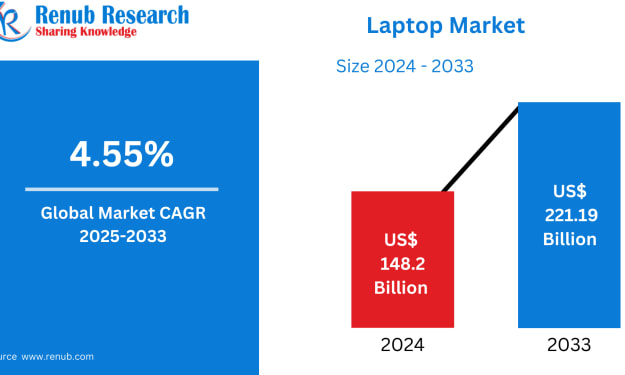
Global Laptop Market Outlook 2025–2033 The Global Laptop Market is entering a new phase of sustained growth, driven by evolving work cultures, rapid digital transformation, and rising demand for portable computing solutions. According to Renub Research, the global laptop market was valued at US$ 148.2 billion in 2024 and is expected to reach US$ 221.19 billion by 2033, growing at a CAGR of 4.55% from 2025 to 2033.
By Aaina Oberoi3 days ago in Futurism



Comments
There are no comments for this story
Be the first to respond and start the conversation.