
Next-Gen Rocket Tech: How Modern Launch Innovations Are Redefining Space Travel
Space

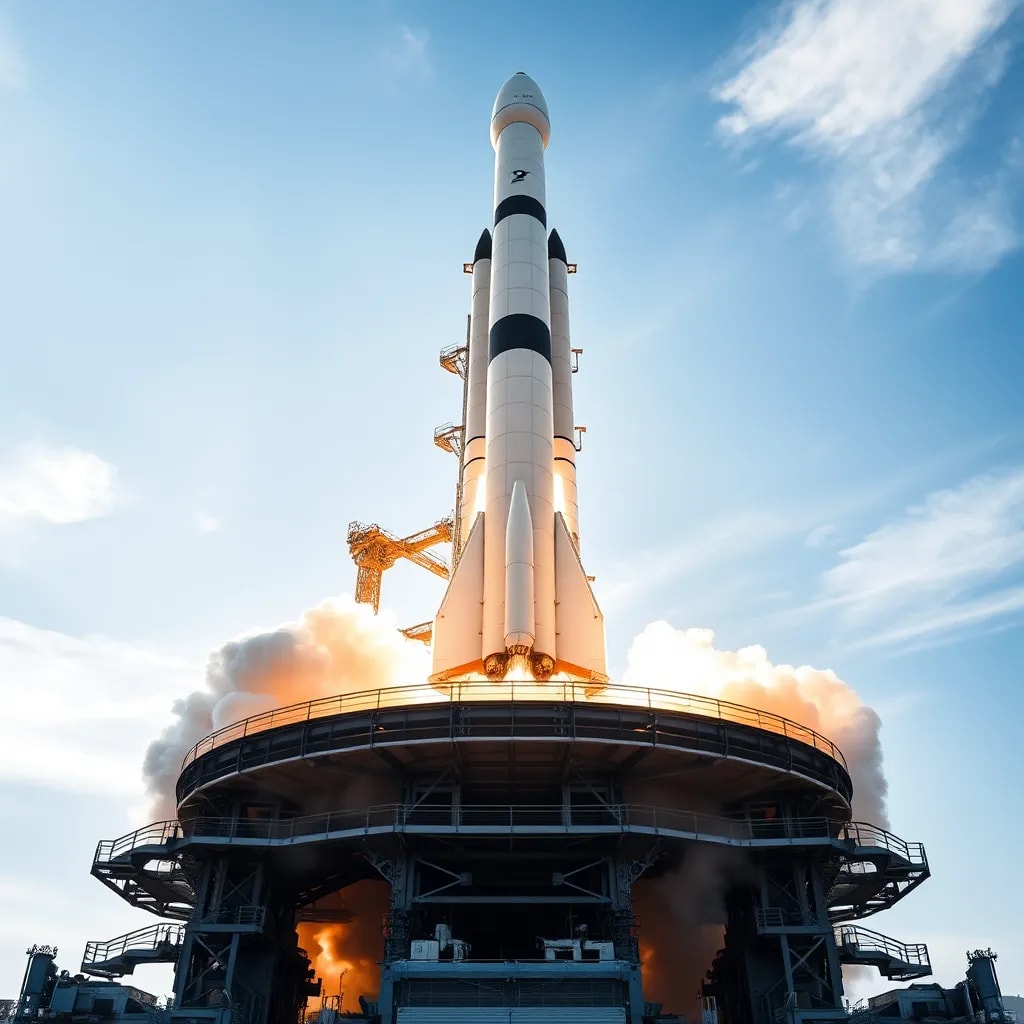
Space travel isn’t just about roaring engines and fiery liftoffs anymore. Today, launching a rocket involves a stunning mix of cutting-edge engineering, artificial intelligence, and advanced materials science. What once seemed like science fiction is now part of our evolving reality, as space becomes more accessible, more efficient, and more sustainable. Let’s explore some of the most transformative technologies changing the face of rocket launches—and shaping the future of space exploration.
1. Reusable Rockets: Slashing Costs, Boosting Ambitions
One of the most groundbreaking innovations in the space industry is the development of reusable rockets. In the past, rocket stages were used only once and then discarded—usually crashing into the ocean after a launch. That meant every mission required building an entirely new rocket, costing hundreds of millions of dollars.
Enter companies like SpaceX, with their Falcon 9 and Falcon Heavy systems, which flipped the script. These rockets can return to Earth, land vertically, and be used again. This dramatically cuts the cost of launches and opens up space to startups, universities, and even space tourists.
The secret lies in ultra-precise engine control, automated landing systems, and heat-resistant materials that can endure the stresses of re-entry. Each successful reuse is a leap toward making spaceflight as routine—and affordable—as flying across the globe.
2. Smart Control Systems and Artificial Intelligence
Modern rockets are essentially flying supercomputers. Their onboard systems can adjust flight paths in real time, respond to anomalies, and execute pinpoint landings—without any human intervention.
Artificial intelligence (AI) is taking these capabilities even further. Machine learning algorithms help optimize fuel consumption, engine efficiency, and trajectory planning. Some systems even use neural networks to analyze real-time telemetry data, identify potential issues, and make split-second decisions to ensure mission success.
This level of automation means fewer people are needed to oversee complex launches, reducing both operational costs and the risk of human error.
3. Revolutionary Materials and 3D Printing
To reach orbit, rockets must survive brutal conditions—immense pressure, searing temperatures, and violent vibrations. That’s where advanced materials come in. Engineers now use carbon composites, heat-resistant ceramics, and lightweight metal alloys to build stronger, lighter, and more efficient rockets.
But it’s not just what rockets are made of—it’s how they’re made. 3D printing, also known as additive manufacturing, has become a game-changer in aerospace. Complex components like engine nozzles, fuel injectors, and structural supports can now be printed in a matter of days instead of months.
This speeds up production, cuts costs, and allows for rapid prototyping of new designs. Companies like Relativity Space are even working on fully 3D-printed rockets—a bold step toward faster, more agile space missions.
4. Cleaner, Greener Propulsion Systems
Rocket fuel has traditionally been a messy business. Most rockets run on a mix of liquid oxygen and kerosene—a potent but environmentally unfriendly combo. Now, engineers are exploring cleaner alternatives, like liquid methane, which burns more efficiently and produces fewer carbon byproducts. It also has the added benefit of being easier to store and more suitable for long-duration missions.
Beyond chemical propulsion, electric propulsion is also gaining momentum. Ion thrusters and plasma engines, which use electromagnetic fields to accelerate charged particles, are perfect for deep-space missions. They’re not powerful enough to launch rockets from Earth, but in space, they offer excellent fuel efficiency and long-term reliability.
5. Modular and Flexible Rocket Designs
Today’s rockets are being designed with adaptability in mind. Modular designs allow space agencies and companies to reconfigure rocket components based on mission requirements—whether it’s launching a swarm of mini-satellites into low Earth orbit or sending a cargo payload to the Moon.
This flexibility speeds up launch preparation and makes missions more affordable. Companies like Rocket Lab and ULA are already incorporating modularity into their launch platforms, making space transportation more like plug-and-play.
The Bottom Line: The Future Is Already Here
The technologies powering today’s rockets are not just incremental improvements—they’re giant leaps. Reusability, AI-driven navigation, innovative manufacturing techniques, and eco-friendly propulsion are making spaceflight safer, cheaper, and more accessible than ever before.
These advances are opening the door to incredible possibilities: mining asteroids, building lunar bases, sending humans to Mars, and unlocking the mysteries of deep space. What once seemed like a distant dream is now well within reach.
So, next time you watch a rocket soar into the sky, remember—it’s not just a launch. It’s a signal that humanity is stepping boldly into a new era of exploration. And who knows? You might just witness the next great leap in space history.
About the Creator
Keep reading
More stories from Holianyk Ihor and writers in Futurism and other communities.
Cosmic Voyagers: How Space Probes Explore the Far Reaches of Our Solar System
When we gaze up at the night sky, it’s easy to forget that some of our most ambitious explorers aren’t people—but machines. Silent and persistent, space probes have traveled billions of kilometers beyond Earth, venturing into the unknown corners of our Solar System. These robotic pathfinders have helped humanity unlock cosmic secrets far beyond our reach.
By Holianyk Ihor7 months ago in Futurism
About Binding Prometheus
I want to start actively advocating on behalf of my own work, and the most valuable part of my canon is, without a doubt, Binding Prometheus, the play I have been working on since 2019 and only finished in 2023 as part of my MA. The play itself is an amalgamation of a million different inspirations. On one end, it evokes the Ancient Greek myth-play, deriving its own title from the earliest extant work of Western drama we have, Aeschylus’s Prometheus Bound. On the other end, it borrows significantly from the sci-fi bulwarks from over the years, namely Mary Shelley’s Frankenstein and Karel Capek’s Rossum’s Universal Robots. The play could be an episode of Black Mirror, I fear. I don’t know. I’ve only ever seen one episode of Black Mirror.
By Steven Christopher McKnight11 days ago in Futurism
France Convenience Store Market Size and Forecast 2026–2034
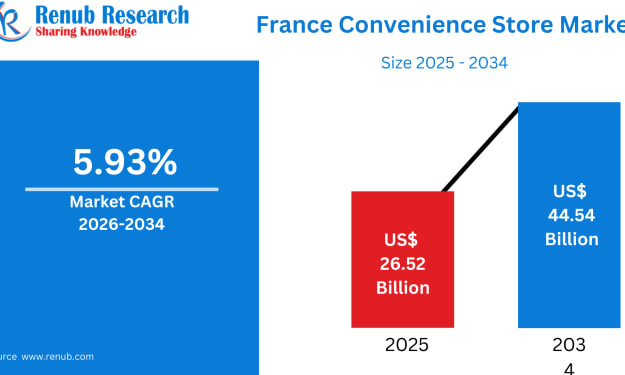
Introduction The France Convenience Store Market is poised for strong expansion over the coming decade, reflecting the country’s changing consumer habits, growing urban density, and rising preference for speed, accessibility, and ready-to-consume products. According to Renub Research, the market is expected to grow from US$ 26.52 billion in 2025 to US$ 44.54 billion by 2034, registering a healthy compound annual growth rate (CAGR) of 5.93% from 2026 to 2034.
By jaiklin Fanandish3 days ago in Futurism



Comments
There are no comments for this story
Be the first to respond and start the conversation.