
Nebulizers Market: Infection Control Standards, Safe Drug Delivery & Market Forecast
Demand for easy-to-use respiratory devices boosts nebulizer adoption.

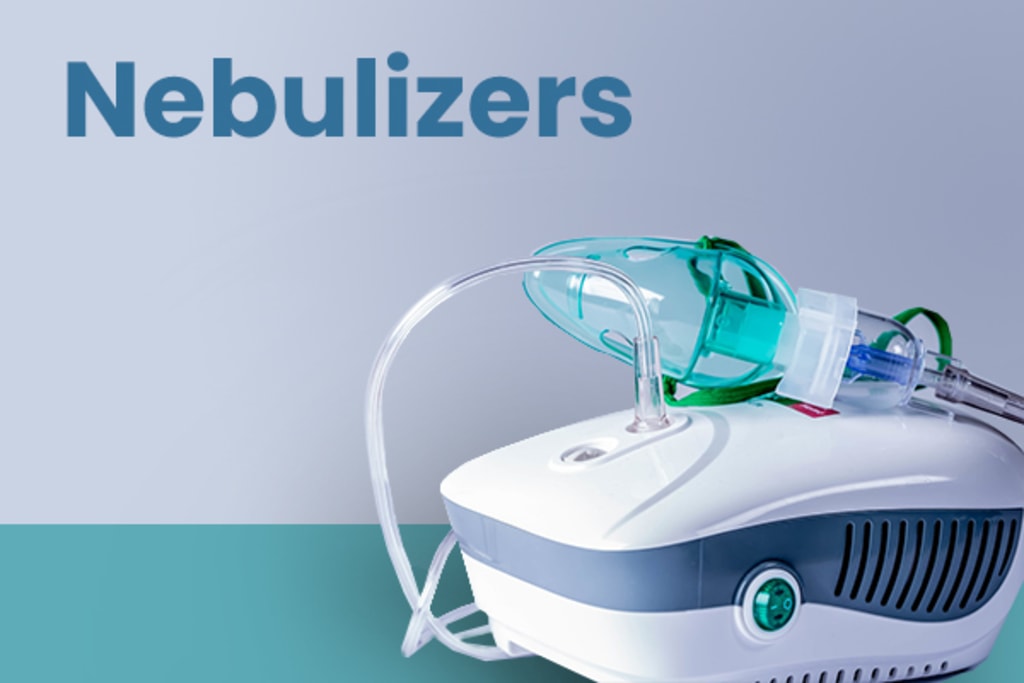
According to IMARC Group's latest research publication, the global nebulizers market size reached USD 1,460.12 Million in 2024. Looking forward, IMARC Group estimates the market to reach USD 2,564.92 Million by 2033, exhibiting a growth rate (CAGR) of 6.14% during 2025-2033.
How AI is Reshaping the Future of the Nebulizers Market
- Predictive Maintenance and Device Reliability: Machine learning monitors nebulizer performance in real-time, flagging potential failures before they occur and ensuring uninterrupted drug delivery for patients who rely on daily respiratory treatments at home or in clinical settings.
- Connected Health and Remote Patient Monitoring: AI-integrated smart nebulizers transmit live usage data to healthcare providers, enabling proactive intervention and improving medication adherence, a critical advantage for elderly patients and those in home-care settings.
- Aerosol Intelligence and Drug Delivery Optimization: AI models simulate aerosol particle dynamics to refine nebulizer design, ensuring deeper lung penetration, minimizing medication waste, and improving therapeutic effectiveness across diverse age groups and conditions.

Nebulizers Industry Overview
The global nebulizers industry is being shaped by a sharp rise in respiratory diseases, an aging population, and the growing preference for home-based treatment. Over 3 million people die from COPD annually, according to the World Health Organization, while the American Lung Association notes that nearly 90% of lung cancer cases are linked to cigarette smoking, both driving consistent demand for effective drug delivery devices.
Nebulizers Market Trends & Drivers
The biggest force pushing this market forward is the relentless rise in chronic respiratory conditions. Asthma alone accounts for roughly 54.5% of nebulizer usage, particularly among children and the elderly who struggle with inhalers. North America holds a 35% global market share, backed by robust healthcare infrastructure and widespread insurance coverage.
Technology is redefining what nebulizers can do, opening up entirely new patient segments. In January 2025, Qnovia kicked off Phase 1 trials for RespiRx, a hand-held nebulizer designed for nicotine cessation therapy, an application that barely existed before. TruNeb upgraded its portable model with mesh technology and USB-C charging the same month, improving usability for home patients.
Homecare is rapidly becoming the dominant setting for nebulizer use, reshaping how devices are designed and sold. Standalone nebulizers command around 56.4% of market share because they are compact, affordable, and require no clinical setup. In Asia Pacific, government-backed healthcare expansion and India's fast-growing medical devices sector are accelerating adoption of portable solutions.
Leading Companies Operating in the Global Nebulizers Industry
- Agilent Technologies, Inc.
- Air Liquide Medical Systems (Air Liquide Healthcare)
- Beurer GmbH
- Bremed Ltd.
- CA-MI S.r.l
- Drive DeVilbiss Healthcare
- Feellife Health Inc.
- GF Health Products, Inc.
- Microlife Corporation
- Omron Healthcare, Inc (Omron Corporation)
- Rossmax International Ltd.
Nebulizers Market Report Segmentation
By Product Type:
- Pneumatic Nebulizers
- Ultrasonic Nebulizers
- Mesh Nebulizers
- Others
Pneumatic nebulizers hold the largest share at around 64.5%, valued for their affordability, durability, and broad medication compatibility.
By Portability:
- Portable Nebulizers
- Standalone Nebulizers
Standalone nebulizers lead with around 56.4% of market share, driven by ease of use and affordability for home care patients.
By End-User:
- Hospitals and Clinics
- Long Term Healthcare Centers
- Homecare Settings
- Outpatient Settings
Hospitals and clinics lead with around 44% of market share, driven by rising patient volumes and demand for precise medication delivery.
By Application:
- COPD
- Cystic Fibrosis
- Asthma
- Others
Asthma leads with around 54.5% of market share, as nebulizers remain the preferred delivery method for bronchodilators, especially among children and elderly patients.
Regional Insights:
- North America (United States, Canada)
- Asia Pacific (China, Japan, India, South Korea, Australia, Indonesia, Others)
- Europe (Germany, France, United Kingdom, Italy, Spain, Russia, Others)
- Latin America (Brazil, Mexico, Others)
- Middle East and Africa
North America dominates with a 35% market share, supported by advanced healthcare systems, high adoption rates, and strong home healthcare demand.
Recent News and Developments in the Nebulizers Market
- March 2025: Aerogen opened its India headquarters in New Delhi, bringing its advanced aerosol drug delivery technology to one of the world's largest respiratory disease markets. With over 55 million people in India living with COPD, the expansion reflects the company's commitment to improving respiratory care access and strengthening India-Ireland healthcare collaboration.
- January 2025: TruNeb upgraded its portable nebulizer with enhanced mesh technology, a 10ml medication cup, USB-C charging, and a wireless base, making treatment faster and easier for asthma and COPD patients at home. The company also announced the upcoming launch of a Hypertonic Saline Solution as an expansion of its respiratory care product range.
Note: If you require specific details, data, or insights that are not currently included in the scope of this report, we are happy to accommodate your request. As part of our customization service, we will gather and provide the additional information you need, tailored to your specific requirements. Please let us know your exact needs, and we will ensure the report is updated accordingly to meet your expectations.
About the Creator
sujeet. imarcgroup
With 2 years of hands-on experience at IMARC Group, I have conducted in-depth market research and analysis across diverse industries including technology, healthcare, agriculture, and consumer goods.
Keep reading
More stories from sujeet. imarcgroup and writers in Futurism and other communities.
Dental Services Market: Cosmetic Dentistry Demand, Smile Makeovers & Market Forecast
According to IMARC Group's latest research publication, the global dental services market size reached USD 472.2 Billion in 2024. Looking forward, IMARC Group expects the market to reach USD 689.9 Billion by 2033, exhibiting a growth rate (CAGR) of 4.3% during 2025–2033.
By sujeet. imarcgroupa day ago in Futurism
Plastics Market Outlook: Industrial Demand Expansion and Sustainable Innovation Opportunities
According to IMARC Group's latest research publication, The global plastics market size was valued at USD 653.35 Billion in 2024. Looking forward, IMARC Group estimates the market to reach USD 847.30 Billion by 2033, exhibiting a CAGR of 2.78% from 2025-2033.
By Michael Richardabout 8 hours ago in Futurism
Pea Starch Market Outlook: Plant-Based Ingredient Demand and Sustainable Food Growth Opportunities
According to IMARC Group's latest research publication, the global pea starch market size reached USD 151.4 Million in 2024. Looking forward, IMARC Group expects the market to reach USD 263.1 Million by 2033.
By James Whitman7 days ago in Futurism
Craft Over Catharsis Challenge Winners
Craft Over Catharsis? What the hell does that even mean? The phrase came out of a curation meeting as a genuine question. We had been noticing that many challenge entries, across prompts, naturally gravitate toward trauma, grief, and personal reckoning. That makes sense. Writing is often cathartic. It's one of the ways we process what we've lived through.
By Vocal Curation Team2 days ago in Resources




Comments
There are no comments for this story
Be the first to respond and start the conversation.