
Pea Starch Market Outlook: Plant-Based Ingredient Demand and Sustainable Food Growth Opportunities
The pea starch market is witnessing steady growth, driven by increasing consumer preference for plant-based, gluten-free, and clean-label food ingredients.

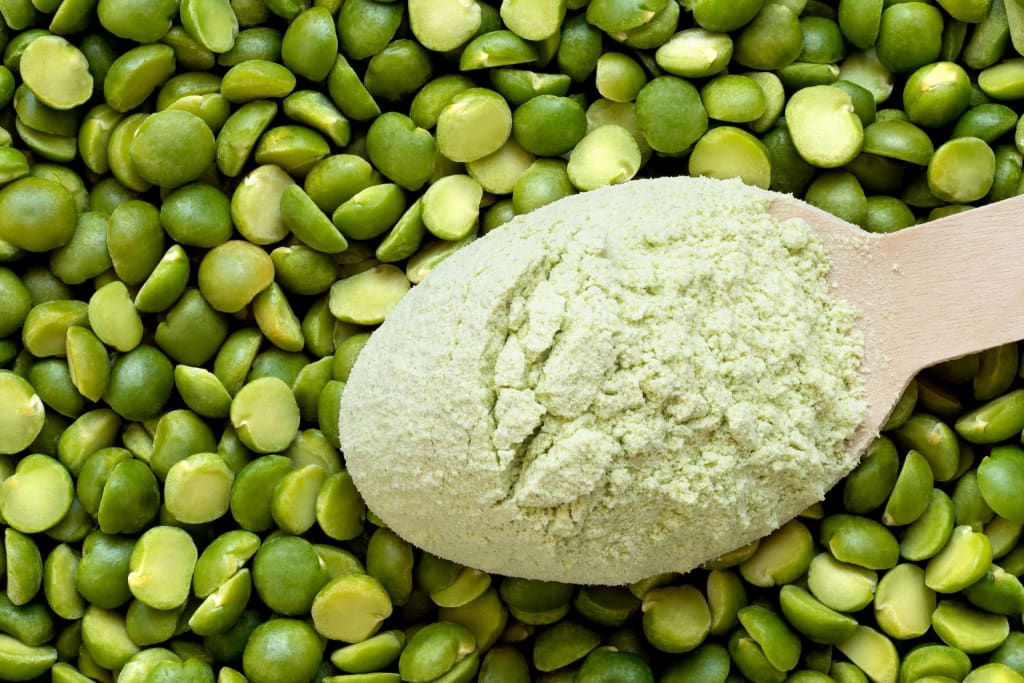
According to IMARC Group's latest research publication, the global pea starch market size reached USD 151.4 Million in 2024. Looking forward, IMARC Group expects the market to reach USD 263.1 Million by 2033.
How AI is Reshaping the Future of Pea Starch Market
- Smart Quality Control and Vision Systems: AI-powered computer vision analyzes starch particle size, color consistency, and purity levels during processing. Automated systems detect contaminants and defects with 95% accuracy, ensuring only premium-grade pea starch meets food and pharmaceutical standards.
- Production Optimization and Energy Efficiency: Machine learning algorithms monitor extraction temperatures, pH levels, and processing times to maximize starch yield. Companies implementing AI-driven systems report 10-15% improvements in production output and 20% reductions in energy consumption through optimized batch scheduling.
- Predictive Maintenance and Downtime Prevention: IoT sensors combined with AI analytics predict equipment failures before breakdowns occur. Real-time monitoring of milling equipment, centrifuges, and dryers enables maintenance scheduling that cuts unplanned downtime by approximately 30%, ensuring continuous production flow.

Pea Starch Industry Overview:
The pea starch industry is experiencing robust growth driven by surging demand for plant-based, allergen-free ingredients across food, pharmaceutical, and cosmetic sectors. North America leads production, particularly Canada which supplies 29% more peas compared to previous periods. Ingredion's USD 200 million investment in Verdient Foods demonstrates industry consolidation and upstream integration strategies. European processors like Cosucra are channeling EUR 200 million into non-GMO certified facilities, while Roquette's AMYSTA and LYCAGEL innovations showcase advanced clean-label technologies meeting consumer transparency expectations.
Pea Starch Market Trends & Drivers
The plant-based revolution is fundamentally reshaping ingredient sourcing across food manufacturing, with pea starch emerging as a versatile solution for clean-label formulations. Over 75% of consumers report that brand transparency influences purchasing decisions, driving manufacturers toward recognizable ingredients like pea starch over synthetic alternatives. Almost one in three new food launches globally now positions itself as clean-label. Roquette's AMYSTA L 123 thermally soluble pea starch, developed through enzyme-free processing, allows simple ingredient declarations—"soluble pea starch" in the EU and "pea starch" in the US. Major food companies are reformulating products to eliminate complex chemical names, with pea starch replacing modified corn starches in sauces, soups, and bakery items. The ingredient's neutral taste, gluten-free status, and non-GMO availability make it ideal for plant-based meat alternatives, dairy substitutes, and allergen-free snacks targeting health-conscious consumers.
Pharmaceutical and nutraceutical applications are opening high-value growth channels for pea starch processors. Roquette's LYCAGEL Flex hydroxypropyl pea starch premix offers softgel manufacturers a plant-based alternative to gelatin capsules, with 5-minute degassing times versus 60 minutes for gelatin formulations. The global softgel market worth approximately USD 1 billion remains 90% gelatin-based, presenting substantial conversion opportunities as vegan supplement demand accelerates. Producing 1 kg of peas generates 30 times less CO2 emissions than 1 kg of meat-based gelatin, appealing to sustainability-focused pharmaceutical companies. Modified pea starches also function as excipients in tablet coatings, providing improved stability and moisture protection for probiotics and sensitive active ingredients. The acquisition of capsule specialist Qualicaps by Roquette strengthens integrated solutions combining pea starch technology with dosage form expertise, enabling faster pharmaceutical innovation.
Regional production expansion and strategic partnerships are securing supply chains and enhancing processing capabilities. Ingredion's full acquisition of Verdient Foods for USD 200 million demonstrates vertical integration to control feedstock quality and pricing. Bunge's collaboration with Golden Fields established a Latvia facility exclusively supplying dry-milled pea protein concentrates and starch, ensuring consistent raw material access. Canadian processors benefit from proximity to major pulse-growing regions, with pea cultivation increasing 29% as farmers adopt improved varieties and precision irrigation. North America's wet-milling infrastructure upgrades, exemplified by Ingredion's USD 50 million Cedar Rapids expansion, boost specialty starch throughput and enable faster product iterations. Asia-Pacific markets show 12.56% growth as industrialization accelerates and middle-class consumers seek plant-based alternatives. China's rising labor and energy costs are reshaping competitive dynamics, pushing suppliers toward value-added products rather than commodity exports.
Leading Companies Operating in the Global Pea Starch Industry:
- American Key Products Inc.
- Axiom Foods Inc.
- Cosucra
- Emsland Group
- Herba Ingredients B.V.
- Ingredion Incorporated
- Meelunie B.V. (Hoogwegt Groep B.V.)
- Puris
- Roquette Frères
- The Scoular Company
- Vestkorn Milling AS (Koninklijke DSM N.V.)
- Yantai Shuangta Food Co. Ltd.
Pea Starch Market Report Segmentation:
By Type:
- Organic and Non-GMO
- Conventional
By Function:
- Binding and Thickening
- Gelling
- Texturizing
- Film Forming
- Others
By Application:
- Food and Beverages
- Feed
- Others
Regional Insights:
- North America (United States, Canada)
- Asia-Pacific (China, Japan, India, South Korea, Australia, Indonesia, Others)
- Europe (Germany, France, United Kingdom, Italy, Spain, Russia, Others)
- Latin America (Brazil, Mexico, Others)
- Middle East and Africa
Recent News and Developments in Pea Starch Market
- October 2025: Roquette launched AMYSTA L 123 thermally soluble pea starch, the first innovation in its new AMYSTA label-friendly starch range. Developed through a patented enzyme- and chemical-free process, it delivers label transparency and reliable texturizing performance for ready-to-mix beverages, dried soups, sauces, and condiment mixes, addressing the growing demand for simple, recognizable ingredients.
- June 2024: Bunge collaborated with European agricultural company Golden Fields to establish a new facility in Latvia exclusively supplying Bunge with dry-milled pea and faba bean protein concentrates. This partnership secured the supply chain for key pea ingredients, including pea starch, ensuring consistent raw material quality for manufacturers across Europe.
- May 2024: Ingredion invested USD 200 million to gain full ownership of Verdient Foods, aiming to control upstream protein and starch assets and mitigate risks related to feedstock pricing and quality. This strategic acquisition strengthens Ingredion's position in the North American pea ingredient market and enables better supply chain integration.
- May 2024: Roquette launched LYCAGEL Flex, a hydroxypropyl pea starch premix for nutraceutical and pharmaceutical soft gel capsules. This plasticizer-free excipient allows manufacturers to customize formulations for various production needs while offering optimal quality, stability, and performance for plant-based soft capsules, providing an effective alternative to traditional gelatin-based solutions.
- April 2024: Roquette Beauté introduced a new biodegradable pea-based film former leveraging pea starch as a key ingredient. This sustainable solution is designed for the cosmetics industry, providing an eco-friendly alternative to traditional film formers and demonstrating pea starch's versatility across multiple sectors beyond food and pharmaceuticals.
- January 2024: Cosucra Company extended its distribution agreement with DKSH to introduce its range of dietary fibers and plant-based proteins, including pea starch products, to India's food and beverage manufacturing industry. This partnership leverages DKSH's extensive network to expand Cosucra's presence in the rapidly growing Indian market.
Note: If you require specific details, data, or insights that are not currently included in the scope of this report, we are happy to accommodate your request. As part of our customization service, we will gather and provide the additional information you need, tailored to your specific requirements. Please let us know your exact needs, and we will ensure the report is updated accordingly to meet your expectations.
About the Creator
James Whitman
With years of experience in analyzing global industries, I specialize in delivering actionable market insights that help businesses stay ahead in an ever-changing landscape.
Keep reading
More stories from James Whitman and writers in Futurism and other communities.
Hybrid Fiber Optic Connectors Market Outlook: High-Speed Connectivity Demand and Growth Opportunities
According to IMARC Group's latest research publication, global hybrid fiber optic connectors market size reached USD 927.8 Million in 2024. Looking forward, IMARC Group expects the market to reach USD 1,566.9 Million by 2033, exhibiting a growth rate (CAGR) of 5.7% during 2025-2033.
By James Whitman5 days ago in Futurism
Chance AI: Best AI Vision App That Helps Your Phone Understand What It Sees
Imagine pointing your phone’s camera at something and instantly knowing what it is, where it comes from, or how it works. This is no longer science fiction. Thanks to rapid advances in artificial intelligence, AI vision apps are now capable of understanding images almost like humans do. In 2026, finding the best AI vision app has become important for students, professionals, travelers, and everyday users.
By Maheep Makkarabout 12 hours ago in Futurism
Android 17 Brings Custom Shortcuts to the Pixel Launcher Search Bar
What Happened With the release of Android 17 Beta 1, Google has introduced a long-requested customization feature to the Pixel Launcher search bar, aligning it more closely with the functionality already available in the Google Search widget.
By Behind the Tech3 days ago in Futurism
Think for Me
"How do you calculate the circumference of a circle? Submit your answer when ready." [Pause] "Excellent! Every student was able to call up the answer electronically very quickly. If I, as a robot had feelings, I would express pride. You may break for lunch. Return to this cyber room in 45 minutes."
By Julie Lacksonen4 days ago in Humans




Comments
There are no comments for this story
Be the first to respond and start the conversation.