
Navigating the Storm
How Indonesia Can Capitalize on the US-China Trade War

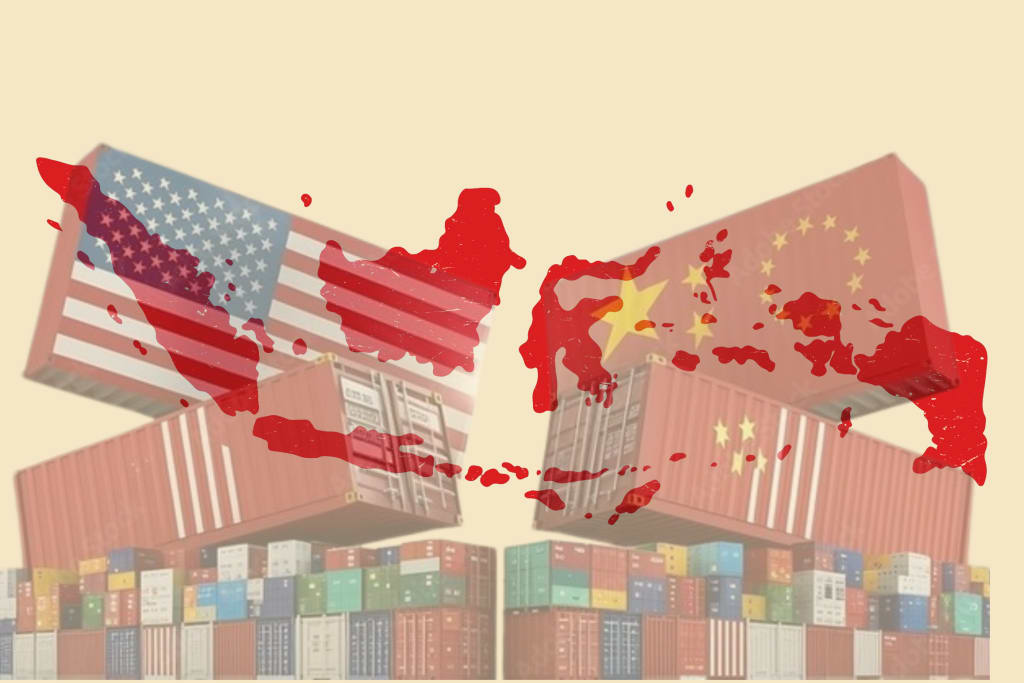
The global economic tension has intensified as the trade war between the United States and China escalates. The Trump administration, back in power, has announced new tariffs on Chinese products, promptly reciprocated by Beijing with similar measures. "If war is what the US wants, be it a tariff war, a trade war or any other type of war, we're ready to fight till the end," declared the Chinese Embassy in a statement quoted by BBC. This harsh rhetoric marks a new phase in the strained relationship between the world's two largest economies, potentially reshaping the global trade landscape in the near future.
Amidst the uncertainty created by this trade war, Indonesia sees promising opportunities. The Chairman of the Indonesian Chamber of Commerce and Industry (KADIN), Anindya N. Bakrie, emphasized during a seminar on the impact of tariff wars on Indonesian exports that "The US-China tariff war is not just a challenge, but also an opportunity. We must strengthen domestic industries and expand export markets with the right strategy." This optimism is supported by a study from the KADIN Indonesia Institute, Yayasan Berbakti Semangat Indonesia (YBSI), and Datawheel, which projects a potential surge in Indonesian exports of up to US$1.69 billion, with the footwear, textile, electronics, and light furniture sectors benefiting the most.
However, this optimistic view needs deeper examination when compared to various scientific research from economic and international politics experts. Amiti et al. (2019) in their study published in The Review of Economic Studies found that the first US-China trade war (2018-2020) reduced US consumer welfare by approximately $6.9 billion annually due to rising import prices. Their research also highlighted that the tariff burden was largely borne by US consumers, not Chinese producers as initially intended. This indicates that export market diversion doesn't always proceed smoothly and can create new economic inefficiencies.
Nevertheless, Evenett and Fritz (2021) from Global Trade Alert identified a significant "trade diversion effect," where countries like Vietnam, Malaysia, and Indonesia have enjoyed increased exports to the US for products subject to tariffs from China. This trade diversion phenomenon aligns with the projection presented by Professor César Hidalgo of Datawheel, who predicts a surge in Indonesian exports, particularly in the textile, garment, and footwear sectors, of up to US$732 million due to shifts in global supply chains.
Further research by Bloomfield and Leblang (2021) in the Journal of International Economics reveals that trade wars impact not only trade flows but also foreign direct investment (FDI) decisions. Multinational companies tend to divert their investments from China to alternative countries in Southeast Asia as a "China+1" strategy to mitigate risks. Indonesia, with its large domestic market and relatively competitive labor costs, could potentially become one of the main destinations for this investment reallocation, which in turn would strengthen national production capacity and export competitiveness.
This echoes the statement of Pahala Mansury, Vice Chairman of KADIN Indonesia for International Trade, who emphasized the need for long-term strategies for Indonesia to maximize the benefits from US import diversion, especially in downstream and labor-intensive sectors. These strategies include expanding market access, collaborating with global suppliers, and increasing investment attractiveness.
Behind this optimism, however, experts like Petri and Plummer (2020) from the Peterson Institute for International Economics warn that short-term benefits from trade diversion must be balanced with vigilance against long-term risks. A sustained trade war could trigger a global economic slowdown, which would ultimately negatively impact exports from all countries, including Indonesia. Additionally, excessive dependence on the US market could create new vulnerabilities in the Indonesian economy.
A study by Basri et al. (2021) published in Asian Economic Papers analyzes that Indonesia needs to diversify export destination markets and improve product competitiveness to maximize the benefits from the US-China trade war. Without structural improvements in infrastructure, bureaucracy, and workforce quality, Indonesia risks falling behind countries like Vietnam that are better prepared to take advantage of this situation. These findings confirm that although export opportunities are wide open, Indonesia still needs to address various structural barriers to fully capitalize on these opportunities.
Interestingly, a report from the Asian Development Bank (2024) places Indonesia as one of the six countries most likely to benefit from the diversion of global supply chains due to the US-China trade war. However, the report also highlights that the increase in Indonesian exports to the US, although potentially surpassing Malaysia, Thailand, and the Philippines, will still lag behind Vietnam. This underscores the urgency for Indonesia to accelerate structural reforms and enhance the competitiveness of its manufacturing industry to optimally leverage this momentum.
The literature review above shows that the optimism expressed by Anindya Bakrie and researchers from the KADIN Indonesia Institute, YBSI, and Datawheel has a strong empirical basis. However, leveraging these opportunities requires a comprehensive and strategic approach. Indonesia needs to develop a two-pronged strategy: short-term to capitalize on the ongoing trade diversion, and long-term to build economic resilience amid global geopolitical uncertainty.
Facing the ever-changing dynamics of global trade, Indonesia needs to use this momentum to accelerate the structural transformation of its economy. Policies for downstream natural resource processing, infrastructure improvement, bureaucratic reform, and human resource development are important prerequisites for optimizing the benefits from export opportunities opened by the US-China trade war. With the right approach, Indonesia can transform this geopolitical challenge into a catalyst for more inclusive and sustainable economic growth.
References
Amiti, M., Redding, S.J., & Weinstein, D.E. (2019). The Impact of the 2018 Tariffs on Prices and Welfare. The Review of Economic Studies, 86(4), 1435-1471.
Asian Development Bank. (2024). Asian Development Outlook 2024: Navigating Global Economic Shifts. Manila: ADB.
Basri, M.C., Rahardja, S., & Fitrania, S. (2021). Indonesia's Response to US-China Trade War: A Preliminary Assessment. Asian Economic Papers, 20(1), 65-82.
Bloomfield, M., & Leblang, D. (2021). Foreign Direct Investment Under Tariff Uncertainty: Evidence from the US-China Trade War. Journal of International Economics, 131, 103448.
Evenett, S.J., & Fritz, J. (2021). Collateral Damage: Cross-Border Fallout from Pandemic Policy Overdrive. The 27th Global Trade Alert Report. London: CEPR Press.
Petri, P.A., & Plummer, M.G. (2020). East Asia Decouples from the United States: Trade War, COVID-19, and East Asia's New Trade Blocs. Peterson Institute for International Economics Working Paper 20-9.
About the Creator
Defrida
Writing is how I create my own universe of thought. Without it, I'd vanish into the swirling depths of a black hole.
Australia Caustic Soda Market: Industrial Demand Growth, Local Production Expansion & Sustainability Trends
According to IMARC Group, the Australia caustic soda market reached 1,687.3 Thousand Tons in 2025 and is projected to grow to 1,900.4 Thousand Tons by 2034, exhibiting a compound annual growth rate (CAGR) of 1.29% during 2026–2034. The moderate but steady growth reflects stable industrial demand and the essential role of caustic soda across multiple sectors in Australia. Expanding alumina refining operations, rising infrastructure development, and increased focus on supply chain resilience are supporting domestic production capacity. At the same time, sustainability-driven manufacturing upgrades and energy efficiency initiatives are shaping the long-term trajectory of the Australia caustic soda market share.
By Kevin Cooper2 days ago in Futurism
Australia Cold Chain Logistics Market: Temperature-Controlled Capacity, Food & Pharma Demand & Technology Integration
According to IMARC Group, the Australia cold chain logistics market was valued at USD 5.2 Billion in 2025 and is projected to reach USD 7.3 Billion by 2034, exhibiting a compound annual growth rate (CAGR) of 3.80% during 2026–2034. The market’s steady expansion reflects the growing importance of temperature-controlled supply chains across Australia. Rising investments in refrigerated transportation fleets, advanced cold storage warehouses and smart inventory systems are strengthening logistics infrastructure nationwide. As food safety standards tighten and pharmaceutical distribution becomes increasingly complex, cold chain logistics is emerging as a strategic pillar of supply chain resilience.
By Shrestha Roy7 days ago in Futurism



Comments
There are no comments for this story
Be the first to respond and start the conversation.