
Nanobots in Space: The Future of Self-Repairing Spacecraft
Space

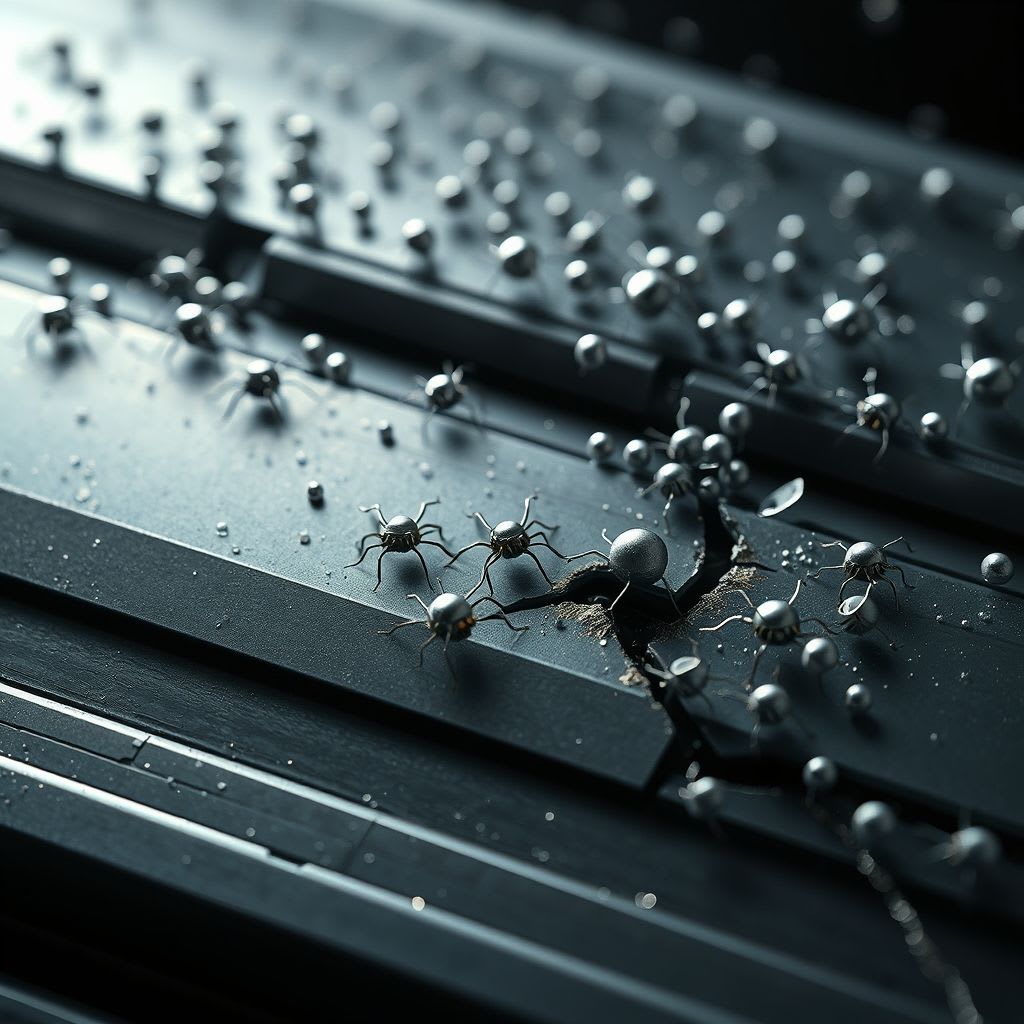
As humanity steps deeper into the era of space exploration, our technology must evolve to match the harsh, unpredictable conditions beyond Earth’s atmosphere. While giant rockets, artificial gravity, and advanced propulsion systems steal most of the spotlight, one quiet revolution is happening on the smallest possible scale: nanobots microscopic machines that could one day take over the repair and maintenance of spacecraft. Once a staple of science fiction, nanobots are quickly becoming a tangible part of our technological future.
What Are Nanobots?
Nanobots, or nanoscale robots, are machines ranging from tens to hundreds of nanometers in size that’s about 1,000 times smaller than the width of a human hair. These bots can be made from materials like carbon nanotubes, advanced polymers, or even DNA based structures, depending on the task they're built to perform. Because of their minute size, nanobots can slip into hard to reach areas, navigate microscopic cracks, and even interact with matter at a molecular level.
Imagine a crew of mechanical ants, invisible to the naked eye, tirelessly working inside a spacecraft, scanning, analyzing, and fixing tiny imperfections that human eyes could never see. That’s the promise of nanobot repair systems.
Why Do Spacecraft Need Internal Swarms?
Space is brutal. Spacecraft are bombarded by micrometeorites, exposed to extreme temperatures, drenched in radiation, and must operate in a vacuum. Even a tiny crack in a hull or heat shield can mean mission failure or worse, loss of life.
Today, many spacecraft repairs require dangerous extravehicular activity (EVA), where astronauts must venture into space in bulky suits to fix problems manually. This is risky, time consuming, and expensive. Nanobots offer a future where such missions become rare or even unnecessary.
What Can Nanobots Do?
Nanobots aren’t just futuristic Roombas. They have the potential to change how we build, maintain, and extend the life of spacecraft. Here are some of the tasks they could perform:
- Detect Micro-Damage
Equipped with nanosensors, nanobots could continuously patrol a spacecraft's surface and interior, scanning for the tiniest fractures or signs of wear before they become dangerous. Think of it as having a thousand mechanical inspectors on 24/7 duty.
- Self-Healing Structures
Some nanobots are designed to carry self repairing materials. When a crack is found, these bots can release or synthesize compounds that fill the gap and solidify, effectively sealing the breach a bit like injecting cement into a hairline crack in a dam.
- Internal Maintenance
Nanobots could move through narrow pipes, electronics, or cable systems, cleaning dust, removing debris, or even repairing wiring without disassembling anything. This would be especially useful on long-duration missions where spare parts and tools are limited.
- Preventive Care
Advanced nanobots integrated with AI could predict future failures based on vibrations, thermal shifts, or material stress. Instead of waiting for something to break, they would act proactively like a digital immune system for the ship.
A Day in the Life of Nanobots on a Ship
Imagine this: a spacecraft is on its way to Mars. A small micrometeorite hits a wing section. Within seconds, embedded sensors detect the microfracture. A swarm of nanobots is activated. They quickly move to the area, assess the damage, and begin repairing it. One team fills the crack with self healing material, while another monitors pressure and structural integrity. Minutes later, the system logs the event and alerts the crew no EVA needed, no human at risk.
The Benefits (and the Challenges)
Advantages:
- Eliminates many dangerous EVA missions.
- Extends spacecraft lifespan.
- Saves mass, time, and money on maintenance equipment.
- Enhances safety for crew and mission integrity.
Challenges:
- Requires precise control systems and advanced AI.
- Difficult and expensive to manufacture at scale.
- Risk of malfunctions or unintended behavior in autonomous systems.
- Must be made from biocompatible and energy efficient materials.
Where Are We Now?
As of today, full-scale nanobot systems in space remain theoretical. But labs around the world from NASA and ESA to companies like IBM and MIT startups are already experimenting with nanoactuators, self assembling materials, and nano-sensors. Some nanomachines can already respond to heat, light, or chemical triggers. Meanwhile, the development of “smart materials” substances embedded with nanoscale systems is bringing us ever closer to autonomous repair tech.
Tomorrow’s Invisible Engineers
The idea of a self-repairing spaceship may sound futuristic, but it’s grounded in real science. Nanobots could become to spacecraft what the immune system is to the human body constantly on guard, fixing problems before we even notice them.
In the not so distant future, every deep space vehicle may come equipped with a silent crew of micro engineers, working tirelessly, invisibly, and with precision beyond human capability. The age of nanobots may just be the next big leap in our journey to the stars.
Next time you look up at the night sky, remember: the future of space travel might not lie in bigger ships, but in smaller machines.
About the Creator
Keep reading
More stories from Holianyk Ihor and writers in Futurism and other communities.
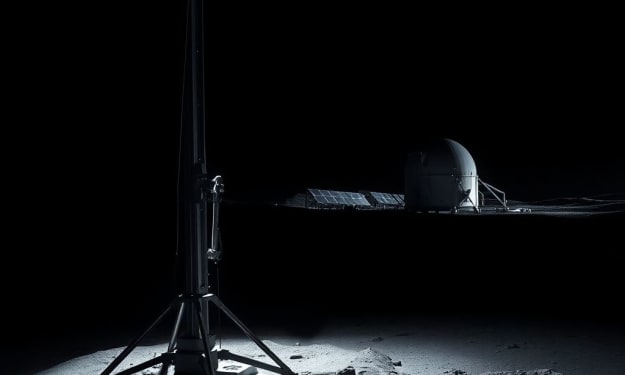
Breathing on the Moon: How Scientists Plan to Generate Oxygen from Lunar Ice
When we picture the Moon, we often imagine a desolate, grey landscape endless dust, massive craters, and complete silence under a black sky. With no breathable atmosphere and extreme temperatures, it seems like the last place where humans could live. But beneath this lifeless surface lies a surprising key to our future in space: frozen water hidden in the shadows of lunar craters. And from that ice, scientists are working on a groundbreaking solution producing oxygen on the Moon.
By Holianyk Ihor7 months ago in Futurism
About Binding Prometheus
I want to start actively advocating on behalf of my own work, and the most valuable part of my canon is, without a doubt, Binding Prometheus, the play I have been working on since 2019 and only finished in 2023 as part of my MA. The play itself is an amalgamation of a million different inspirations. On one end, it evokes the Ancient Greek myth-play, deriving its own title from the earliest extant work of Western drama we have, Aeschylus’s Prometheus Bound. On the other end, it borrows significantly from the sci-fi bulwarks from over the years, namely Mary Shelley’s Frankenstein and Karel Capek’s Rossum’s Universal Robots. The play could be an episode of Black Mirror, I fear. I don’t know. I’ve only ever seen one episode of Black Mirror.
By Steven Christopher McKnight17 days ago in Futurism
Gelatin Market: Clean Label Demand, Functional Ingredients & Food Industry Expansion
According to IMARC Group's latest research publication, global gelatin market size reached 4,70,970 Tons in 2024. Looking forward, IMARC Group expects the market to reach 5,36,020 Tons by 2033, exhibiting a growth rate of 1.3% during 2025-2033.
By sujeet. imarcgroup3 days ago in Futurism


Comments
There are no comments for this story
Be the first to respond and start the conversation.