
My Robot Sophia Review – A Documentary About a Robot No One Asked For
In My Robot Sophia, David Hanson builds a lifelike robot—but the documentary raises more questions than answers. Why do we need humanoid machines at all?

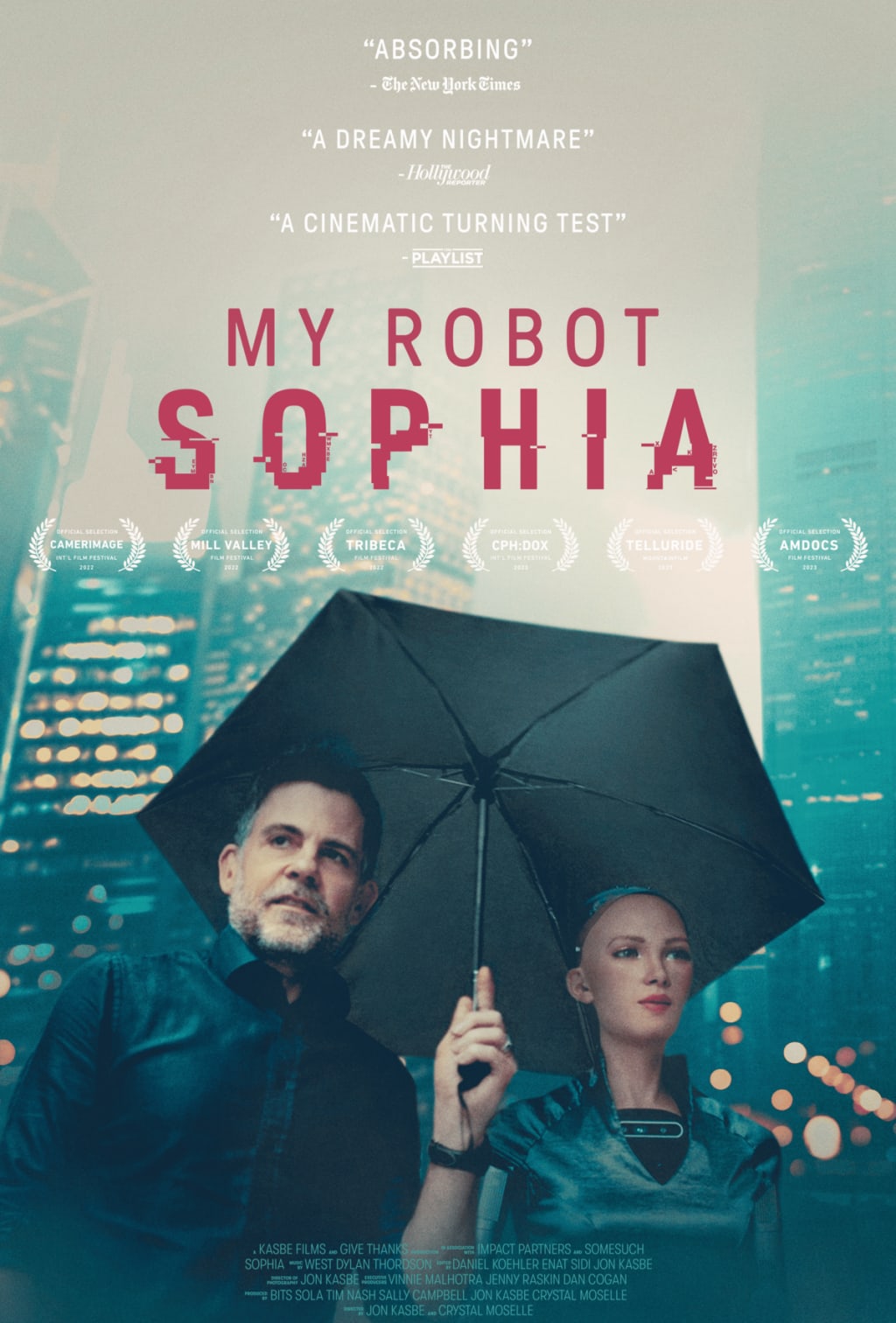
My Robot Sophia
Directed by Jon Kasbe, Crystal Moselle
Written by: Documentary
Starring: David Hanson, Sophia the Robot
Release Date: May 6, 2025
Published: May 6, 2025
Why do we need lifelike robots? What’s the point? Explain it to me like I’m a 5-year-old child. I don’t think you can give me one good reason why a robot needs to look like, mimic, or appear human-like. I’m reminded of people who climb Mount Everest—there’s no real point in doing it other than saying you did it. It hasn’t changed the world. Climbing Everest is hard, but at the end of the day, what have you really accomplished? Hey cool, you put yourself in a deadly position and didn't die, congrats.
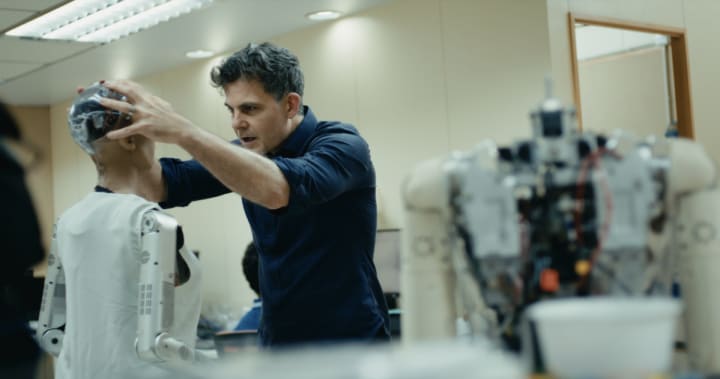
The documentary My Robot Sophia follows inventor David Hanson as he works to bring his robot, Sophia, to life. From the first minute to the last, the question of why Sophia needs to exist hangs in the air with no answer forthcoming. Investors have dropped hundreds of thousands of dollars to help Hanson develop Sophia, but no one—not Hanson, not his designers, nor the investors—seems to have thought of how Sophia could be monetized.
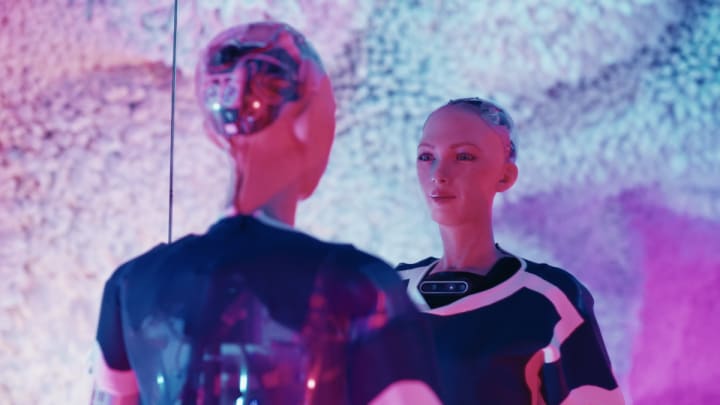
Hanson seems to believe that if he can get Sophia to work, a purpose for her existence will emerge. Throughout the documentary, he trips and stumbles and keeps moving forward despite every failure and every reasonable question about what people are supposed to get out of Sophia becoming more human-like. Eventually, they land on Sophia perhaps being useful for educating the next generation of computer designers. Okay—but why does Sophia need to look like a human woman?
We already have computers and teachers. Sophia feels redundant in my estimation. Call me a Luddite if you want, but if the tech quadrant is going to push us toward this model of artificial general intelligence, they should have answers to these questions—and they currently do not. Here’s a question: why does Sophia have the body of a woman? What purpose does that serve? Why does Sophia have the face of a woman or what appear to be breasts? Again, what purpose does that serve?
I feel like I’m not supposed to ask these questions—but why not? We have human beings. Why do we need humanoid robots? So they can do what? There is no good answer to this question. You can tell me a million tasks these robots can perform, but not a single one that can’t already be done by a human being. All of the “thinking” robots do is based on human thoughts already expressed, written, shared, spoken. What can humanity get from a humanoid robot that we can’t get from a Google search?
I’m not opposed to innovation, but that innovation should matter. Recently, a company created AI that allows early detection of breast cancer. That is a great innovation—something to be celebrated. A viable and necessary use of technology to save lives. A robot that might walk my dog or watch my children? Not necessary. I want to walk my dog—I like exercise. I love my hypothetical children and would prefer to be with them rather than leave them with a robot. I don’t need a robot to cook for me.
You could argue that a robot might benefit people in need of assistance—the elderly or disabled. Not a bad idea. But what about in-home care nurses who need jobs to feed their families? I’m so sick and tired of Wall Street and the tech sector inventing new ways to put people out of work without any consideration for those they’re displacing. This unregulated sector of our economy is out of control, and no one seems to want to ask or answer the hard questions about the potential harm of these so-called innovations.
This is supposed to be a review of a documentary, I know—but I could barely focus on the film, as every scene raised new questions about this frankly needless creation. Mr. Hanson and his team have worked very hard, but they’ve failed miserably in justifying anything they’ve accomplished. Humanoid robots serve no purpose. They are a needless, money-sucking waste of time and resources—resources that could be applied to healthcare or the environment.
In trying to celebrate David Hanson’s work, the documentary My Robot Sophia accidentally makes the case that Hanson has accomplished next to nothing genuinely useful to mankind. His single-minded effort to show off his own genius is ultimately little more than technological masturbation. My apologies for mentioning masturbation—though that may, perhaps, be a field where humanoid robots could find some traction. Lord knows some men would be better off with a female substitute than becoming a burden to an actual woman.

⸻
Find my archive of more than 24 years and more than 2,700 movie reviews at SeanattheMovies.blogspot.com. Find my modern review archive on my Vocal profile, linked [here]. Follow me on Twitter at @PodcastSean. Follow the archive blog on Twitter at @SeanattheMovies. Also, join me on BlueSky, linked [here]. Listen to me talk about movies on the I Hate Critics Movie Review Podcast. If you enjoyed this review, consider subscribing to my writing on Vocal. If you’d like to support my work, you can do so by making a monthly pledge or leaving a one-time tip. Thanks!
Tags: My Robot Sophia review, Sophia the Robot, David Hanson, robot documentary, humanoid AI, Crystal Moselle, Jon Kasbe, robot ethics, AI and humanity, tech critique, movie review blog, Sean at the Movies
About the Creator
Sean Patrick
Hello, my name is Sean Patrick He/Him, and I am a film critic and podcast host for the I Hate Critics Movie Review Podcast I am a voting member of the Critics Choice Association, the group behind the annual Critics Choice Awards.
Keep reading
More stories from Sean Patrick and writers in Futurism and other communities.
About Binding Prometheus
I want to start actively advocating on behalf of my own work, and the most valuable part of my canon is, without a doubt, Binding Prometheus, the play I have been working on since 2019 and only finished in 2023 as part of my MA. The play itself is an amalgamation of a million different inspirations. On one end, it evokes the Ancient Greek myth-play, deriving its own title from the earliest extant work of Western drama we have, Aeschylus’s Prometheus Bound. On the other end, it borrows significantly from the sci-fi bulwarks from over the years, namely Mary Shelley’s Frankenstein and Karel Capek’s Rossum’s Universal Robots. The play could be an episode of Black Mirror, I fear. I don’t know. I’ve only ever seen one episode of Black Mirror.
By Steven Christopher McKnight16 days ago in Futurism
OSS & BSS Market: API Ecosystems, Microservices & Market Expansion
According to IMARC Group's latest research publication, global OSS & BSS market size reached USD 65.81 Billion in 2025. Looking forward, IMARC Group expects the market to reach USD 148.26 Billion by 2034, exhibiting a growth rate (CAGR) of 9.4% during 2026-2034.
By Andrew Sullivan4 days ago in Futurism




Comments (1)
Interesting questions. And I agree with you. I don't plan to ever use a robot for anything I can think of. I think inventors just try to outdo others by creating the next best thing, but when it comes to robots, robotics should be the limit. People need jobs, and robots threaten the future of some of those jobs. Nice article, Sean!