
Mind-control Tech is No longer Sci-Fi
Are we ready to control devices with thoughts?

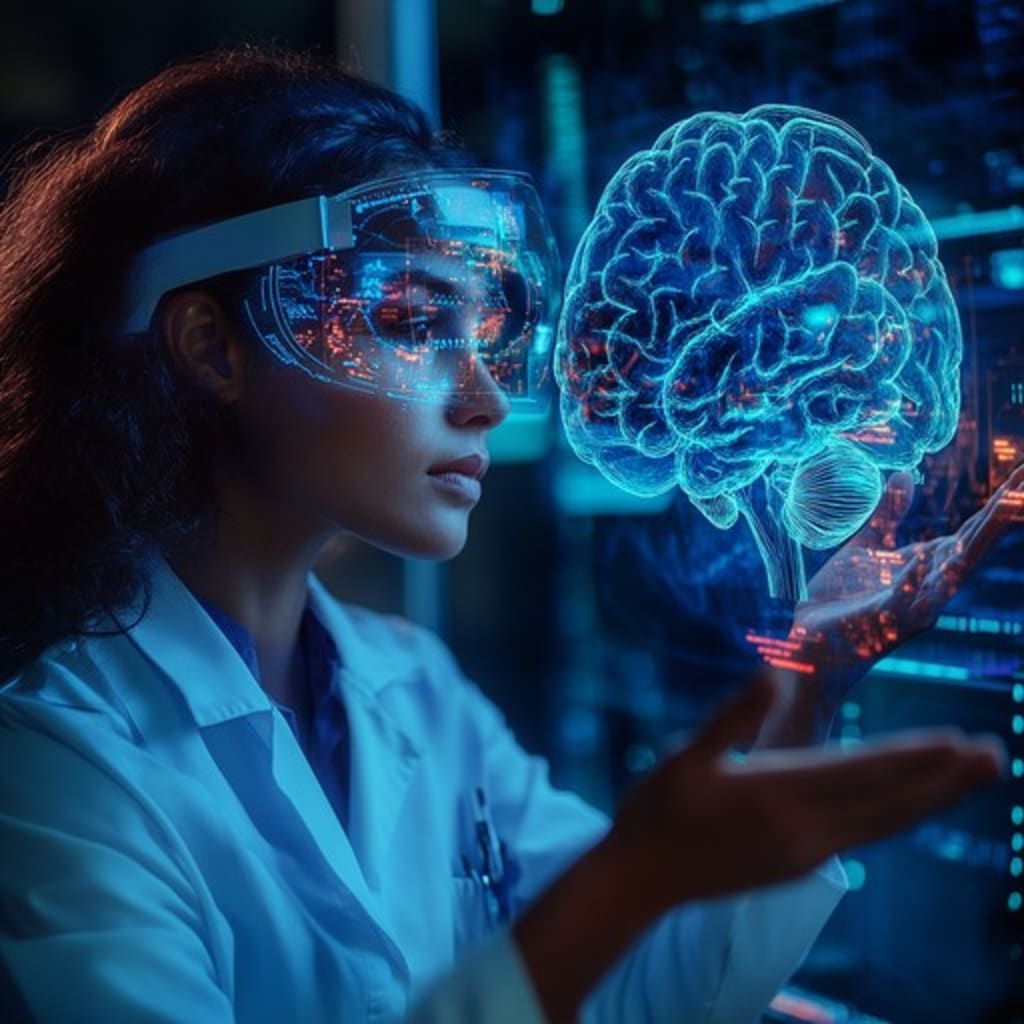
Mind-Control Tech Is No Longer Sci-Fi — Are We Ready to Control Devices With Our Thoughts?
Texting, painting, or playing games — without lifting a finger. Just thinking.
It’s not the future anymore. It’s already happening. Meet Brain-Computer Interfaces (BCIs).
We’re entering an era where the boundary between biology and technology is blurring fast. BCIs could be one of the most transformative innovations since the internet — but also one of the most ethically complex.
What Are BCIs, and How Do They Work?
BCIs are systems that allow the brain to directly communicate with external devices, bypassing the body’s natural physical movement. Whether you're imagining moving your hand or silently composing a sentence, your brain is generating electrical signals. These are picked up by sensors — either surgically implanted or worn externally — and interpreted by algorithms that translate thought into action.
The idea may sound futuristic, but the science is rooted in decades of neurological research. Neuroscientists have long studied how different areas of the brain are responsible for specific motor functions and cognitive tasks. With the right equipment, it's now possible to detect those neural signatures and use them to trigger digital responses in real time.
It’s Already Real — and It Works
In January 2024, Neuralink, Elon Musk’s neurotechnology company, announced the successful implantation of a wireless brain chip in a human subject. The recipient was able to control a computer cursor and play video games using nothing but their thoughts. That’s not science fiction — it’s verified clinical trial data.
Synchron, a lesser-known but rapidly rising competitor, developed the Stentrode, a device that can be implanted without invasive brain surgery. It’s inserted through blood vessels — much like a stent — and reaches the brain with far less risk. Patients with paralysis have already used the Stentrode to email, text, and browse online completely hands-free.
Meanwhile, Blackrock Neurotech, based in Utah, has worked with patients who have ALS or spinal injuries. Using their BCI tech, patients have gained some independence by controlling robotic arms, digital assistants, and even drones. These aren’t prototypes in labs — these are systems helping real people right now.
One impressive case involved a BCI user "typing" at nearly 90 words per minute just by imagining each word. That’s faster than many people can physically type on a phone.
What Could BCIs Mean for Everyday Life?
Now imagine this technology becoming mainstream — not just medical. BCIs could fundamentally change how we work, play, and live. Here’s what that might look like:
Hands-free communication: Forget swiping or typing. A simple thought could send a message, open an app, or control your home devices.
Gaming on another level: Reaction times would no longer be limited by hand-eye coordination. Competitive gaming might become an arena of pure mental focus.
Creative flow without limits: Artists, designers, and musicians could "think" their work into existence — skipping traditional tools entirely.
Massive productivity leaps: Imagine writing emails, generating code, or managing spreadsheets at the speed of thought.
Disability inclusion: People with mobility issues could regain autonomy. Tasks we take for granted — turning on lights, sending texts — would become possible again.
And that’s just the beginning. BCIs might be used in schools to help kids with learning differences, or in workplaces to boost output by syncing human cognition with AI-powered machines.
The Dark Side: Risks and Ethical Questions
For all the promise BCIs offer, there’s a growing chorus of concern. The closer our minds get to machines, the more questions arise.
Mental privacy: If machines can read your thoughts, who owns that data? Could it be sold to advertisers or used to manipulate behavior?
Security threats: Just like smartphones can be hacked, BCIs could be vulnerable too. Imagine someone gaining unauthorized access to your thoughts — or controlling your connected devices without your consent.
Workplace monitoring: Could employers use BCIs to track employee focus, mood, or even detect lies? What if job performance becomes linked to mental output?
Cognitive overload: Being always “plugged in” could cause burnout. If our thoughts are constantly tied to machines, when do we get to rest?
Digital inequality: These enhancements may only be available to the wealthy. Would that create a new form of inequality — a literal divide between brain-enhanced humans and the rest?
Already, some companies are floating the idea of “brain-data marketplaces,” where users can sell their thoughts and attention patterns. If your inner world becomes a product, what does that mean for your autonomy?
So, Are We Ready?
We stand at a crossroad where tech that was once the domain of sci-fi writers is becoming a commercial and clinical reality. The same way the internet redefined communication, BCIs may redefine what it means to be human.
But with great power comes deep responsibility — and serious questions. Just because we can control devices with our minds… should we? Who controls the controllers?
The race to develop better BCIs is accelerating. Governments, tech giants, and startups are investing billions. What we choose to do with this tech — and how we choose to regulate it — will shape the future for generations.
Would you let a machine read your mind?
Would you implant a chip to enhance your thinking, create faster, or control the world around you with nothing but thought?
Let’s talk about it.
Sources:
Reuters – Neuralink implants brain chip in human, Musk says
-https://www.reuters.com/technology/musks-neuralink-implants-brain-chip-human-2024-01-29/
Scientific American – A Less Invasive Brain-Computer Interface Could Help Paralyzed People Control Devices
-https://www.scientificamerican.com/article/a-less-invasive-brain-computer-interface-could-help-paralyzed-people-control-devices/
About the Creator
About Binding Prometheus
I want to start actively advocating on behalf of my own work, and the most valuable part of my canon is, without a doubt, Binding Prometheus, the play I have been working on since 2019 and only finished in 2023 as part of my MA. The play itself is an amalgamation of a million different inspirations. On one end, it evokes the Ancient Greek myth-play, deriving its own title from the earliest extant work of Western drama we have, Aeschylus’s Prometheus Bound. On the other end, it borrows significantly from the sci-fi bulwarks from over the years, namely Mary Shelley’s Frankenstein and Karel Capek’s Rossum’s Universal Robots. The play could be an episode of Black Mirror, I fear. I don’t know. I’ve only ever seen one episode of Black Mirror.
By Steven Christopher McKnight25 days ago in Futurism
Digital Identity Solutions Market: Secure Authentication Trends & Platform Innovation
According to IMARC Group's latest research publication, the global digital identity solutions market reached USD 43.76 Billion in 2024. Looking forward, IMARC Group expects the market to reach USD 214.2 Billion by 2033, exhibiting a growth rate (CAGR) of 17.70% during 2025-2033.
By Andrew Sullivan7 days ago in Futurism
📢 Raise Your Voice Thread: 01/22/2026
Our “Raise Your Voice Threads” are hosted most alternating Thursdays at 12PM ET to offer creators more avenues to uncover exceptional stories on Vocal. As we are continuously searching for fresh creators and inspiring stories, this thread provides an opportunity to exchange and discuss the stories that have moved and motivated us on Vocal.
By Raise Your Voice by Vocal3 days ago in Resources




Comments
There are no comments for this story
Be the first to respond and start the conversation.