
Longevity Research: How Life Beyond Earth Could Slow Down Aging
Space


For decades, the idea that living beyond Earth could extend the human lifespan sounded like pure science fiction. But today, researchers in biomedicine, space physiology, and astrobiology are beginning to uncover a surprising possibility: certain aspects of life in space may actually reveal how aging works — and how it might be slowed down.
As humanity prepares for long-term missions to the Moon, Mars, and orbital habitats, the concept of longevity becomes not only a medical challenge but also a practical requirement for survival. Future explorers will not merely need to endure space; they will need to remain healthy, adaptable, and biologically resilient for years at a time. This makes space one of the most promising environments for discovering new pathways to extend healthy human life.
Space as a Natural “Time-Laboratory”
On Earth, human biology is shaped by gravity, atmospheric pressure, and stable environmental conditions. In space, these factors change dramatically, creating what scientists sometimes call a “natural experiment” on the mechanisms of aging.
Long-term experiments aboard the International Space Station have revealed unexpected results. In several astronauts, researchers recorded temporary patterns that resemble slowed biological aging. For example, shifts in gene expression occurred in pathways linked to tissue repair and immune function, while enzymes called telomerases — responsible for maintaining chromosome ends — were found to be unusually active during missions.
These findings are complex: spaceflight also triggers harmful stressors such as radiation exposure and sleep disruption. Yet within this stressful environment, some biological functions seem to go into a unique mode that scientists believe may hold keys to longevity.
Microgravity and Cellular Rejuvenation
One of the most intriguing areas of research is microgravity. The absence of normal gravitational forces changes how cells behave at nearly every level:
Mitochondrial efficiency increases
Mitochondria — the cellular “engines” tied closely to aging — sometimes produce energy more efficiently under microgravity, reducing metabolic waste that normally contributes to cellular aging.
Cardiovascular load decreases
Without Earth’s gravity, the heart and blood vessels experience far less physical strain. This gives scientists the opportunity to study how tissues regenerate when mechanical stress is minimized.
Stem cells become more active
Several experiments show that stem cells in microgravity may divide and differentiate more rapidly, opening questions about how microgravity could influence tissue regeneration therapies on Earth.
These biological shifts do not mean astronauts age more slowly overall — but they reveal processes that could inspire future anti-aging treatments.
Radiation: A Threat That Teaches Protection
Space is filled with radiation levels far higher than those on Earth. In theory, this should accelerate aging by damaging DNA. Surprisingly, however, astronauts’ bodies activate powerful defense systems in response. These include:
- intensified antioxidant activity,
- accelerated DNA repair,
- enhanced resilience of cell membranes.
Scientists are now exploring whether these protective responses can be triggered artificially on Earth. This may lead to new classes of pharmaceuticals, gene therapies, or biomaterials specifically designed to mimic the “cosmic stress response.”
The “Cosmic Metabolic Switch” Hypothesis
Some researchers propose that living outside Earth may activate what they call a “cosmic metabolic switch” — a deep survival mode in the human body. This mode resembles the biological changes produced by calorie restriction or intermittent fasting, both of which are associated with increased longevity.
In space, metabolism adapts to conserve resources and operate with extreme efficiency. This often includes:
- lower baseline inflammation,
- a higher proportion of healthy, functional cells,
- intensified autophagy (a cellular cleaning process linked to longevity).
In practical terms, microgravity forces the body to rewrite its metabolic rules — and studying this adaptation could lead to therapies that slow aging on Earth.
Lunar Bases and Martian Settlements as Drivers of Innovation
As humanity prepares for extended missions to the Moon and Mars, new biomedical technologies are being designed to ensure that long-term life in space is sustainable. Several of these innovations could redefine longevity research for decades:
1. Genetic engineering for radiation resistance
Inspired by extremophile organisms like Deinococcus radiodurans, scientists are exploring gene edits that strengthen DNA repair processes.
2. Space-grade bioregulators
Next-generation peptide complexes could stabilize telomeres and maintain cellular structures affected by stress.
3. Nanomaterials for rapid tissue repair
Engineered nanoparticles may support faster healing in environments where medical infrastructure is limited.
4. Personal bio-shield suits
These wearable systems would monitor physiology in real time, regulate pressure and temperature, maintain muscle tone, and prevent degradation associated with microgravity.
These technologies are still experimental, but they demonstrate how closely the future of space travel intersects with the future of human longevity.
Could Living Beyond Earth Truly Extend Lifespan?
Scientists remain cautious: we cannot yet claim that space prolongs human life. What we can say is that space provides a unique lens for understanding aging. It accelerates certain stresses while activating powerful survival mechanisms that Earth rarely triggers.
Within the next few decades, breakthroughs from cosmic biomedicine may lead to practical solutions for slowing aging — from advanced pharmaceuticals to genetic optimization and engineered cellular repair systems.
Space as the Frontier of Human Longevity
Life beyond Earth is more than an engineering challenge — it is a biological revolution in the making. Lunar habitats, Martian settlements, and orbital research stations may become the very places where humanity first learns to control aging in a meaningful way.
Today, space seems harsh and unforgiving. But tomorrow, it may provide the knowledge that allows us to maintain youth longer, stay healthier, and live far beyond the limits once considered possible.
About the Creator
Keep reading
More stories from Holianyk Ihor and writers in Futurism and other communities.
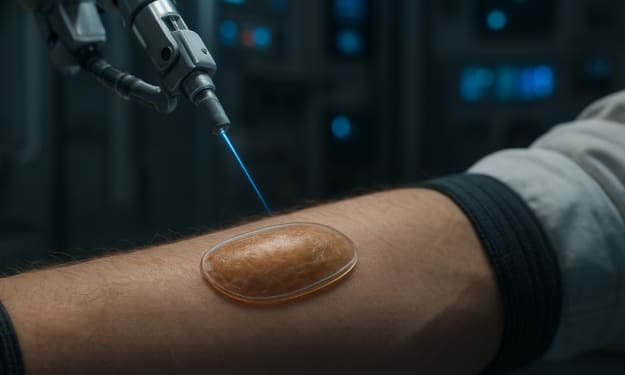
New Frontiers in Space Radiation Protection: Tissue Implants and Genetic Modifications
As humanity pushes further into deep space—toward permanent lunar bases, multi-year missions to Mars, and eventually interplanetary travel—one invisible threat becomes increasingly central to mission planning: radiation. Not the background radiation we face on Earth, but intense fluxes of charged particles, galactic cosmic rays, and unpredictable solar storms. Over long durations, these particles damage DNA, increase cancer risk, disrupt neurological function, and weaken cardiovascular health. Traditional shielding has reached its limits, and this has driven scientists to explore a surprisingly promising direction: biological protection from the inside out.
By Holianyk Ihorabout a month ago in Futurism
About Binding Prometheus
I want to start actively advocating on behalf of my own work, and the most valuable part of my canon is, without a doubt, Binding Prometheus, the play I have been working on since 2019 and only finished in 2023 as part of my MA. The play itself is an amalgamation of a million different inspirations. On one end, it evokes the Ancient Greek myth-play, deriving its own title from the earliest extant work of Western drama we have, Aeschylus’s Prometheus Bound. On the other end, it borrows significantly from the sci-fi bulwarks from over the years, namely Mary Shelley’s Frankenstein and Karel Capek’s Rossum’s Universal Robots. The play could be an episode of Black Mirror, I fear. I don’t know. I’ve only ever seen one episode of Black Mirror.
By Steven Christopher McKnight14 days ago in Futurism
UAE Animal Feed Market: Livestock Expansion, Feed Innovation & Growth Outlook
According to IMARC Group's latest research publication, UAE Animal Feed Market size reached USD 2,644.68 Million in 2024. The market is projected to reach USD 3,376.05 Million by 2033, exhibiting a growth rate (CAGR) of 2.75% during 2025-2033.
By Abhay Rajputabout 8 hours ago in Futurism


Comments
There are no comments for this story
Be the first to respond and start the conversation.