
Life Support Systems with Zero Energy: Sci-Fi Dream or Future Survival Tech?
Space

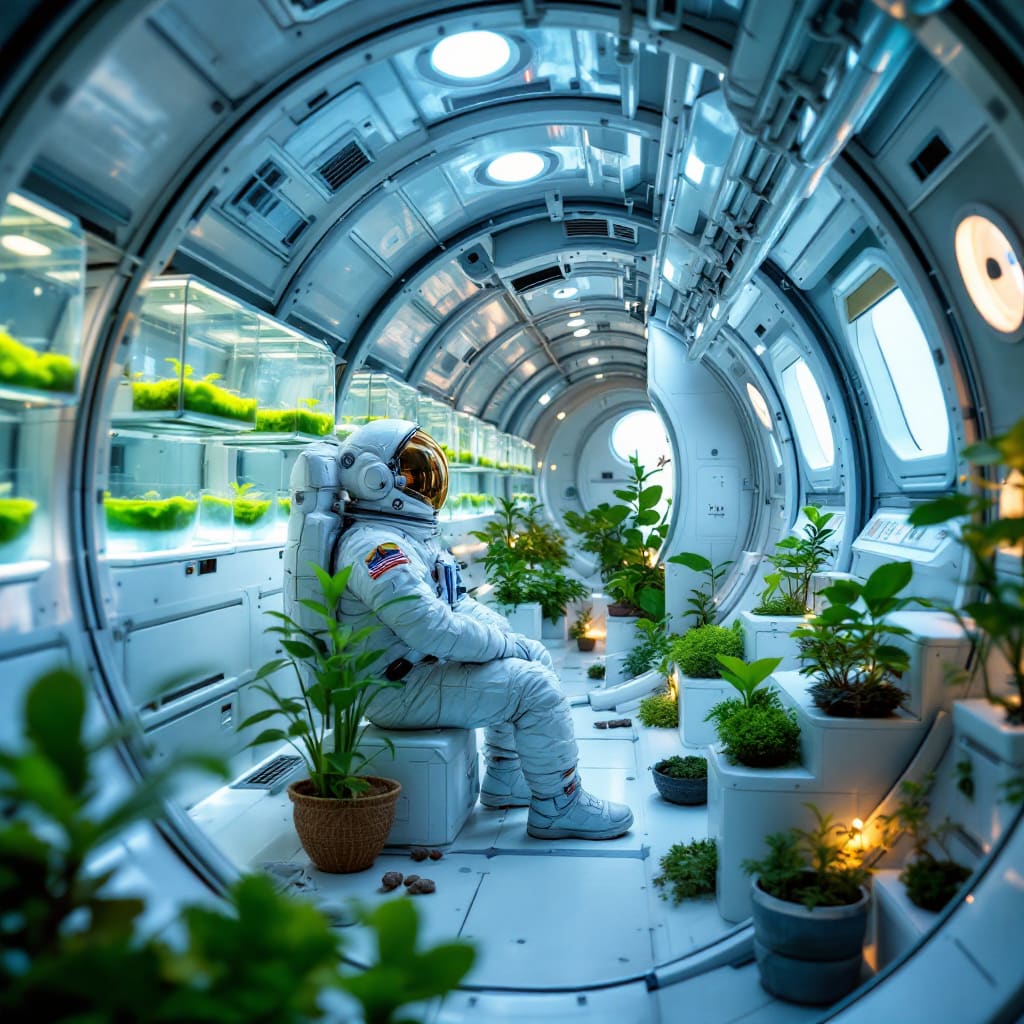
In space, energy is more than just a necessitynit’s a currency of survival. Without it, there’s no propulsion, no communication, and most critically, no way to sustain human life. But what happens if energy runs out completely? Imagine a spacecraft hit by a solar storm, its solar panels fried, its batteries drained. How can a crew survive without power? Surprisingly, scientists are exploring life support systems that could function with zero external energy. Let’s dive into this bold concept that straddles the line between science fiction and near-future innovation.
Why Zero Energy Systems Matter
In deep space, failure is not just possible it’s inevitable. Solar arrays can be damaged by micrometeoroids or disabled by solar flares. Batteries degrade over time. When the energy stops flowing, survival depends on what remains. A zero energy life support system isn’t just a cool idea it might one day save lives in long duration missions to Mars or beyond.
In emergency scenarios, every breath counts. Traditional life support systems consume energy to manage oxygen levels, remove carbon dioxide, regulate temperature, process water, and dispose of waste. Without power, all of these functions are compromised unless they can be redesigned to operate passively or regeneratively.
What Does a Life Support System Actually Do?
At its core, a life support system (LSS) manages five critical functions:
- Oxygen supply
- Carbon dioxide removal
- Temperature and humidity regulation
- Water recycling and purification
- Waste management
Each function typically requires active, energy-consuming systems. But with clever engineering and biological help, some of these can operate without electricity.
The Power of Nature: Bioregenerative Technologies
One of the most promising paths to low or zero energy life support lies in bioregenerative systems closed loop ecosystems where biology does the heavy lifting. These systems use:
- Microalgae like Chlorella to produce oxygen and absorb carbon dioxide through photosynthesis.
- Plants to provide both food and air exchange.
- Bacteria to break down organic waste into usable compounds.
These natural systems can function with minimal light possibly even the faint glow of emergency chemiluminescent capsules that can shine for several days. Imagine a tiny ecosystem glowing in the dark, quietly breathing life into a sealed module.
Thermal Mass and Passive Climate Control
Temperature control is another challenge when there's no power. But nature again offers solutions.
- Thick walls filled with water or wax like materials can store heat during daylight hours and release it slowly during cold periods.
- Passive insulation layers combined with radiative heat exchangers can maintain a habitable internal environment using only the laws of thermodynamics no electric heaters or chillers required.
This method echoes techniques used for centuries in Earth’s deserts, now being adapted for the silence of space.
Airflow Without Fans: Gravity and Design
Air circulation is essential to prevent CO₂ buildup. But even this can be achieved without powered fans. Dome-shaped modules can exploit natural convection warm air rises, cool air sinks creating a gentle airflow driven by temperature differences. Smart architecture, rather than smart tech, does the work.
Water: The Silent Hero
Water is more than just hydration. In a zero energy setup, it becomes a multifunctional tool:
- It can evaporate and condense in sealed systems to circulate and purify without pumps.
- Hygroscopic materials can absorb moisture from the air and release it later, helping to regulate humidity.
- With clever containment and cycling, water becomes its own machine constantly renewing itself without power.
Waste Isn’t Useless It’s Fuel
Human waste can be more than just a disposal problem. In anaerobic bioreactors, bacteria break down organic material in oxygen free environments, producing methane as a byproduct. This gas can:
- Be used in low-flame combustion for light or warmth
- Feed into gas-exchange cycles with microalgae for oxygen production
- In a closed loop, waste becomes resource, not liability.
- The Zero Energy Survival Capsule
Let’s imagine a real-world application of all this theory a zero energy survival module, designed to keep an astronaut alive for 72 hours after total power loss:
- Walls lined with water-filled compartments for thermal control
- Glow-in-the-dark organic panels providing minimal light
- Algae reservoirs maintaining breathable air
- Passive airflow built into the structure
- Biological filters and moisture-absorbing fabrics
- Fast-growing plants like radish, cress, and moss for micro-harvest and CO₂ absorption
In essence, it’s a space lifeboat—an eco-capsule where nature becomes both shelter and life support.
Nature + Technology = Resilience
Creating zero energy life support is more than a technical challenge it’s a philosophical shift. It means embracing biomimicry, regenerative design, and ecological balance as the future of space survival. As we dream of Moon bases and Mars colonies, we must ask: how do we build systems that breathe, adapt, and sustain without being plugged into a socket?
Mastering this balance will be essential not only for astronauts, but also for future Earth applications in disaster zones, submarines, and remote habitats.
In the end, life doesn't always need electricity. Sometimes, it just needs light, warmth, water and the quiet genius of biology. A candle can still burn in the dark, if we learn to light it with the breath of living systems.
About the Creator
Keep reading
More stories from Holianyk Ihor and writers in Futurism and other communities.
Catching Light from the Edge of Time: How Photons from Distant Quasars Reveal the Universe’s Secrets
Somewhere on the edge of the observable universe billions of light-years away ancient giants still burn brightly. These are quasars: dazzling, hyperactive galactic cores powered by supermassive black holes devouring surrounding matter. Though impossibly far, the light they emit or more precisely, the photons travels across space for over 10 billion years, eventually reaching us. Each photon is like a cosmic message in a bottle, whispering secrets about the early universe and everything the light passed through on its epic journey.
By Holianyk Ihor6 months ago in Futurism
About Binding Prometheus
I want to start actively advocating on behalf of my own work, and the most valuable part of my canon is, without a doubt, Binding Prometheus, the play I have been working on since 2019 and only finished in 2023 as part of my MA. The play itself is an amalgamation of a million different inspirations. On one end, it evokes the Ancient Greek myth-play, deriving its own title from the earliest extant work of Western drama we have, Aeschylus’s Prometheus Bound. On the other end, it borrows significantly from the sci-fi bulwarks from over the years, namely Mary Shelley’s Frankenstein and Karel Capek’s Rossum’s Universal Robots. The play could be an episode of Black Mirror, I fear. I don’t know. I’ve only ever seen one episode of Black Mirror.
By Steven Christopher McKnight15 days ago in Futurism
Anti-Jamming Market Outlook: Strengthening Secure Communications Across Critical Sectors
Anti-Jamming Market Overview The global anti-jamming market is becoming increasingly critical as satellite-based navigation and communication systems face growing threats from intentional interference, signal spoofing, and electronic warfare. Anti-jamming solutions protect GPS and GNSS signals to ensure accuracy, reliability, and operational continuity across defense, aerospace, aviation, maritime, and critical infrastructure applications. Rising dependence on precision navigation, autonomous platforms, and secure communication networks is accelerating the adoption of advanced anti-jamming technologies. As governments and commercial operators prioritize resilience and security, the market is poised for sustained growth worldwide.
By James Smith3 days ago in Futurism



Comments
There are no comments for this story
Be the first to respond and start the conversation.