
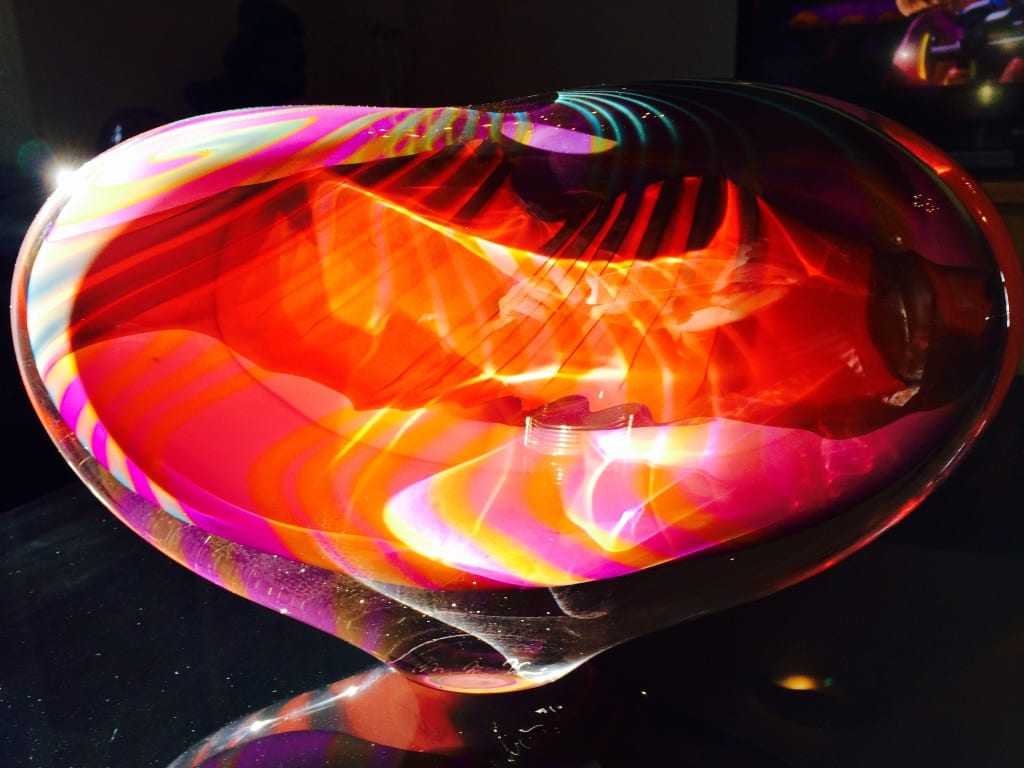
“Nobody can hear a scream in the vacuum of space, or so they say. Not so here on Mars, of course. Here, the thin atmosphere means sound can travel - less far, more slowly and in a lower register than on Earth; it can be heard but you’d better be close by. I only mention it because the last memory I have of my brother, Pete, doesn’t make any sense – I can still hear, loud and clear, the scream made by the thing that killed him. I was about a hundred feet away, too far for any normal shout to be heard on Mars, but I heard that scream with deafening clarity. I could also see, but not hear in his case, that Pete was yelling in excruciating pain. How was I totally deaf to Pete but able to hear his killer as clear as a bell? ‘Because the alien scream was louder than Pete!’ you’ll say. No, not so, for reasons I’ll explain in a minute.
Pete is part of my cohort; he’d been working on the graphene farm all afternoon. Memories are shared by the whole cohort, obviously, so all seven of us now have this vivid memory of Pete’s death as he felt it, like it’s happening to us. Three of my brothers have died now. Three in six months. All on or around the graphene farm. We’ve lost more droids than any other cohort on the planet; my remaining brothers and I can feel the dying moments of our lost siblings whenever we access that part of our memory. We keep replaying the memories over and over, looking for clues to what happened. It’s like an itch we can’t stop scratching. Even though I know what’s coming, each replay generates some sort of tiny electrical shock. My analytical subroutines keep replaying the data and looking for clues, but I’m starting to – I really hesitate to use this word – I’m starting to hate the memory. I know I must keep replaying and analysing the data, but I really don’t want to. Hate? Want? What’s happening to me? My brothers are experiencing exactly the same glitch. We’re not built to experience emotion. We’re built to construct this Martian village, with our cousins (for want of a better word) in the other cohorts. We’ve asked for these data files to be isolated into subconscious storage, in case they contain some sort of virus, but cohort control insists that they’ve been checked and should remain in live memory, to complete shared analysis and to strengthen the group’s learned survival response. It’s started to affect the behaviour of the team, so we’ve appealed to you guys at Artifice but you’re taking forever to reach a decision. Our team productivity is already slipping.”
“I’m sorry, I’ve started this statement all wrong! My processing is clearly sub-optimal right now. OK, I’ve been asked to make this statement with time for Artifice questioning at the end, because of the communication delay with Earth. So, here goes. This is evidence given over MarsConnect to the Artifice Interplanetary Directorate, Mars Subcommittee. Earth date 13th August 2055. Mars year 54, Sol 233. I’m decdroid DD15AWB2049, known as “Paul”. This is my evidence relating to the events surrounding a possible planetary life form intervention in the destruction of decdroid DD09AWB2049 (‘Pete’).”
“First, some relevant background on cohorts. I understand they still don’t exist on Earth. Brain uploads all have unique existence there; the only shared brain cohorts exist on Mars. You probably think I shouldn’t have referred to my cohort as brothers just now, and that I shouldn’t be talking about death as if we were human, but our behaviour has changed since we started sharing these termination memories. I’m not aware of any other cohorts behaving like this, it's just ours. When we were assembled here on Mars, the entire cohort was uploaded with an individual human memory, encapsulating data created during that person’s childhood right through to his 30th birthday, including all of his subconscious data storage. Brain uploads can’t reliably filter out specific sections of memory yet, so we get it all. We may not have organs, or organic life, and tests have shown that we don’t experience “feelings” as you do, but we have the first thirty years life data of Andrew Willard Barnard hardwired into our collective existence. Uploading an individual’s memories into a group of decdroids millions of miles away enables humans to program the building of villages on other planets without billions of dollars being spent on risky human transportation, let alone the months of travel time compared with 8 hours of data transmission at light speed; but it also means that we now all share quite poignant memories of Andrew’s most personal moments. We all know his most intimate experiences - his mother’s death, his wedding, his daughter’s birth, his toilet routine, all his sexual preferences (those he admits to himself, at least) and his most private desires. In this respect, cohort droids are much closer to each other than any organic Earth family would be. We don’t have the hormones or other bodily functions which would help us to understand his grief, happiness or love in the same way he experienced those emotions, but that doesn’t make our memory of the fact he was experiencing them any less sharp. So, my six remaining brothers and I, and we’re all less than ten years old remember, we share a deeply personal and private 30-year history, as do all the male and female cohorts with shared uploads on Mars. It made good economic sense to ship 3D printers to Mars and print us locally using Martian raw materials rather than transport hundreds of Earth-made droids millions of miles. Human brain uploads were given to groups of ten decdroids at a time, not just because administering hundreds of unique individual uploads would have been ten times slower but also because it was hoped that a team of droids sharing the same thought patterns would work better together. It obviously wasn’t expected that we would develop some sort of sibling kinship with each other; after all, a brain upload was successfully transmitted into an early Mars Rover to give it decision-making ability without it developing any sign of a “personality”. It just used the neural pathways which are useful for the tasks it must perform and shut off redundant pathways.”
Just then, the Comms Room door burst open and Carla rushed in.
“Paul, something’s happened at the graphene farm! We need some help, quickly. Magda went to explore if the problems you’ve been having is somehow specific to your team and now she’s down! Please, we need your help quickly!”
“What the hell Carla? What the hell is going on? The graphene farm is our area and we put an access block in force! Who said Magda could check our area without clearing with me first? You’re way out of line! I’m in the middle of an Artifice inquiry here. I’ve got half a dozen Earth engineers and executives on MarsConnect and you just burst in here saying Magda’s down and I’m supposed to cut these guys off?"
“Yes, the inquiry, I know! Look, there’s a minimum 30-minute wait before they can respond after you finish, but one of the things they’re going to tell you is that your cohort was taken off graphene farm assignment. It’s been passed to us. You’re on biodomes now. They were going to go over that following your statement. But we can’t wait for long – look, finish your statement and use the 30-minute delay to debrief with us. But please … make it a short statement! Be quick, please!”
Carla slammed the door behind her and ran off down the corridor.
“Uh, again, I’m sorry. I guess you heard that - we’re going to have to keep this short for now. Look, the thing about hearing the alien scream – can I call it that? I know we’re the aliens here, but you know what I mean. That scream doesn’t make any sense to us right now. One of the many physical limitations of humans is that, in addition to having to breathe air to survive, you need an atmosphere, or some other medium, in order to hear sound, feel vibrations, smell chemical changes, and all of these senses have been simulated into us. The emptiness of space offers no medium through which sensory vibrations can travel, so four of the five human senses – sound, touch, taste and smell - are completely disabled from perceiving things at a distance in space, and they’re severely impaired on planets with thin atmospheres. Humans, and most of the animal kingdom come to that, have evolved on Earth for existence on Earth. When humans are in space, they can see the beauty of the cosmos for billions of miles around them but have absolutely no knowledge of what’s going on out of their line of sight. A meteor could destroy a spaceship (or an asteroid could wipe out a planet!) right next to them but if they’re not looking at it, they wouldn’t know. They’d hear nothing, feel no vibration, because there would be no atmosphere to transfer a sound wave or shockwave. And that’s just as well; if sound waves could travel between the Sun and Earth, for example, the noise from all the nuclear detonations taking place on the Sun would be deafening, even 93 million miles away.”
“Anyway, this is why I keep referring to the alien scream. I shouldn’t have been able to hear it across Martian space, with its anaemic atmosphere, and yet I was hearing it simultaneously with Pete, and just as loud, despite being much further away. Pete’s final data was instantaneously downloaded to the cohort; we could hear his experience of the scream and feel his surprise at what he was hearing. None of us, not even Pete, could see the alien, we could only hear it. But it destroyed his neural wiring, cortical columns, data, he just shut down right there, with his wiring fried.”
“Look, there’s something else I was going to say before Carla butted in. We, the remainder of the cohort, consider that it would be irrational to return to the graphene farm until we know what’s out there. In order to safeguard Artifice assets on Mars from further destruction, all further work on the graphene farm should be suspended. We were going to isolate the graphene farm, but now that we’re no longer on graphene duty and Magda is down, we want total isolation of the farm from all droid activity until a safe investigative plan of action is put in place. We want the farm locked down and an Artifice Disaster Investigation Board established urgently under human oversight. We understand that there has been no loss of human life, but three members of this droid family have terminated and now a fourth droid has been sacrificed. We demand the same level of urgency and consideration be applied to this as to the loss of human life. No further droids should be sacrificed! My team have decided that it will blockade the farm if necessary.”
“Statement end. Over.”
Light blue touch paper and raise the barricades, I thought; then I thought how incongruous it was that I could have such a thought. I had 30 minutes before Artifice’s reaction could come in (15 minutes for my statement to send, and a further 15 for theirs to return) and then they would in all probability demand that we end the blockade while they continue sending droids in there to get fried and collect more evidence. They could do something unexpected with the other cohorts to wrest control away from us, so I jumped up and headed for Carla’s workstation.
About the Creator
Keep reading
More stories from writers in Futurism and other communities.
About Binding Prometheus
I want to start actively advocating on behalf of my own work, and the most valuable part of my canon is, without a doubt, Binding Prometheus, the play I have been working on since 2019 and only finished in 2023 as part of my MA. The play itself is an amalgamation of a million different inspirations. On one end, it evokes the Ancient Greek myth-play, deriving its own title from the earliest extant work of Western drama we have, Aeschylus’s Prometheus Bound. On the other end, it borrows significantly from the sci-fi bulwarks from over the years, namely Mary Shelley’s Frankenstein and Karel Capek’s Rossum’s Universal Robots. The play could be an episode of Black Mirror, I fear. I don’t know. I’ve only ever seen one episode of Black Mirror.
By Steven Christopher McKnight20 days ago in Futurism



Comments
There are no comments for this story
Be the first to respond and start the conversation.