
Joe Biden's European Tour Repairing Ties or courting Allies?
no

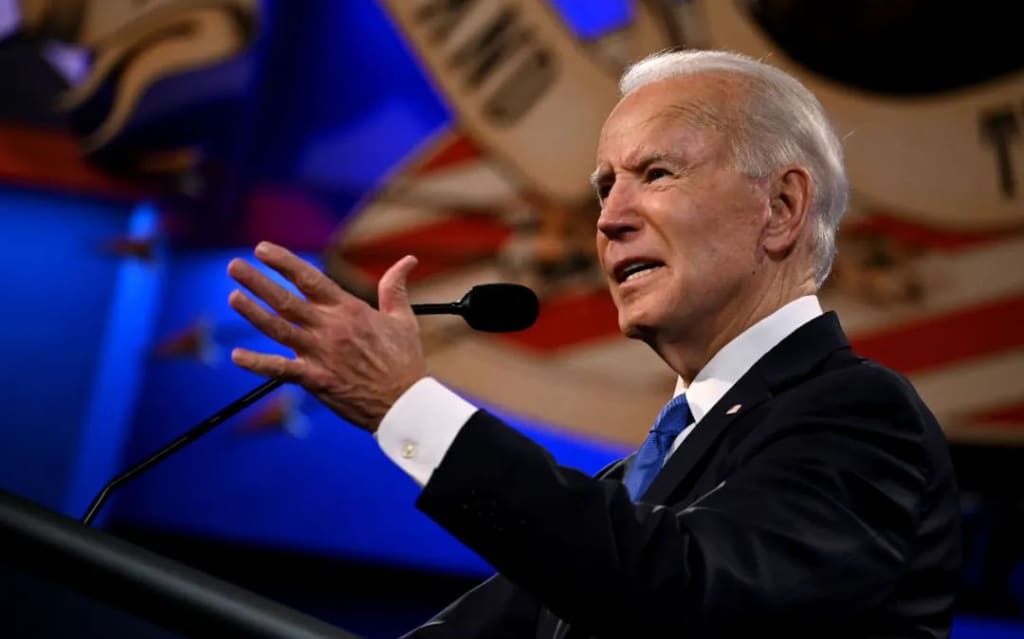
U.S. President Joe Biden arrived at Britain's Royal Air Force Mildenhall on June 9 for his first trip to Europe since taking office. Biden's trip will take him to the Group of Seven (G7) summit, the NATO summit and the US-EU summit, as well as a meeting with Russian President Vladimir Putin. This is Biden's first visit to Europe since leaving office in 2016.
What is the main purpose of Biden's visit? It is widely believed that Biden's visit is aimed at repairing the US-European relations that have been badly damaged in the past four years. Under former President Trump's administration, the United States withdrew from the Paris Agreement and the Comprehensive Agreement on the Iranian nuclear issue, pressured European Allies to increase military spending, and imposed tariffs on EU steel and aluminum products, a series of actions that intensified conflicts between the two sides in political, economic and security fields. After the Biden administration came to power, it has been emphasizing the importance of Allies, reaffirming the security commitment to Allies, and extending olive branches to Europe in many areas, trying to improve the low US-European relations.
However, the "broken heart" of Europe is suspicious of the United States, "broken mirror" is not easy. On the one hand, Europe lacks confidence in the political stability and reliability of the United States. The New York Times pointed out in a report on the 9th that despite Biden's efforts to promote the "return of the United States", European leaders are unable to determine the direction of the United States, they are paying close attention to the fierce political debate in the United States, and note that Trump's control of the United States Republican Party has not weakened. Barry Pavel, director of the Scowcroft Center for Strategy and Security at the Atlantic Council, said that European countries know the current state of the Republican Party in the United States and witnessed the riots on Capitol Hill in January this year, and they do not know what kind of president the United States will elect in 2024. "A lot of Europeans will be very cautious when it comes to renewing the transatlantic relationship." Julian Miller-Kahler, a researcher at the German Council on Foreign Relations.
On the other hand, Europe is wary of US interests and strategic intentions. According to a recent poll jointly released by the Bertelsmann Foundation and the German Marshall Fund, the US reputation as a "global leader" has suffered in Europe because of the US government's previous response to the epidemic, and there has been no rebound since Biden took office. The "Biden effect" that some expected did not materialize. In addition to the crisis of trust, the United States and Europe also have substantive differences in trade and major country relations, and it is not easy to solve these "troubles". Over the past few years, the United States has imposed steel and aluminum tariffs on the European Union and some other countries on the grounds of national security, while European countries have imposed digital services taxes on some American technology giants, and the two sides have been in dispute. According to some US media reports, the leaders of the United States and the European Union hope to end the trade disputes, including the dispute over aviation subsidies, the United States imposed steel and aluminum tariffs and the EU's countermeasures, at a meeting next week in Brussels, Belgium. However, whether the two sides can achieve a breakthrough at the negotiating table remains uncertain.
Analysts believe that the United States is trying to woo Allies to jointly suppress countries such as Russia and China, but it has not caused a "resonance" in Europe. The world needs multilateral cooperation on issues such as the COVID-19 pandemic, climate change and arms control, according to an annual security report released by the organizers of the Munich Security Conference on Monday. Western countries and countries such as Russia and China should not abandon cooperation in competition, and cooperation should not abandon competition. A senior EU diplomat told the media that "the reality is that we are not 100 percent united with the United States."
To sum up, Biden's European trip, while expressing a willingness to repair relations, still has many obstacles and challenges to actually achieve that goal. Europe is no longer the focus of US foreign strategy, but a variable. There needs to be a more equal, respectful and pragmatic partnership between the US and Europe, rather than a simple return to the patterns of the past.
About the Creator
Keep reading
More stories from Williams review and writers in Futurism and other communities.
Trump faces federal criminal charges for "secret gate" case, becoming the first former president in US history to be treated this way
After leaving the White House, former US President Donald Trump was accused of illegally keeping thousands of classified documents and trying to prevent the government from getting them back. It is the second time in three months that he has faced criminal charges, and the first time in U.S. history that a former president has been indicted on federal criminal charges. This incident triggered widespread concern and controversy in the US society, and also made Trump's political future once again in trouble.
By Williams review3 years ago in Criminal
About Binding Prometheus
I want to start actively advocating on behalf of my own work, and the most valuable part of my canon is, without a doubt, Binding Prometheus, the play I have been working on since 2019 and only finished in 2023 as part of my MA. The play itself is an amalgamation of a million different inspirations. On one end, it evokes the Ancient Greek myth-play, deriving its own title from the earliest extant work of Western drama we have, Aeschylus’s Prometheus Bound. On the other end, it borrows significantly from the sci-fi bulwarks from over the years, namely Mary Shelley’s Frankenstein and Karel Capek’s Rossum’s Universal Robots. The play could be an episode of Black Mirror, I fear. I don’t know. I’ve only ever seen one episode of Black Mirror.
By Steven Christopher McKnight19 days ago in Futurism
Window Sensor Market Size and Forecast 2025–2033
Introduction: A Market Opening to New Possibilities The global Window Sensor Market is entering a transformative phase as intelligent security and building automation reshape residential, commercial, and industrial environments. According to Renub Research, the market is expected to grow from US$ 12.98 billion in 2024 to US$ 24.78 billion by 2033, registering a strong CAGR of 7.45% from 2025 to 2033. This robust growth is driven by rising adoption of smart home security systems, rapid improvements in Internet of Things (IoT) connectivity, accelerating urbanization, and the increasing use of wireless technologies that enhance automation, safety, and energy efficiency.
By jaiklin Fanandish7 days ago in Futurism
Wild Card Weekend Recap: What Happens Now?
I think I figured out why I love Wild Card Weekend so much. It's because it's the first playoff anything of the calendar year. The NFL season starts in the fall, and once upon a time, the champion was crowned either on or slightly before New Year's. The evolution of the NFL schedule has resulted in the playoffs starting just into the New Year, and currently, the final week of the season falls on the first weekend of the New Year, with Wild Card Weekend coming a week after that. So yes, chronologically, the NFL's Wild Card Weekend serves as the first playoff anything of the calendar year.
By Clyde E. Dawkins7 days ago in Unbalanced



Comments
There are no comments for this story
Be the first to respond and start the conversation.