
JF-17 Thunder: How Pakistan’s Fighter Jet is Redefining Air Power
A closer look at the cost-effective, combat-ready aircraft that’s turning heads across the global defense industry.

Introduction
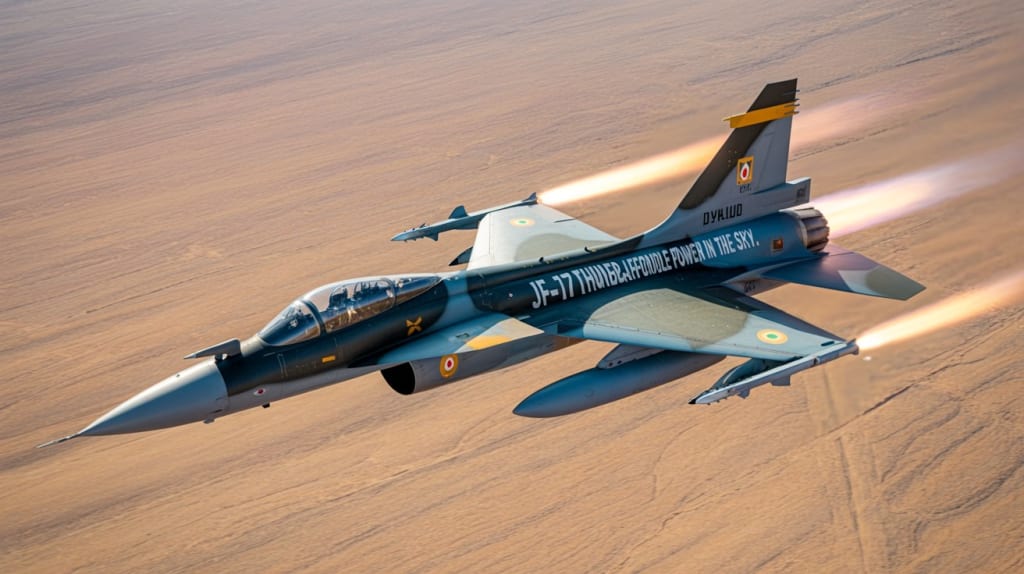
In the world of modern fighter jets, names like F-16, Rafale, and MiG-29 often take center stage. But over the past decade, another name has been making quiet waves — the JF-17 Thunder. Developed jointly by Pakistan and China, this multirole fighter jet is not only a symbol of modern military collaboration but also a bold step toward self-reliance for Pakistan’s defense industry.
In this article, we explore what makes the JF-17 Thunder unique, how it compares with other aircraft, and why it's becoming a popular choice for countries looking for affordable air power.
What is the JF-17 Thunder?
The JF-17 Thunder, also known as “Joint Fighter-17”, is a fourth-generation, lightweight, multirole combat aircraft. It was co-developed by Pakistan Aeronautical Complex (PAC) and China’s Chengdu Aircraft Corporation (CAC). The goal? To create a reliable, cost-effective fighter jet that can handle both air-to-air and air-to-ground missio
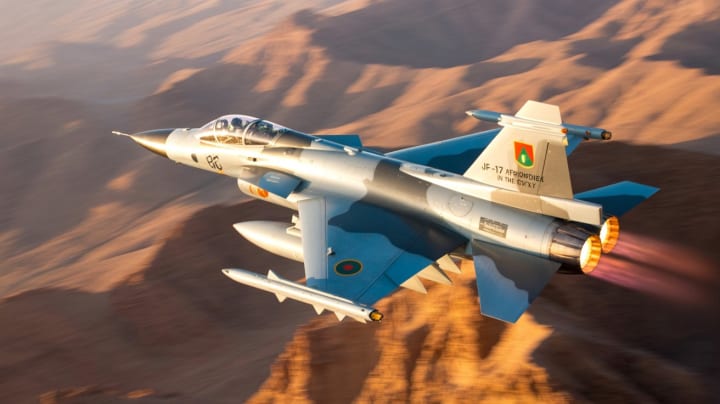
The aircraft made its first flight in 2003 anJF-17 Thunder?d entered service with the Pakistan Air Force (PAF) in 2007. Since then, it has gone through several upgrades, leading to the development of the JF-17 Block II and the more advanced JF-17 Block III.
Key Features of the JF-17 Thunder
1. Multirole Capabilities
The JF-17 is designed to perform a variety of tasks, including:
Interception
Ground attack
Aerial reconnaissance
Maritime strike missions
This flexibility makes it ideal for countries with limited defense budgets but diverse military needs.
2. Modern Avionics
The latest version, Block III, comes with an Active Electronically Scanned Array (AESA) radar, which allows better tracking and targeting. It also includes a Helmet Mounted Display (HMD) and improved electronic warfare systems.
3. Affordable Cost
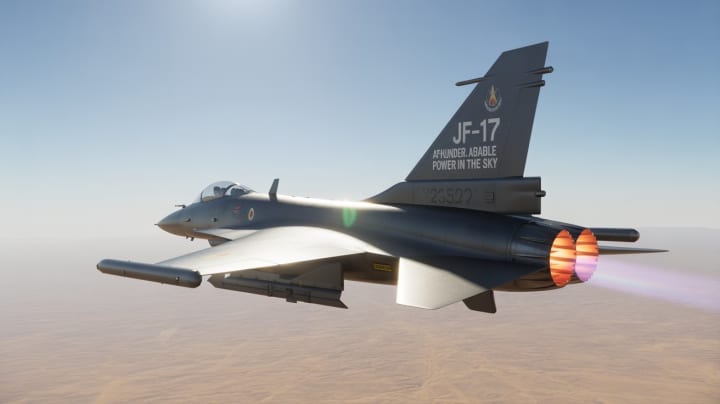
One of the biggest advantages of the JF-17 is its cost. While Western fighter jets can cost $60–100 million each, the JF-17 comes in at around $25–30 million per unit — making it attractive for countries looking for a budget-friendly option.
4. Weapon Variety
The JF-17 can carry a wide range of weapons, including:
Air-to-air missiles (like the PL-5 and PL-15)
Air-to-surface missiles
Laser-guided bombs
Anti-ship missiles
This makes it a true multirole fighter, capable of dealing with multiple threats.
Global Interest and Export Success
Pakistan has not only deployed the JF-17 in its own air force but has also begun exporting it. So far, countries like Myanmar and Nigeria have purchased the aircraft, with interest shown by several nations in Africa, Asia, and the Middle East.
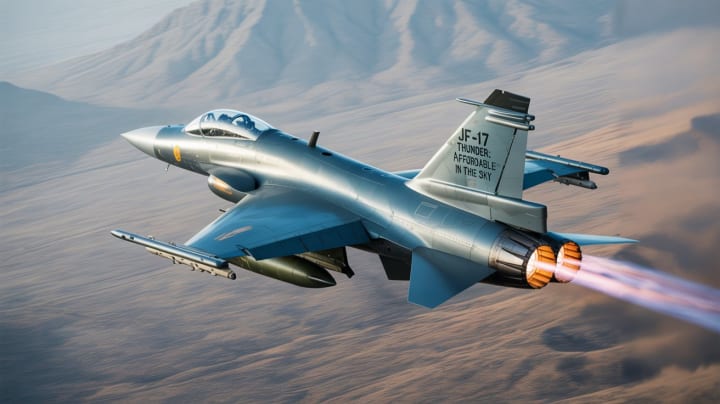
The jet is seen as a game-changer for developing nations that cannot afford top-tier Western aircraft but still want credible air defense.
Comparison with Other Fighter Jets
Jet Country Estimated Cost Generation Radar Type
JF-17 Thunder Pakistan/China $25–30 million 4th Gen AESA (Block III)
F-16 Fighting Falcon USA $60–70 million 4th Gen AESA
MiG-29 Russia $40–50 million 4th Gen Passive Pulse-Doppler
Tejas (LCA) India $40–45 million 4.5 Gen AESA
As shown, the JF-17 offers similar capabilities at a much lower price, making it a practical alternative for many countries.
Strategic Importance for Pakistan
The development of the JF-17 isn’t just about having a good fighter jet — it's about building Pakistan’s defense capabilities. Before the JF-17, Pakistan relied heavily on foreign jets like the F-16. Now, the country has the ability to design, produce, and upgrade its own aircraft, which is a huge step forward in terms of national security and sovereignty.
Future Upgrades and the JF-17 Block III
The Block III version of the JF-17 is considered a major leap forward. It includes:
AESA radar
Improved cockpit and avionics
Stealth features
New air-to-air missiles (like PL-15 with beyond-visual-range capability)
These upgrades place the JF-17 Block III closer to 4.5-generation fighters and improve its chances of competing in the international market.
Final Thoughts
The JF-17 Thunder represents more than just a military aircraft. It’s a story of collaboration, innovation, and national pride. With its mix of affordability, modern features, and adaptability, the JF-17 is becoming a strong competitor in the global fighter jet market.
For Pakistan, it’s a major success in aerospace engineering. For other nations, it’s a chance to gain powerful air capabilities without breaking the bank.
As air forces around the world seek smarter solutions, the JF-17 is proving that you don’t need to spend a fortune to own the skies.
About the Creator
Azizullah
Writer sharing simple stories, trending tech, and smart side hustles. Helping readers learn, laugh, and grow — one article at a time.
Microencapsulation Market Outlook: Controlled Release Technologies and Application Expansion Opportunities
According to IMARC Group's latest research publication, the global microencapsulation market size reached USD 11.3 Billion in 2024. Looking forward, IMARC Group expects the market to reach USD 22.1 Billion by 2033, exhibiting a growth rate (CAGR) of 7.38% during 2025-2033.
By James Whitman5 days ago in Futurism
Financial Planning Software Market to reach USD 18.2 Billion By 2033
The Global Financial Planning Software Market size is expected to be worth around USD 18.2 Billion by 2033, rising from USD 4.3 Billion in 2023, expanding at a CAGR of 15.5% during the forecast period from 2024 to 2033. The increasing complexity of financial decision-making among individuals and enterprises has encouraged the adoption of digital planning tools. These platforms help users manage investments, savings, retirement plans, tax strategies, and budgeting activities through centralized dashboards and analytical tools.
By Roberto Crum7 days ago in Futurism




Comments
There are no comments for this story
Be the first to respond and start the conversation.