
Is There Really a Solar Eclipse This August? Debunking the Viral Rumor
Separating Astronomy from Hysteria in the Age of Misinformation

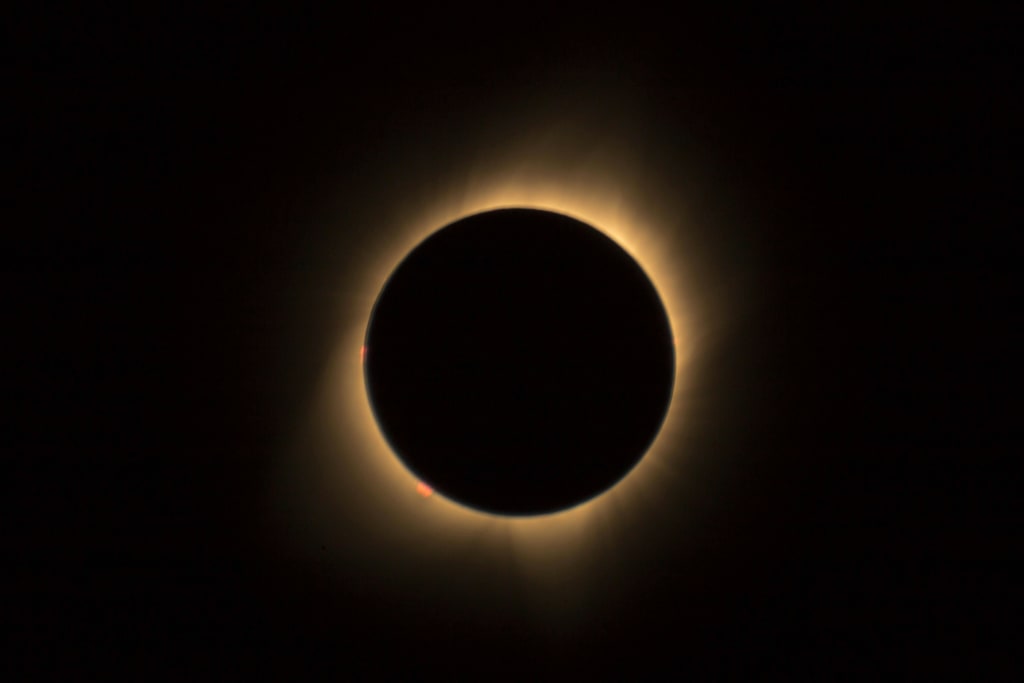
In the age of viral trends and algorithm-driven news feeds, it’s no surprise that every few weeks we’re caught in a whirlwind of mass misinformation. Recently, one particular claim has taken social media by storm: a supposed total solar eclipse happening in August 2025.
Instagram reels, TikTok explainers, and even WhatsApp forwards have been spreading excitement, urging people to “mark their calendars” and “protect their eyes.” Some have even linked the event to spiritual significance, warning of global energy shifts and apocalyptic omens. But here's the truth—there is no total solar eclipse in August 2025.
So, how did this rumor start? Why do such myths gain traction so easily? And what can we do to protect ourselves from misinformation in the digital age?
The Truth from the Experts
Let’s start with what astronomers actually say. According to data from NASA and major observatories, the next visible solar eclipses for most parts of the world are:
October 2, 2024 – Annular eclipse visible in South America
March 29, 2025 – Partial eclipse in parts of Europe and Asia
August 12, 2026 – Total solar eclipse visible across parts of Europe, Greenland, and Iceland
But no major eclipse is expected in August 2025. The idea of a worldwide total eclipse in that month is simply false.
This rumor likely began from a misinterpretation of legitimate celestial calendars—or perhaps an intentional hoax meant to generate engagement and clicks.
Why People Believe It
Misinformation about astronomical events isn't new. In fact, such stories tap into something very human: our curiosity about the universe and our longing for meaning in celestial movements.
Several factors make these rumors believable:
1. Scientific Illiteracy
Many people aren’t familiar with how eclipses work. When someone shares a video showing the sun being "blotted out" and says it’s happening soon, it feels believable—especially when they use graphics and dramatic music.
2. Visual Virality
Posts about eclipses often use real footage from past events to make current claims. A video of the 2017 eclipse can easily be misrepresented as “coming next week.”
3. Influencer Amplification
Influencers with large followings sometimes share viral content without fact-checking. A single post with the caption “We’re entering a powerful eclipse portal 🌓✨” can spark thousands of shares.
4. Spiritual or Astrological Hooks
Many viral eclipse claims are tied to astrology or pseudoscientific ideas. While spiritual beliefs are personal, presenting fiction as fact crosses into misinformation.
What’s the Harm?
At first glance, a harmless false alarm about an eclipse might seem trivial. But it plays into a much bigger issue—the normalization of misinformation.
People begin to doubt credible sources when false stories get more traction than truth. In some cases, misinformation has even led to eye injuries, with people looking directly at the sun without proper protection during a nonexistent or partial eclipse.
Additionally, misinformation breeds a culture where science is sidelined, and emotional engagement wins over factual accuracy.
How to Fact-Check Celestial Events
Before sharing a post about an upcoming astronomical phenomenon, try the following:
1. Check NASA’s Eclipse Website
Visit eclipse.gsfc.nasa.gov for an up-to-date, global eclipse calendar verified by scientists.
2. Cross-verify with a Planetarium or Observatory
Most local observatories post accurate celestial calendars months—or years—in advance.
3. Be Skeptical of Vague Dates
If a post says “the eclipse is coming soon” without listing a specific time or location, it’s likely fake.
4. Watch for Recycled Content
Reverse image search any photo or video that seems familiar. It may be from an event that occurred years ago.
A Teachable Moment
Rather than mocking those who fall for such stories, we can use these viral moments to educate. Sharing a post with a clear explanation of why the rumor is false—and linking to a trusted source—can make a big difference.
If anything, the popularity of these claims shows how fascinated people are with space. That curiosity is a good thing. It just needs to be grounded in facts.
Final Thought
The sky has always captured the human imagination. Eclipses have been feared, worshipped, studied, and celebrated. But in a time where misinformation travels faster than light, it’s more important than ever to pause, verify, and question.
So the next time someone sends you a video about a “coming eclipse,” ask yourself:
Is this science—or just another shadow passing over the truth?
About the Creator
Muhammad ali
i write every story has a heartbeat
Every article starts with a story. I follow the thread and write what matters.
I write story-driven articles that cut through the noise. Clear. Sharp truths. No fluff.
Keep reading
More stories from Muhammad ali and writers in Futurism and other communities.
About Binding Prometheus
I want to start actively advocating on behalf of my own work, and the most valuable part of my canon is, without a doubt, Binding Prometheus, the play I have been working on since 2019 and only finished in 2023 as part of my MA. The play itself is an amalgamation of a million different inspirations. On one end, it evokes the Ancient Greek myth-play, deriving its own title from the earliest extant work of Western drama we have, Aeschylus’s Prometheus Bound. On the other end, it borrows significantly from the sci-fi bulwarks from over the years, namely Mary Shelley’s Frankenstein and Karel Capek’s Rossum’s Universal Robots. The play could be an episode of Black Mirror, I fear. I don’t know. I’ve only ever seen one episode of Black Mirror.
By Steven Christopher McKnight16 days ago in Futurism
Health Insurance Market: Preventive Care Focus, Value-Based Models & Industry Trends
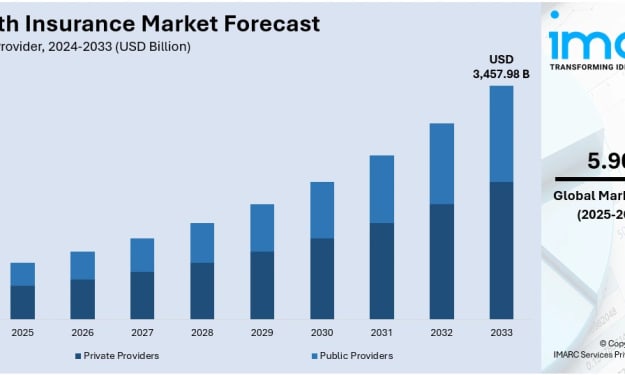
According to IMARC Group's latest research publication, global health insurance market size reached USD 1,949.84 Billion in 2024. Looking forward, IMARC Group expects the market to reach USD 3,457.98 Billion by 2033, exhibiting a growth rate (CAGR) of 5.90% during 2025-2033.
By Andrew Sullivan5 days ago in Futurism



Comments
There are no comments for this story
Be the first to respond and start the conversation.