
Is Starlink Available in Your Area? The Map, the Hype, and the Quiet Revolution Over Your Head
How Elon Musk’s satellite internet rollout is quietly rewriting who gets to be “connected”

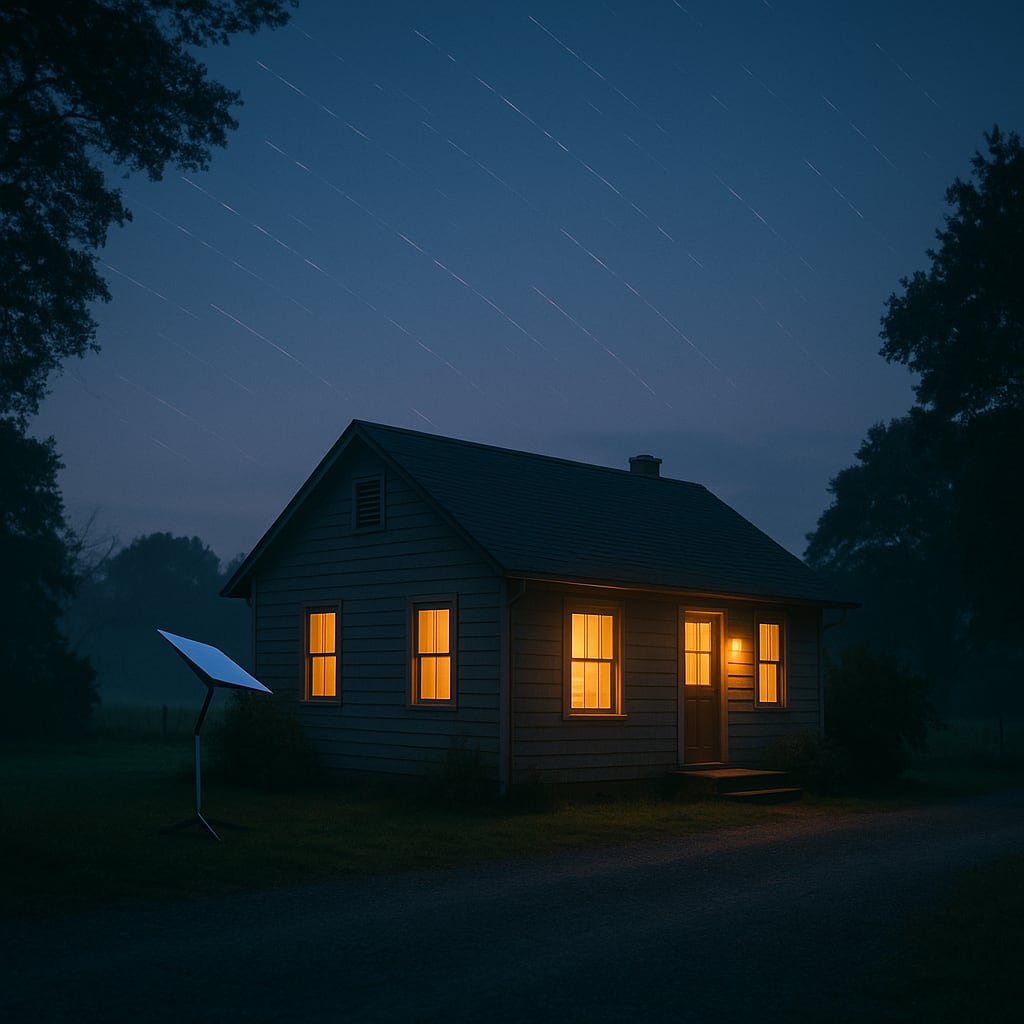
How Elon Musk’s satellite internet rollout is quietly rewriting who gets to be “connected”
The first time my internet died in the middle of a job interview, I was standing on a chair, router in one hand, phone in the other, praying the signal would come back.
I could see the hiring manager’s face frozen on my laptop screen, mid-sentence. Then Zoom crashed, my email wouldn’t refresh, and I just stood there listening to the silence of my very offline house.
If you’ve ever lived outside a big city, you probably know that silence. Not the peaceful, romantic kind. The kind that means: no work, no school, no streaming, no maps, no nothing.
That was the first time I seriously googled:
“Is Starlink available in my area?”
And that search, like a lot of things with Elon Musk’s projects, led me into a strange mix of hope, hype, and waitlists.
The Moment You Realize Your Internet Isn’t Just “Slow” — It’s A Barrier
I grew up thinking bad internet was just part of the deal if you lived in the country.
You get sunsets, quiet nights, maybe a cheaper mortgage… and internet that crawls like it’s dragging a twenty-pound weight behind it.
You learn the tricks:
Download movies at 3 AM.
Kick everyone else off Wi‑Fi for video calls.
Pretend it’s “family bonding” when Netflix buffers every fifteen minutes.
But then the stakes changed. Remote work wasn’t optional anymore. Kids needed video classrooms. Healthcare appointments moved online.
And suddenly “sorry, our connection’s bad out here” stopped being an excuse and started being a threat.
To your job.
To your kid’s education.
To whether you could stay where you live and still have a future.
That’s the pressure cooker a lot of people were in when Starlink appeared.
A promise from the sky:
“High-speed internet. Almost anywhere. Just point a dish at the sky.”
If that sounds like science fiction, that’s because until very recently, it was.
What Starlink Actually Is (Beyond the Headlines and Memes)
It’s easy to treat Starlink as another Elon Musk headline and move on. But buried under the hype is a genuinely weird and wild piece of infrastructure that now circles the planet.
At a basic level, Starlink is:
A constellation of thousands of small satellites in low Earth orbit (about 550 km up, much closer than traditional satellites).
A network that beams internet to a pizza-box-sized dish you install at home.
A system designed to reach people that fiber and cable companies either can’t or won’t serve.
Instead of running fiber lines to your house, Starlink leans on physics.
Signals go: dish → satellite → ground station → the rest of the internet.
Because the satellites are low, latency (lag) is much better than old-school satellite internet. That’s the thing gamers and remote workers obsess over, and for good reason.
It’s very “sci-fi, but make it consumer-grade.”
But none of that answers the question that actually matters when your Zoom call keeps dropping:
So… can I get it?
Is Starlink Available in Your Area? The Quickest Ways to Check
Here’s the practical part, the thing I wish someone had just laid out for me when I first started obsessively searching coverage maps.
There are three ways to figure out if Starlink is available where you live.
1. The Official Starlink Availability Map
Go to Starlink’s website and find their Availability page.
You’ll see a world map with regions shaded:
“Available” – You can usually order now.
“Waitlist” or “Limited” – Spots are full; you can reserve, but you may be waiting months.
“Coming Soon” – Regulatory or infrastructure barriers still in the way.
Type in your address.
What they won’t say outright, but matters:
Being labeled “Available” doesn’t always mean immediate shipment, but it’s close.
“Waitlist” can last longer than you expect. I’ve known people who were on it for nearly a year.
2. The Fine Print: Residential vs. Roam vs. Business
When you check availability, Starlink may show different plans:
Residential – Your fixed home service. This is what most people want.
Roam – Mobile users (RVs, travel, boats). Sometimes available where Residential isn’t.
Business / Maritime / Aviation – Expensive, targeted at companies, ships, planes.
Here’s the catch:
In some places, you can’t get Residential, but you can technically order Roam, which works anywhere Starlink has general coverage.
Roam is portable and often slightly deprioritized in busy areas, but for some people, it’s the only way to get Starlink at all.
3. The Thing That Matters More Than the Map: Your Sky
None of this works if your dish can’t see the satellites.
Starlink has an app that shows you a “sky view” obstruction checker. You point your phone at the sky and it tells you how much is blocked by trees, roofs, or mountains.
Even in an “available” area, if you have too many obstructions, your service will constantly cut out.
I once watched my neighbor proudly install his Starlink dish… right under a massive oak tree. Then he spent a week complaining that “Starlink was overhyped.”
The satellites weren’t the problem. The tree was.
The Uncomfortable Truth: Starlink Is Not A Magic Wand
There’s a temptation to treat Starlink as this clean, heroic story: tech billionaire makes satellites, rural people get fast internet, happily ever after.
Reality is messier.
Here are the trade-offs people rarely spell out in the ads and headlines:
1. It’s not cheap.
Hardware: usually several hundred dollars for the dish and router.
Monthly: often more than a typical cable plan in a city.
For some families, that’s still cheaper than losing work or driving into town for every online task. For others, it’s simply not possible.
2. Weather and physics still exist.
Heavy rain, snow, or dense trees will mess with the signal.
It’s better than old satellite internet, but not invincible.
3. You share the sky with everyone else.
Starlink is a shared network.
In very crowded regions, speeds can dip during peak hours as more users get added to the same satellite “cells.”
4. Starlink isn’t everywhere yet — for reasons that have nothing to do with rockets.
Some countries block or delay Starlink due to regulations, politics, or telecom lobbying.
So even if the satellites fly over, you still can’t legally use them there.
There’s a quiet frustration in that. The tech exists. The dish is ready. You can literally see the satellites streak across the night sky.
And still: “Service is not yet available in your region.”
Where Starlink Shines: The People No One Else Bothered to Serve
Starlink’s most compelling stories don’t come from tech blogs. They come from places you usually only see in travel documentaries or real estate listings labeled “off-grid.”
You hear about:
Farmers who can finally upload drone data for their crops without driving into town for Wi‑Fi.
Kids in remote villages able to attend real-time classes instead of waiting for printed material once a month.
Small businesses in mountain towns running card payments reliably for the first time.
I remember talking to a friend who lives in a cabin up a dirt road that eats tires for breakfast. Her old internet would die if someone looked at a storm cloud.
She installed Starlink, ran a speed test, and said it felt “like cheating.”
Was it perfect? No.
Did it occasionally drop? Yes.
Did it change whether she could realistically keep her job and live there? Absolutely.
That’s the quiet revolution happening here.
Not self-driving cars. Not Mars.
Just regular people getting the same basic digital oxygen that city people barely think about.
How to Read the Starlink Coverage Map Without Losing Your Mind
If you’re staring at the Starlink map trying to decide whether to gamble a chunk of money on hardware, here’s how to think about it more sanely.
If your area is marked “Available”:
Check Reddit or local Facebook groups for “Starlink + [your town/region].”
Ask about real-world speeds at different times of day.
Use the Starlink app to run the obstruction check before ordering.
If your area is “Waitlist” or “Limited”:
You can put down a deposit to reserve a spot.
Consider whether Roam might cover what you need, especially if your work is flexible about occasional slowdowns.
Have a backup: cell-based hotspots, neighbor’s Wi‑Fi, co-working spaces.
If your area is “Coming Soon” or not listed at all:
This is usually a mix of regulatory, spectrum, and infrastructure issues.
You’re not being ignored; you’re caught between space tech and earthly politics.
Check back every few months — coverage does change, sometimes unexpectedly fast.
One thing I’ve learned: the Starlink availability map is less like a static coverage chart and more like a live weather radar.
What’s true this month might not be true next quarter.
The Emotional Side of a Coverage Map
Here’s the part we don’t talk about out loud:
When you look at that Starlink map, you’re not just looking at satellites and service zones.
You’re looking at a quiet hierarchy of who the world thinks is worth connecting.
Dense, rich cities get fiber. Suburbs get cable and 5G.
Everyone else gets excuses.
Or, at best:
“Maybe, if the ROI is high enough.”
So when people in rural or remote areas see a coverage map finally include them, it hits different.
It’s not just: “I can stream Netflix now.”
It’s: “I matter enough for someone to beam internet at my house from orbit.”
Conversely, when your region is still gray, still “pending,” you feel it.
That ache of watching the future skim right over your head.
Starlink doesn’t solve that completely. It’s still a corporation making business calls.
But it’s sometimes the first time someone with real resources has tried to reach the last mile.
And that matters more than marketing copy will ever admit.
If You’re On the Fence About Starlink
If you’re reading this because you’re stuck between bad options — DSL that drops, hotspots that burn data caps in a day, satellite plans with ridiculous contracts — here’s what I’d tell you if we were sitting at the same kitchen table.
Check the map, but don’t stop there.
The availability page is where you start, not where you end. Ask real people, search local groups, find unfiltered experiences.
Be honest about how much connectivity is worth to you.
Not in theory. In days of work missed. In hours spent driving to Wi‑Fi. In your kid crying because the online classroom kicked them out again.
Assume Starlink will improve, but buy it for what it is now.
The network is evolving. Satellites are being added, upgraded, rearranged. But you’re paying for the current reality, not a future press release.
Plan for imperfection.
Have a backup for truly critical moments: a neighbor’s internet, a local library, a phone hotspot. Starlink is good. It is not a sacred oath from the sky.
Sometimes, Starlink will be the life raft you’ve been waiting for.
Sometimes, it won’t make enough difference to justify the cost.
Both outcomes are possible. That’s the uncomfortable truth.
The Quiet Question Behind “Is It Available?”
Under all the technical questions — latency, bandwidth, line of sight, constellations — there’s a quieter question I hear from people who ask about Starlink:
“Am I going to be left behind?”
It’s not really about satellites.
It’s about whether you can stay where you are and still be part of the world.
Whether your home — with its gravel roads, patchy cell service, or distance from a data center — is still compatible with the life you’re trying to build.
Starlink doesn’t answer that question completely.
But it does something that, for a lot of people, feels almost radical:
It gives them a choice.
You can work remotely from the cabin.
You can homeschool from the farm.
You can run a business from a place that looks nothing like a glass tower in a city.
So yes, search “Is Starlink available in my area?”
Zoom into the map. Enter your address. Do the math.
But also notice the bigger story here:
The sky above you just became infrastructure.
Not everyone will love that. Astronomers worry about light pollution. Regulators worry about interference. Competitors worry about market share.
But somewhere, far from fiber lines and 5G towers, a kid is attending a live class for the first time without the feed freezing.
And that’s the kind of quiet, invisible revolution that never fits neatly in a press release.
If you find your house lit up as “Available” on that map, you’ll feel it.
Not as a tech upgrade.
As a kind of permission.
To stay.
To work.
To be part of a world that keeps moving faster, without having to move with it.
Look up.
The future might already be passing over your roof every 90 minutes, whether the coverage map admits it yet or not.
About the Creator
abualyaanart
I write thoughtful, experience-driven stories about technology, digital life, and how modern tools quietly shape the way we think, work, and live.
I believe good technology should support life
Abualyaanart
Keep reading
More stories from abualyaanart and writers in Futurism and other communities.
AI Generative Technology
Over the past few years, we’ve heard constant buzzwords—AI, automation, machine learning. But there’s one branch of artificial intelligence that has quietly slipped into our daily lives without most people even noticing: AI generative technology. It’s the kind of technology that doesn’t just analyze data—it creates things. Images, music, videos, ideas, conversations, solutions—sometimes even entire stories.
By abualyaanart3 months ago in Futurism
Automotive Parts Magnesium Die Casting Market Outlook: Lightweight Vehicle Innovation and Growth Opportunities
According to IMARC Group's latest research publication, The global automotive parts magnesium die casting market size reached USD 3.3 Billion in 2024. Looking forward, IMARC Group expects the market to reach USD 5.5 Billion by 2033, exhibiting a growth rate (CAGR) of 5.51% during 2025-2033
By Michael Richard5 days ago in Futurism
Elon Musk’s Makeshift AI Power Plant Sparks Outcry in Mississippi
In Southaven, Mississippi, a quiet residential road has become the unlikely front line of the artificial intelligence boom. Residents say the constant roar of temporary gas turbines installed by Elon Musk’s AI company, xAI, sounds like jet engines running day and night.
By Behind the Techabout 20 hours ago in Futurism




Comments
There are no comments for this story
Be the first to respond and start the conversation.