
Is it possible for life to exist on Mars? Yeast provides a hint.
Yeast can withstand stress similar to Mars.
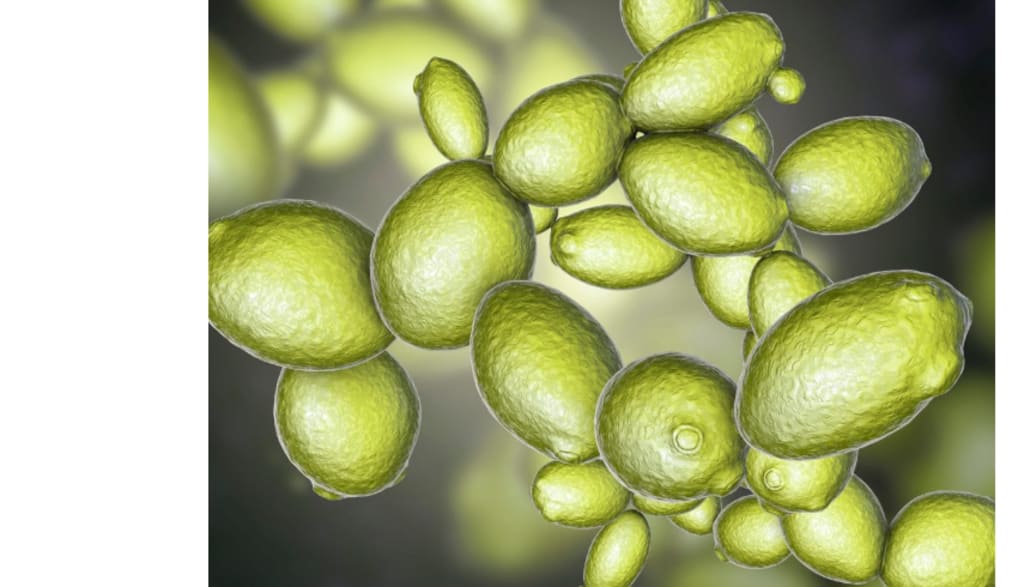
People have been making bread and beer with baker's yeast for generations. Few people thought that this microscopic organism could provide clues about how life can persist on an other planet, like Mars.
Researchers from the Physical Research Laboratory (PRL) and the Indian Institute of Science (IISc) have now demonstrated that Saccharomyces cerevisiae can endure circumstances akin to those on Mars. Their research relates cosmic survival to kitchen biology.
Our perspective on simple living is altered by this discovery. Once believed to flourish primarily in ovens and breweries, yeast has demonstrated incredible resilience to pressures akin to those seen in alien environments.
According to the study's trials, life—even in its most primitive form—may have innate survival characteristics that can endure radiation, chemical poisons, and shock waves like those on Mars.
In addition to advancing our knowledge of biology, the study increases the likelihood that tiny life exists—or ever existed—beyond Earth.
Yeast can withstand stress similar to Mars.
The scientists tested the limits of yeast. They doused it in sodium perchlorate, a poisonous substance found in Martian soil, and blasted it with shock waves travelling at Mach 5.6. Determining whether life might survive exposure to stimuli such as chemical stress and meteorite strikes was the aim.
Setting up the HISTA tube to expose live yeast cells to shock waves—something that has never been done before—and then recovering yeast with the least amount of contamination for further research was one of the most difficult tasks, according to study lead author Riya Dhage.
Both treatments were tolerated by the yeast. It refused to die, but it grew slower. A defence mechanism activated inside the cells. The yeast generated tiny clusters called ribonucleoprotein (RNP) condensates, which rearrange proteins and RNA. P-bodies and stress granules were both induced by shock waves, but exposure to perchlorate alone produced P-bodies.
Intelligent cellular reaction
Within the cell, these RNP condensates function as makeshift shelters. They choose which genetic messages are stored for subsequent use. It is an old system that is species-neutral.
These condensates could not be formed by mutant yeast that lacked the Edc3 and Lsm4 proteins. These cells recovered more slowly and had a harder time surviving perchlorate stress. Important genes related to cell wall repair and protein folding were destabilised by the absence of condensates.
RNA sequencing identified more than 1,300 gene alterations under sodium perchlorate, which aid yeast in adapting to stress. While some delayed translation to conserve energy, many increased energy production and defence against oxidative stress.
Remarkably, yeast also triggered genes that prepare for the production of ascospores, a latent survival phase that is frequently brought on by famine. To defend themselves, the cells effectively put a stop to their expansion.
The scientists discovered that mutant yeast did not adapt as well as wild-type yeast. This demonstrated that by stabilising important RNA molecules and rearranging the cell's energy consumption, RNP condensates assisted in stress management.
After the impact, recovery
Yeast altered its approach following the shock wave stress. It reduced energy-intensive metabolism and increased genes for translation and protein repair. The cells recovered thanks to this emphasis on repair.
Stress-protective transcripts such as SSA1, ROM2, and TPO2 exhibited longer half-lives under perchlorate exposure, according to RNA stability assays. Mutants lacking P-bodies lost that stability. The proof was unmistakable: RNP condensates were the difference between collapse and recovery.
Life's survival skills are revealed by yeast.
"The combination of chemical biology, shock wave physics, and molecular cell biology to investigate how life might adapt to such Mars-like stressors is what makes this work unique," Dhage added.
Shock waves can even aid in the formation of amino acids, which are the building blocks of life, according to earlier studies. It is possible for the same violent forces that destroy to build. According to the IISc-PRL study, life may surprisingly endure the same forces once it has developed.
Yeast in upcoming space missions
Professor Purusharth Rajyaguru, a co-author of the paper, stated, "We were shocked to see yeast surviving the Mars-like stress conditions that we used in our experiments." "We anticipate that this study will spur efforts to include yeast in upcoming space missions."
The findings demonstrate yeast as an astrobiological model. Given that humans also produce RNP condensates, the results could potentially inform space medicine and assist researchers in safeguarding astronauts' cells while they are in orbit.
Between dough and deep space, baker's yeast has advanced significantly. Despite its small size, its tenacity has the potential to influence the course of space exploration in the future and provide insight into what it really takes for life to exist off Earth.
About the Creator
Keep reading
More stories from Francis Dami and writers in Futurism and other communities.
'Super-Earth' is our best chance to date to find extraterrestrial life.
Just under 20 light-years away, astronomers have discovered a likely rocky "super-Earth" that might harbour life. The mass of the planet GJ 251 c seems to be nearly four times that of Earth. The fact that it orbits in the habitable zone—where, under ideal circumstances, liquid water may persist—has scientists excited.
By Francis Dami5 months ago in Futurism
AI in Visual Effects Market Demand to Hit USD 9.6 Billion By 2033
The Global AI in Visual Effects Market is projected to reach approximately USD 9.6 Billion by 2033, rising from USD 1.6 Billion in 2023, reflecting a CAGR of 19.6% during the forecast period from 2024 to 2033. The market expansion is supported by the increasing use of artificial intelligence technologies in film production, gaming, advertising, and digital media.
By Roberto Crum4 days ago in Futurism
The digital radiology market grows as hospitals shift to digital workflows.
According to IMARC Group's latest research publication, the global digital radiology market size reached USD 3.3 Billion in 2024. Looking forward, IMARC Group expects the market to reach USD 5.0 Billion by 2033, exhibiting a growth rate (CAGR) of 4.23% during 2025-2033.
By sujeet. imarcgroupa day ago in Futurism
Lycan Lore
As the students of my 10am mythology class take their seats, I decide to steer the day's curriculum away from Greek and dive into a Western European discourse on the misaligned beliefs of the Werewolf. A tale of truth or fiction. No one really knows.
By Lamar Wigginsabout 12 hours ago in Fiction


Comments
There are no comments for this story
Be the first to respond and start the conversation.