
Industrial Catalyst Market Outlook: Chemical Production Efficiency and Growth Opportunities
The industrial catalyst market is witnessing steady growth, driven by rising demand for efficient chemical processing across petroleum refining, petrochemicals, fertilizers, and environmental applications.

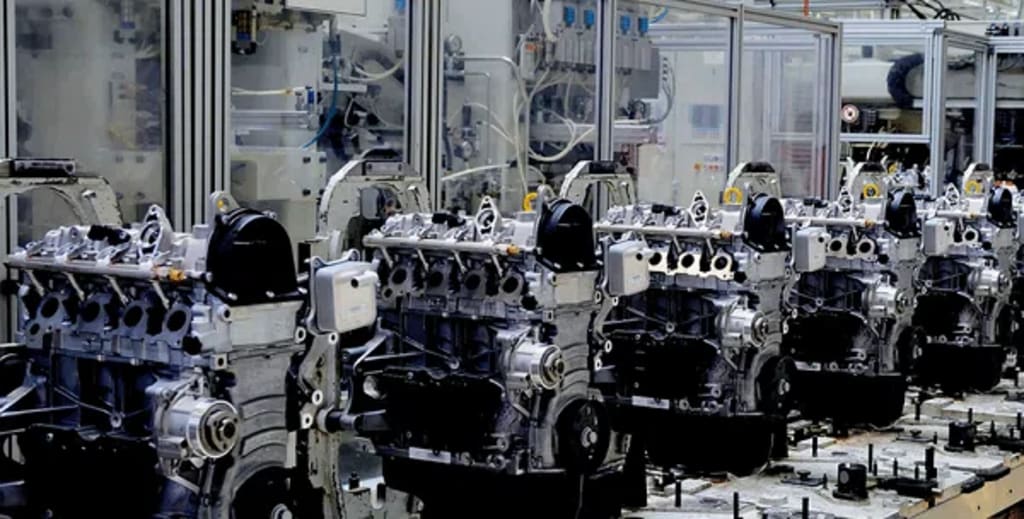
According to IMARC Group's latest research publication, The global industrial catalyst market size reached USD 25.3 Billion in 2025. Looking forward, IMARC Group expects the market to reach USD 33.5 Billion by 2034, exhibiting a growth rate (CAGR) of 3.07% during 2026-2034.
How AI is Reshaping the Future of Industrial Catalyst Market
- Predictive Process Optimization: AI systems analyze sensor data from catalyst reactors in real-time, predicting optimal temperature, pressure, and flow rates to maximize conversion efficiency and catalyst lifespan across refining operations.
- Catalyst Performance Monitoring: Machine learning algorithms track catalyst deactivation patterns, identifying degradation early and scheduling regeneration cycles precisely, reducing unexpected shutdowns and maintaining consistent product quality in petrochemical plants.
- Formulation Discovery and Design: AI accelerates new catalyst development by screening thousands of material combinations virtually, identifying promising candidates for specific reactions faster than traditional laboratory methods.

Industrial Catalyst Industry Overview
The industrial catalyst sector is experiencing transformation driven by environmental regulations and clean energy initiatives. Major refineries are upgrading hydroprocessing units with advanced catalysts to produce ultra-low-sulfur fuels meeting stringent emission standards. Investment in hydrogen production facilities using steam methane reforming catalysts has intensified, with companies building large-scale units supporting industrial decarbonization goals and fuel cell applications.
Industrial Catalyst Market Trends & Drivers
The expanding petrochemical industry is the primary driver of catalyst demand globally. Asia's petrochemical output accounts for over 40% of global production, with China's refining capacity exceeding 18 million barrels daily. Fluid catalytic cracking units and hydroprocessing catalysts remain essential for converting crude oil into polymers and plastics. The rising demand for polyethylene, polypropylene, and specialty chemicals in packaging, automotive, and construction sectors drives continuous catalyst consumption. Major chemical manufacturers are investing in new production facilities, particularly in developing economies, creating sustained demand for polymerization and synthesis catalysts across multiple industrial applications.
Stringent environmental regulations are accelerating adoption of emission-control catalysts worldwide. Governments have implemented policies mandating lower sulfur content in transportation fuels, compelling refineries to expand hydrodesulfurization capacity. The U.S. refining sector processes over 18 million barrels daily, requiring extensive catalyst systems to meet Tier 3 fuel standards limiting sulfur to 10 parts per million. Japan's carbon neutrality commitment by 2050 drives investments in catalytic technologies for industrial emission reduction. Catalytic converters in automotive applications and selective catalytic reduction systems in power generation facilities represent growing markets as nations tighten air quality standards and carbon emission targets.
The hydrogen economy transition is creating new opportunities for catalyst applications. Major energy companies are investing in hydrogen production infrastructure, with projects announced totaling over 200 committed facilities globally. Steam methane reforming catalysts enable conventional hydrogen production, while water electrolysis catalysts support green hydrogen initiatives powered by renewable energy. Industrial sectors including ammonia synthesis for fertilizers, steel manufacturing, and petroleum refining are increasing hydrogen consumption. Government incentives like the U.S. Inflation Reduction Act offering production tax credits up to $3 per kilogram are accelerating electrolyzer deployments, driving demand for platinum-based and alternative catalyst materials supporting the clean energy transition.
Leading Companies Operating in the Global Industrial Catalyst Industry
- Albemarle Corporation
- Arkema S.A.
- BASF Corporation
- Clariant AG
- Evonik Industries AG
- Exxon Mobil Chemical Co
- Akzo Nobel N.V.
- Chevron Phillips Chemical Company
- The DOW Chemical Company
Industrial Catalyst Market Report Segmentation
By Type:
- Heterogeneous Catalysts
- Homogeneous Catalysts
- Biocatalysts
Heterogeneous catalysts represent the largest segment, driven by widespread application in refining and petrochemical processes.
By Raw Material:
- Mixed
- Oxide
- Metallic
- Sulfide
- Organometallic
Mixed catalysts lead the market due to extensive use in chemical manufacturing processes.
By Application:
- Petroleum Refinery
- Chemical Synthesis
- Petrochemicals
- Others
Petroleum refinery dominates the market, accounting for the largest share owing to essential role in fuel production and refining operations.
Regional Insights:
- North America (United States, Canada)
- Asia Pacific (China, Japan, India, South Korea, Australia, Indonesia, Others)
- Europe (Germany, France, United Kingdom, Italy, Spain, Russia, Others)
- Latin America (Brazil, Mexico, Others)
- Middle East and Africa
Asia Pacific exhibits clear dominance in the industrial catalyst market due to extensive petrochemical and refining infrastructure.
Recent News and Developments in Industrial Catalyst Market
- March 2025: Clariant announced successful deployment of its EnviCat N2O-S catalyst at Gujarat Narmada Valley Fertilizers in India, achieving reduction of 44,000 tons monthly in CO2-equivalent nitrous oxide emissions, demonstrating efficacy in industrial decarbonization efforts.
- November 2024: Clariant launched its Plus series industrial syngas catalysts, including ReforMax LDP Plus, ShiftMax 217 Plus, and AmoMax 10 Plus, designed to enhance efficiency and sustainability in hydrogen, ammonia, and methanol production supporting green energy transitions.
- November 2024: BASF Environmental Catalyst and Metal Solutions inaugurated a hydrogen component laboratory in Hannover, Germany, focusing on developing advanced PGM-containing catalysts for water electrolysis with low-iridium content supporting green hydrogen production initiatives.
- October 2025: Evonik launched its Noblyst F catalyst portfolio for flow applications, helping pharmaceutical and fine-chemical customers implement continuous processing with improved catalytic performance and operational efficiency.
- September 2025: BASF's SYNSPIRE G1-110 catalyst enabled Nan Ya Plastics to reduce steam consumption by 40,000 metric tons and lower CO2 emissions by 38,000 metric tons annually, delivering significant operational cost savings.
Note: If you require specific details, data, or insights that are not currently included in the scope of this report, we are happy to accommodate your request. As part of our customization service, we will gather and provide the additional information you need, tailored to your specific requirements. Please let us know your exact needs, and we will ensure the report is updated accordingly to meet your expectations.
About the Creator
James Whitman
With years of experience in analyzing global industries, I specialize in delivering actionable market insights that help businesses stay ahead in an ever-changing landscape.
Keep reading
More stories from James Whitman and writers in Futurism and other communities.
Fish Farming Market Outlook: Rising Seafood Demand and Sustainable Aquaculture Growth Opportunities
According to IMARC Group's latest research publication, The global fish farming market size reached USD 322.3 Billion in 2024. Looking forward, IMARC Group expects the market to reach USD 470.3 Billion by 2033, exhibiting a growth rate (CAGR) of 4.25% during 2025-2033.
By James Whitmanabout 14 hours ago in Futurism
Beyond the Refresh Button: How to Actually Speed Up Your PC in 2026
We’ve all been there—staring at a spinning circle while a simple app takes ages to load. In 2026, our PCs are handling more AI-integrated software and heavier browser tasks than ever before. Most people think their hardware is getting old, but more often than not, it's just buried under layers of digital "junk." After spending weeks troubleshooting my own system’s lag, I realized that PC optimization isn't just about deleting a few files—it’s about a smarter workflow. In this guide, I’m sharing the exact steps I used to reclaim my computer’s speed.
By Muhammad Owaisa day ago in Futurism



Comments
There are no comments for this story
Be the first to respond and start the conversation.