
Fish Farming Market Outlook: Rising Seafood Demand and Sustainable Aquaculture Growth Opportunities
The fish farming market is experiencing strong growth, driven by increasing global demand for seafood, declining wild fish stocks, and the expansion of sustainable aquaculture practices.

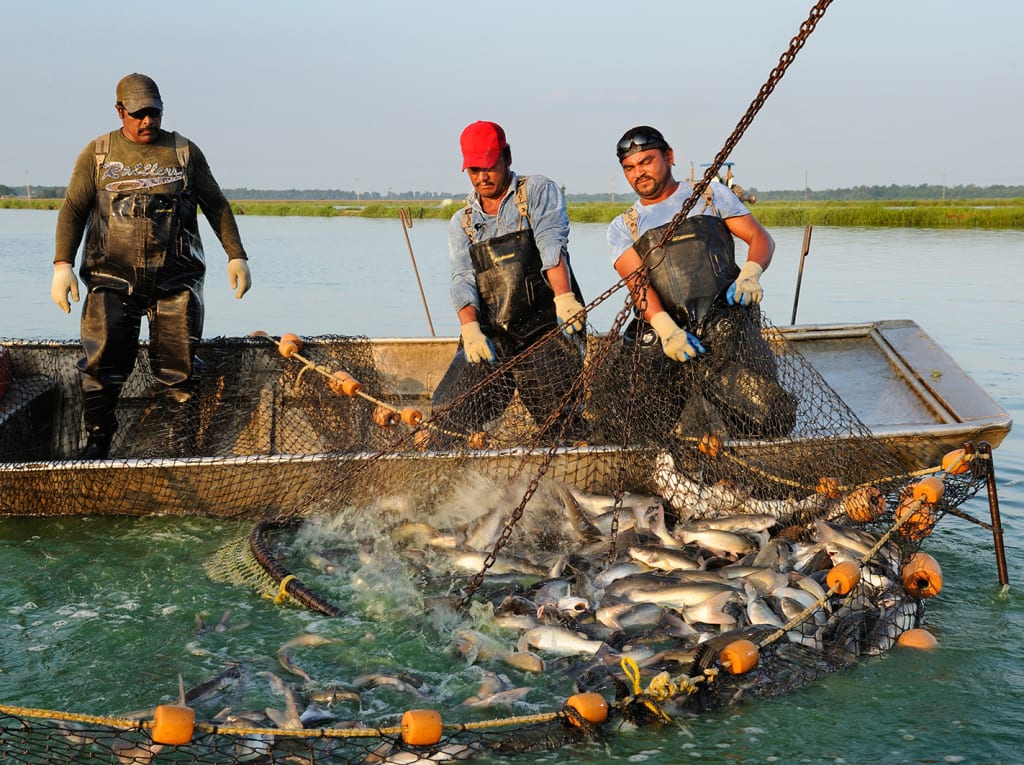
According to IMARC Group's latest research publication, The global fish farming market size reached USD 322.3 Billion in 2024. Looking forward, IMARC Group expects the market to reach USD 470.3 Billion by 2033, exhibiting a growth rate (CAGR) of 4.25% during 2025-2033.
How AI is Reshaping the Future of Fish Farming Market
- Automated Health Monitoring and Disease Detection: AI-powered computer vision systems analyze fish behavior, swimming patterns, and physical appearance to identify signs of stress or illness before visible symptoms appear. These intelligent monitoring platforms detect abnormal behavior and health deviations in real-time, enabling early intervention that reduces mortality rates and minimizes antibiotic use across commercial operations.
- Precision Feeding Optimization: Machine learning algorithms process real-time data on fish behavior, water conditions, and environmental parameters to dispense exact feed amounts when fish are actively feeding. Companies implementing AI-driven feeding systems have reduced feed waste by up to 30% while improving growth rates, cutting operational costs significantly and minimizing excess nutrients entering aquatic environments.
- Water Quality Management and Environmental Control: AI monitors sensors throughout aquaculture facilities to track dissolved oxygen, temperature, pH levels, and ammonia concentrations, automatically adjusting aeration systems and filtration equipment to maintain optimal conditions. Predictive analytics identify potential water quality issues before they become critical, preventing fish stress and maintaining stable production environments across both land-based and offshore operations.

Fish Farming Industry Overview:
The fish farming sector is experiencing robust expansion driven by government initiatives promoting sustainable aquaculture and food security. The U.S. National Aquaculture Development Plan released comprehensive strategic frameworks supporting regulatory efficiency, economic development, and research advancement. NOAA identified Aquaculture Opportunity Areas totaling 21,000 acres across the Gulf of America and Southern California coast, establishing prime locations for commercial operations. These federal programs include substantial funding through the Fisheries Finance Program providing long-term financing for up to 80% of facility construction costs, Saltonstall-Kennedy grants prioritizing environmentally-sound aquaculture development, and NOAA Small Business Innovation Research investments supporting next-generation technologies.
Fish Farming Market Trends & Drivers
Rising global protein demand and declining wild fish stocks are pushing aquaculture expansion as a sustainable seafood solution. The world's growing population has elevated per capita fish consumption to record levels, creating consistent demand that traditional fisheries cannot meet alone. Overfishing has depleted approximately 90% of commercially valuable wild fish populations, making farmed seafood essential for maintaining stable supply chains. Consumer awareness of fish's nutritional benefits—particularly omega-3 fatty acids supporting heart and brain health—continues driving market growth as health-conscious demographics prioritize lean protein sources.
Technology adoption through Recirculating Aquaculture Systems and offshore innovations is transforming production capabilities and geographic reach. RAS facilities enable year-round fish farming in climate-controlled inland environments, reducing water consumption by recycling up to 99% of system water while maintaining optimal growing conditions regardless of external weather patterns. India launched its first RAS-based trout farm in Kashmir featuring Danish-bred fingerlings that enhance survival rates and lower feed conversion ratios. China deployed the world's first floating fish farm capable of producing 8,000 tons of salmon annually with mobile infrastructure that relocates during natural disasters.
Government support and collaborative research partnerships are accelerating industry professionalization and sustainable practices. India's Pradhan Mantri Matsya Sampada Yojana launched the country's first organic fisheries cluster with ₹50 crore investment focusing on chemical-free production aligned with sustainability goals. The SAARC Development Fund committed $3.97 million for the AquaLivelihood Project enhancing small-scale farming across five South Asian countries, benefiting over 120,000 rural households through infrastructure development and capacity building. Bihar introduced the Mukhyamantri Samekit Chaur Vikas Yojana offering 70% subsidies for fish pond construction on barren land, converting underutilized areas into productive farms.
Leading Companies Operating in the Global Fish Farming Industry:
- Alpha Group
- Cermaq Group AS (Mitsubishi Corporation)
- Cooke Aquaculture Inc.
- Leroy Seafood Group ASA (Austevoll Seafood ASA)
- Mowi ASA
- Nippon Suisan Kaisha Ltd.
- Tassal Group
- Nireus Aquaculture S.A.
Fish Farming Market Report Segmentation:
By Environment:
- Marine Water
- Fresh Water
- Brackish Water
Fresh water represents the largest segment, as controlled freshwater environments enable precise management of water quality, temperature, and disease prevention while accommodating popular species like tilapia, carp, and catfish.
By Fish Type:
- Salmon
- Milkfish
- Tuna
- Tilapia
- Catfish
- Sea Bass
- Others
Salmon holds the largest market share owing to strong consumer demand, premium pricing potential, successful farming technologies, and high omega-3 content driving health-conscious purchasing decisions.
Regional Insights:
- North America (United States, Canada)
- Asia Pacific (China, Japan, India, South Korea, Australia, Indonesia, Others)
- Europe (Germany, France, United Kingdom, Italy, Spain, Russia, Others)
- Latin America (Brazil, Mexico, Others)
- Middle East and Africa
Asia Pacific exhibits clear market dominance due to extensive coastlines, abundant freshwater resources, favorable climatic conditions enabling year-round production, strong seafood consumption culture, and substantial government investments in aquaculture infrastructure.
Recent News and Developments in Fish Farming Market
- August 2025: The SAARC Development Fund launched the AquaLivelihood Project in Colombo, Sri Lanka, partnering with five SAARC countries. The project, with a USD 3.97 million investment, aims to enhance small-scale fish farming and nutrition security for over 120,000 rural households in South Asia through technology, infrastructure development, and capacity building benefiting women and rural communities.
- June 2025: Bihar launched the Mukhyamantri Samekit Chaur Vikas Yojana (MSCVY), offering up to 70% subsidy for farmers to build fish ponds on barren land. The scheme aims to convert underutilized low-lying areas into productive fish farms, enhancing rural livelihoods and promoting sustainable land use across the state.
- June 2025: The FISH4ACP program launched an input finance initiative to support fish farming in Nigeria, addressing the country's significant production gap. The initiative provides financial access, technical support, and capacity building for smallholder farmers, helping scale the catfish sector and reduce import dependency.
- April 2025: South Korea launched its first land-based salmon farm, the Busan Smart Aquaculture Cluster, using AKVA group's RAS technology. The facility, developed by GS Engineering & Construction and operated by Eco Aquafarm, will produce 500 metric tons of Atlantic salmon annually using closed-loop filtration systems recycling up to 99% of water.
- January 2025: Oman launched its first sustainable marine fish farming project using Recirculating Aquaculture System (RAS) technology in Al Musannah, South Al Batinah. The 8-ton capacity farm focuses on Sea Bream production, aiming to promote sustainable aquaculture, create jobs, and reduce environmental impact.
- January 2025: Latvia launched the TOME Aquaculture Centre to promote sustainable fish farming through research, training, and innovation. Managed by BIOR and supported by EU funding, the center focuses on RAS technology, species breeding, and biosecurity, strengthening the Baltic aquaculture sector by supporting entrepreneurs, students, and industry professionals.
Note: If you require specific details, data, or insights that are not currently included in the scope of this report, we are happy to accommodate your request. As part of our customization service, we will gather and provide the additional information you need, tailored to your specific requirements. Please let us know your exact needs, and we will ensure the report is updated accordingly to meet your expectations.
About the Creator
James Whitman
With years of experience in analyzing global industries, I specialize in delivering actionable market insights that help businesses stay ahead in an ever-changing landscape.
Keep reading
More stories from James Whitman and writers in Futurism and other communities.
Fencing Equipment Market Outlook: Rising Sports Participation and Growth Opportunities
According to IMARC Group's latest research publication, The global fencing equipment market size reached USD 1,178.3 Million in 2025. Looking forward, IMARC Group expects the market to reach USD 1,716.6 Million by 2034, exhibiting a growth rate (CAGR) of 4.14% during 2026-2034.
By James Whitmanabout 16 hours ago in Futurism
UAE Health and Fitness Club Market Trends: Growth Drivers and Key Factors
According to IMARC Group's latest research publication, UAE health and fitness club market size reached USD 484.4 Million in 2024. The market is projected to reach USD 742.9 Million by 2033, exhibiting a growth rate of 4.37% during 2025-2033.
By Abhay Rajput6 days ago in Futurism
Dialysis Market Insights: Home Dialysis Expansion, Aging Population & Industry Outlook to 2034
Increasing prevalence of chronic kidney disease and end-stage renal disease, rising diabetes and hypertension cases, technological advancements in dialysis equipment, growing healthcare spending, expanding home dialysis solutions, and favorable government policies are driving robust market growth. The global dialysis market size was valued at USD 125.8 Billion in 2025. Looking forward, IMARC Group estimates the market to reach USD 181.2 Billion by 2034, exhibiting a CAGR of 4.14% from 2026-2034.
By Andrew Sullivan4 days ago in Futurism
The Lesions of Devotion
Every day I set myself down on the freshly cut lawn and strip myself bare. I take my guitar and finger the frets and pick at the strings, listening for dissonance. My life is dissonance. I twist the tuning pegs until each string sounds bright. Then I kneel, calves pointing behind me, kneecaps facing forward. All exposed to the breeze. I close my eyes and play the melody.
By Paul Stewart6 days ago in Fiction




Comments
There are no comments for this story
Be the first to respond and start the conversation.