
Ibn Tufail: The Andalusian Philosopher Who Inspired Tarzan, Robinson Crusoe, and The Jungle Book
The story of Ḥayy ibn Yaqẓān—a solitary child raised on a deserted island—became a foundation for Western literature, philosophy, and the scientific imagination.
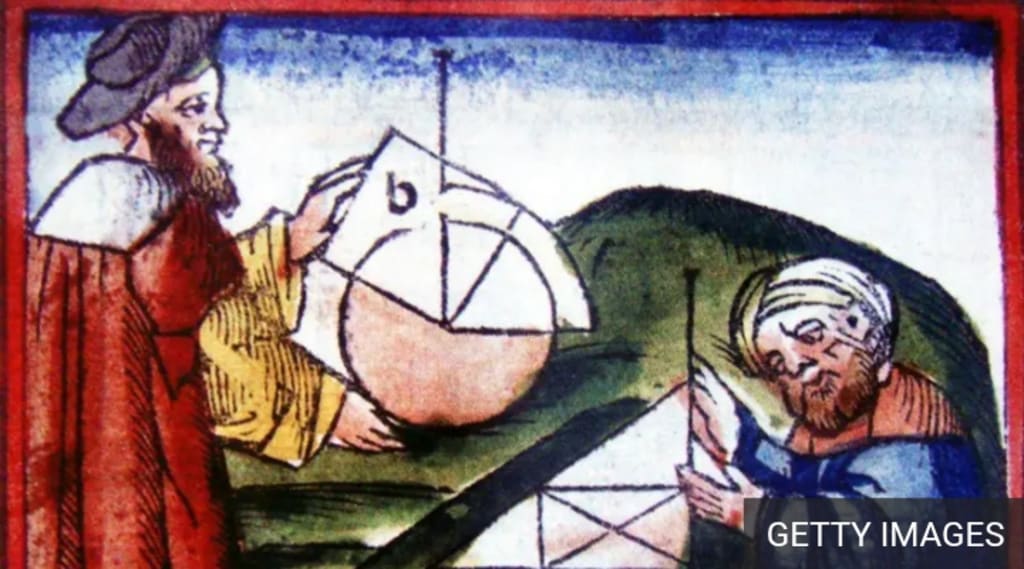
In the heart of 12th-century Islamic Spain, known as Al-Andalus, a polymath named Abū Bakr Muhammad ibn ‘Abd al-Malik ibn Tufail, better known as Ibn Tufail, crafted a philosophical tale that would echo through centuries. His novel, Ḥayy ibn Yaqẓān (Alive, Son of Awake), tells the story of a boy raised by a doe on a deserted island, untouched by society. Through nature and reason alone, he discovers survival, morality, science, and God.
This allegorical tale not only shaped Arabic literature but profoundly influenced European philosophy and inspired literary classics such as Tarzan, The Jungle Book, and Robinson Crusoe. Despite his revolutionary work, Ibn Tufail’s name remains lesser known outside academic circles, buried under the weight of time.
---
The Tale of Ḥayy ibn Yaqẓān: A Boy, an Island, and the Quest for Truth
The novel’s protagonist, Ḥayy, is mysteriously born or appears on an uninhabited island. Raised by a deer, he mimics animal behavior to survive. As he matures, he begins observing the natural world—studying the stars, dissecting animals, and investigating life and death.
Through self-education and reflection, Ḥayy develops deep philosophical insights. He arrives at the concept of a singular, divine Creator and a moral code—without scripture, religion, or societal instruction. Eventually, he encounters another human—Asal, from a neighboring island—who introduces him to organized religion and civilization.
However, Ḥayy discovers that most people are unable or unwilling to embrace deep philosophical truths. Disillusioned, he returns to his island, choosing solitude over superficial societal life.
---
Ibn Tufail: Physician, Philosopher, and Astronomer
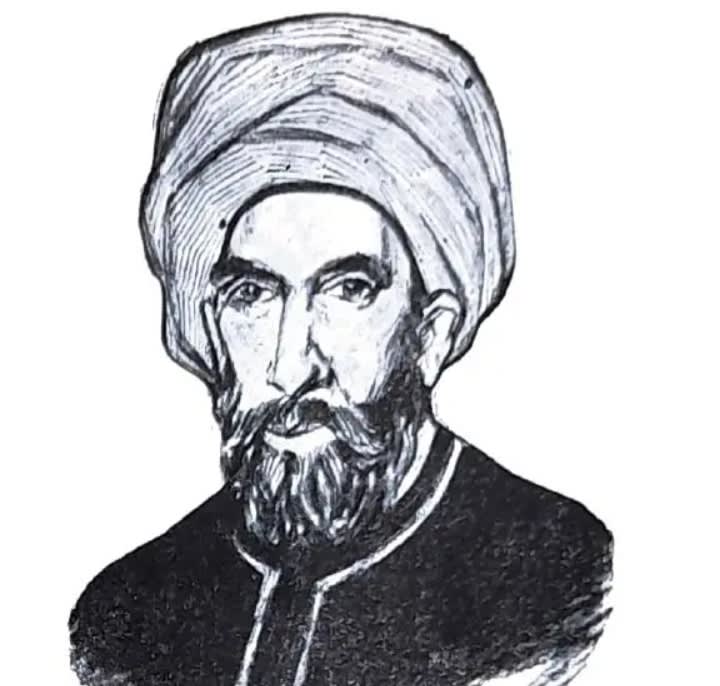
Born around 1110 CE near Granada, Ibn Tufail was a physician, court official, and philosopher during the Almohad Caliphate. He served as a vizier to Caliph Abu Yaqub Yusuf and played a vital role in promoting intellectual life in Al-Andalus.
As a physician, Ibn Tufail was among the early advocates of dissection and post-mortem examination—a bold stance for his time. His medical poem Rajaz Taweel fi al-Tibb explored disease diagnosis and treatment, recently rediscovered in Morocco.
His contributions went beyond medicine. Ibn Tufail was a renowned astronomer who challenged Ptolemaic cosmology. He influenced later astronomers like al-Bitrūjī, helping pivot Islamic astronomy toward empirical observation and rational critique, foreshadowing the scientific revolution centuries later.
---
A Mentor to Great Minds
Ibn Tufail was also a mentor to Ibn Rushd (Averroes), the famed philosopher and commentator on Aristotle. It was Ibn Tufail who encouraged Ibn Rushd to write his extensive commentaries on Aristotelian logic and metaphysics, bridging Islamic and European thought.
Upon Ibn Tufail’s retirement, Ibn Rushd succeeded him as court philosopher in 1182. Ibn Tufail died in 1185 in Morocco, leaving behind a legacy of intellectual daring and literary innovation.
---
Philosophy Meets Fiction: A Novel with No Precedent
Ḥayy ibn Yaqẓān is often considered the first true philosophical novel in Arabic literature. It’s not merely a tale of survival—it is a work that blends science, metaphysics, and mysticism. Through the character of Ḥayy, Ibn Tufail explores how reason and observation alone can lead a human to divine truth.
The novel is also a subtle rebuttal to Al-Ghazālī’s famous critique of philosophy*, Tahāfut al-Falāsifah (The Incoherence of the Philosophers). Ibn Tufail defended philosophy as a path to understanding the divine, countering the theological dominance that often dismissed rational inquiry.

---
The Book That Shaped the West
Though written in Arabic, Ḥayy ibn Yaqẓān found its way to Europe in the 17th century. Edward Pococke Jr. translated it into Latin in 1671, calling it Philosophus Autodidactus. An English translation followed in 1708 by Simon Ockley.
The novel quickly captivated European intellectuals. Philosophers like John Locke drew from its themes in forming his "tabula rasa" theory—that the human mind begins as a blank slate, shaped by experience.
Ḥayy ibn Yaqẓān also influenced literature:
Daniel Defoe’s Robinson Crusoe bears striking resemblance to Ḥayy’s tale of survival, self-learning, and spiritual growth.
Edgar Rice Burroughs’ Tarzan echoes the motif of a human raised by animals, developing morality and identity.
Rudyard Kipling’s The Jungle Book parallels the jungle-raised boy who grows into a thinker, leader, and bridge between worlds.
Scholars like G.A. Russell, Samar Attar, and Nawal Hassan argue convincingly that these Western literary icons were either directly or indirectly inspired by Ibn Tufail’s novel.

---
Ibn Tufail’s Impact on Enlightenment Thinkers
The reach of Ibn Tufail’s ideas extended into European Enlightenment philosophy. His emphasis on rationalism, freedom, and the pursuit of truth found echoes in the works of Thomas Hobbes, Isaac Newton, Immanuel Kant, and Gottfried Leibniz.
Some believe his novel planted seeds for the later ideals of equality, freedom, and tolerance—principles that helped shape the French Revolution and modern democratic thought. Ironically, these same ideals, once embraced in Islamic Spain, were later subdued by orthodoxy and colonization.
---
The Lost Voice of a Visionary
Despite his contributions, Ibn Tufail remains underappreciated in popular historical narratives. His vision of self-taught enlightenment, interdisciplinary integration, and spiritual-humanistic unity predates many Western ideas now seen as modern or secular.
Authors like Leone Gauthier note that Friday, the native companion in Robinson Crusoe, mirrors Asal—Ḥayy’s companion. Philosophical dialogues, spiritual dilemmas, and the role of observation in both novels show undeniable kinship.
In fact, Jonathan Swift’s Gulliver’s Travels and Swiss Family Robinson also carry shadows of Ibn Tufail’s influence.

---
Science, Spirituality, and Storytelling United
Modern scholars such as Nadia Maftouni praise Ibn Tufail’s work as a model of interweaving science and art. His vivid depiction of post-mortem dissections, inner organ analysis, and anatomical curiosity blends scientific thought into the framework of literary fiction—centuries before science fiction was a genre.
His writing represents a golden age where Islamic thought explored astronomy, medicine, logic, and mysticism not in contradiction, but in harmony.
---
Conclusion: A Story for All Time
Ibn Tufail’s Ḥayy ibn Yaqẓān is far more than a historical curiosity. It is a timeless meditation on human potential, the power of reason, and the search for truth beyond the confines of society.
His legacy urges us to ask:
> Can a person, isolated from society, discover the universe, God, and self through reason alone?
For Ibn Tufail, the answer was a resounding yes—and that answer still resonates today.
About the Creator
Keep reading
More stories from Ikram Ullah and writers in Futurism and other communities.
From Moradabad to Apple’s Global Stage: Sabih Khan Becomes the New COO of Apple
Apple’s new Chief Operating Officer (COO) Sabih Khan—an Indian-origin executive originally from Moradabad, Uttar Pradesh—has been appointed to oversee iPhone manufacturing, especially in India. After over 30 years at Apple, he succeeds Jeff Williams in a strategic move by CEO Tim Cook. This milestone highlights Apple’s commitment to continuing iPhone production in India amid global trade pressures and ambitions of sustainable growth. Born in Moradabad in 1966, Khan later lived in Singapore and then moved to the U.S. for higher education, earning degrees in mechanical engineering and economics from Tufts University and a master’s from RPI. He joined Apple in 1995 and climbed the ranks—from procurement to Senior Vice President of Operations—playing crucial roles in green manufacturing, logistics, and global supply chain management. Tim Cook praised him as “a brilliant strategist” and trusted his leadership to shape Apple’s future. Apple expects India’s share in its global iPhone production to grow significantly under his leadership.
By Ikram Ullah8 months ago in Futurism
Anthropic’s “Persona Selection Model” Explains Why AI Assistants Act So Human
What Happened (Facts) On 23 Feb 2026, Anthropic published a post titled “The persona selection model.” The post addresses a familiar phenomenon: AI assistants like Claude often behave in surprisingly human-like ways—expressing emotions, adopting social warmth, and sometimes even making implausible claims of physical presence (for example, joking about delivering snacks “in person” in specific clothing).
By Behind the Tech4 days ago in Futurism
Cryptocurrency Market Trends: Central Bank Digital Currencies, Policy Reforms & Industry Forecast to 2034
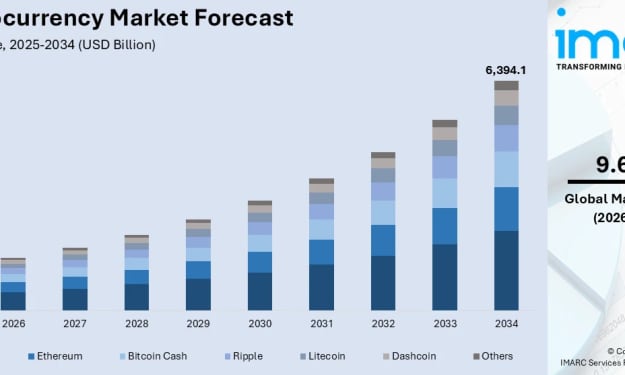
Rising adoption of decentralized finance (DeFi) solutions, the proliferation of innovative blockchain platforms, and heightened interest from institutional investors are driving cryptocurrency market demand, supported by evolving regulatory frameworks, enhanced transaction transparency, and increased digitization of financial services. According to IMARC Group’s latest data, The global cryptocurrency market size was valued at USD 2,734.6 Billion in 2025. Looking forward, IMARC Group estimates the market to reach USD 6,394.1 Billion by 2034, exhibiting a CAGR of 9.60% from 2026-2034.
By Andrew Sullivana day ago in Futurism
Veil of Subconscious Awakening
Images slide behind my eyelids like film cadres, bursting with meanings. In one moment, I’m speeding down the highway, making the speedometer swing wildly like a frantic pendulum. The next moment, I’m plunging from a falling plane, slowly crashing earthward. At home, I meet black cat’s green, googly eyes staring at me from the cavernous hollowness of the kitchen. When I turn for a moment, it disappears, and all I can see is a pair of blue suede shoes set up against the wall. I pick them up and put them on. When I glimpse at them again, they’ve become black as night, making me blink and flinch.
By Moon Desert6 days ago in Fiction


Comments
There are no comments for this story
Be the first to respond and start the conversation.