
How to Tell a Living Planet from a Dead One: In Search of the Breath of Worlds
Space

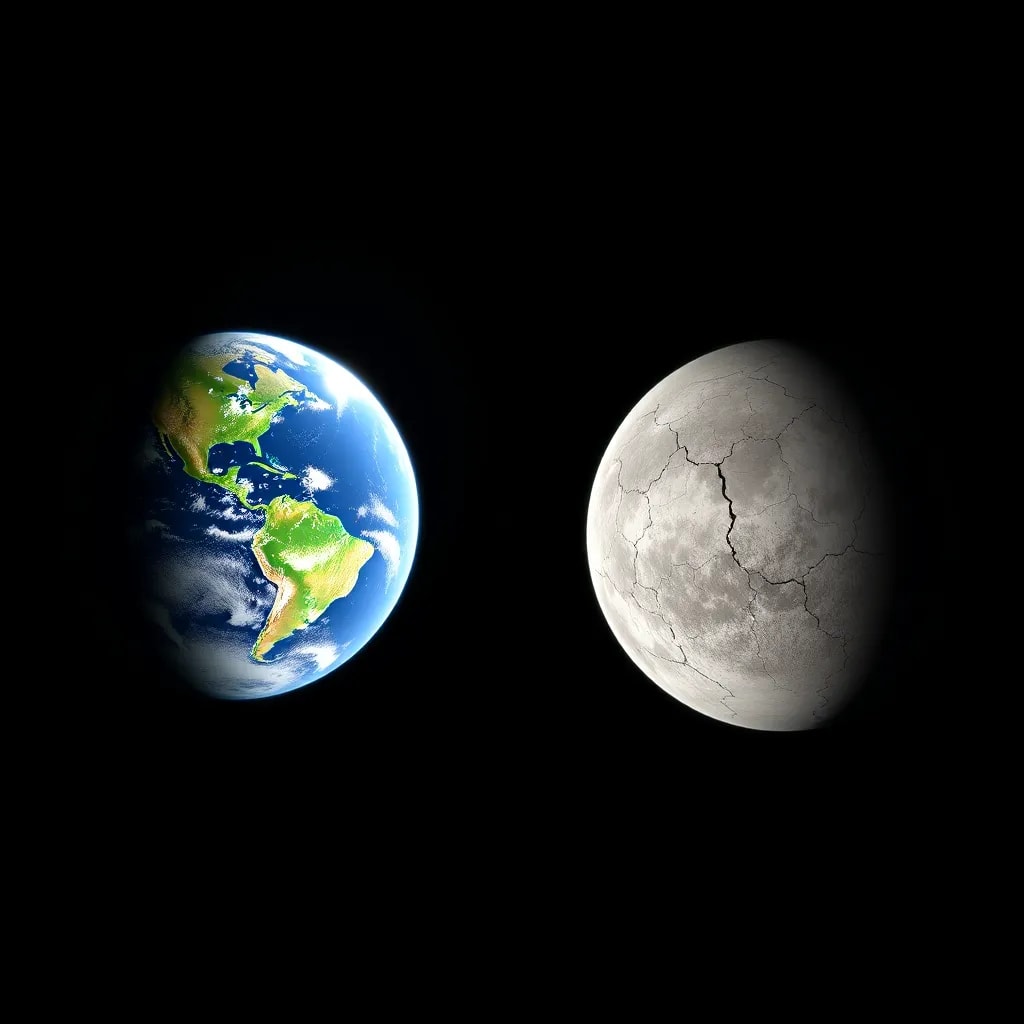
When we look up at the night sky and see tiny lights scattered across the inky depths of space, it is hard not to wonder how many of those worlds are alive. More importantly, how do we tell a living planet from a dead one? This question has fascinated scientists, astronomers, and dreamers for centuries. It touches on one of humanity’s oldest and most captivating mysteries: are we alone in the universe?
What Does It Mean for a Planet to Be Living?
First, it is important to clarify that a living planet does not necessarily mean a world covered in dense forests or inhabited by intelligent beings. In scientific terms, a living planet is one where active biological processes occur. This could mean anything from simple microbial life to more complex organisms. The key point is that traces of life must be present and strong enough to detect even from light-years away.
On the other hand, a dead planet is a world where signs of life are missing or have vanished long ago. Such a planet might be beautiful, geologically active, or even have an atmosphere, but it lacks the characteristic fingerprints left by living organisms.
How Do Scientists Search for Signs of Life?
In practice, researchers do not look for life directly but rather for biosignatures chemical and physical signs produced only by living beings. Some examples include:
Oxygen and Ozone. On Earth, oxygen is produced by photosynthesis. Without life, oxygen quickly reacts with other substances and disappears. Finding oxygen in the atmosphere of an exoplanet may suggest biological activity.
Methane. Most methane on Earth is generated by living organisms. If methane appears alongside oxygen on another planet, it is a powerful hint of life because these two gases react and destroy each other unless constantly replenished.
Atmospheric Disequilibrium. Planets without life tend to have chemically stable atmospheres. The presence of an unstable mix of gases may indicate ongoing biological processes.
Spectral Variability. By studying the light passing through a planet’s atmosphere, astronomers can detect seasonal changes. For example, on Earth, oxygen levels rise in spring and summer and carbon dioxide increases in autumn, reflecting the cycles of plant growth and decay.
Geology Versus Biology
However, nature can be tricky. Some gases like methane can also form through geological processes such as volcanic activity. This means context is crucial: scientists must consider the planet’s chemical makeup, temperature, the star’s radiation, the presence of water, and orbital features before jumping to conclusions.
The behavior of a planet’s atmosphere can also reveal clues. Venus, for instance, has a thick and toxic atmosphere but shows no clear signs of life. Mars is currently dead, but it might have once been alive. It has dry riverbeds, minerals formed in water, and even debated traces of organic molecules.
A Planet’s Life Thermometer
An interesting way to assess life is by looking at a planet’s energy balance. Living planets often disrupt the natural distribution of heat because biological processes like plant growth or animal metabolism absorb and release energy. In this sense, Earth almost seems to sweat, breathe, and radiate life.
Alien Life Might Be Different
It is important to remember that all this reasoning is based on Earth’s model of life. We are looking for what we know. Yet, it is possible that far away in space there are lifeforms based on entirely different chemistry perhaps silicon instead of carbon, ammonia instead of water. If that is true, we might be overlooking entire living worlds simply because we don’t recognize their signs.
Conclusion: Careful Observation and Open Mind
Determining whether a planet is alive is like trying to sense breathing during sleep. It requires careful observation and not relying on a single sign. We are on the brink of a new era when next-generation telescopes such as the James Webb Space Telescope and others will study the atmospheres of distant worlds with astonishing precision.
Maybe someday we will detect a familiar combination in a planet’s spectrum: oxygen, a bit of methane, an unstable balance of gases... and realize that somewhere out there, deep in the cosmos, another planet is breathing too.
About the Creator
Keep reading
More stories from Holianyk Ihor and writers in Futurism and other communities.
Rogue Planets: Wanderers Without Stars
When we think about a planet, we usually picture a celestial body orbiting a star. Like Earth, which circles the Sun. But in space, there is a completely different and almost mystical class of planets that breaks this rule. They are called rogue planets or stellar wanderers. These worlds drift through the Universe alone, not bound to any star. They are dark, silent, and mysterious like cosmic ghosts.
By Holianyk Ihor7 months ago in Futurism
About Binding Prometheus
I want to start actively advocating on behalf of my own work, and the most valuable part of my canon is, without a doubt, Binding Prometheus, the play I have been working on since 2019 and only finished in 2023 as part of my MA. The play itself is an amalgamation of a million different inspirations. On one end, it evokes the Ancient Greek myth-play, deriving its own title from the earliest extant work of Western drama we have, Aeschylus’s Prometheus Bound. On the other end, it borrows significantly from the sci-fi bulwarks from over the years, namely Mary Shelley’s Frankenstein and Karel Capek’s Rossum’s Universal Robots. The play could be an episode of Black Mirror, I fear. I don’t know. I’ve only ever seen one episode of Black Mirror.
By Steven Christopher McKnight19 days ago in Futurism
Saudi Arabia Modular Construction Market: Vision 2030 Projects & Off-Site Construction Demand
According to IMARC Group's latest research publication, Saudi Arabia modular construction market size reached USD 877.1 Million in 2025. The market is projected to reach USD 1,381.6 Million by 2034, exhibiting a growth rate of 5.18% during 2026-2034.
By Faisal Al-Harbiabout 4 hours ago in Futurism



Comments
There are no comments for this story
Be the first to respond and start the conversation.