
How the Planets Got Their Names: A Journey Through Mythology, History, and Astronomy
Space

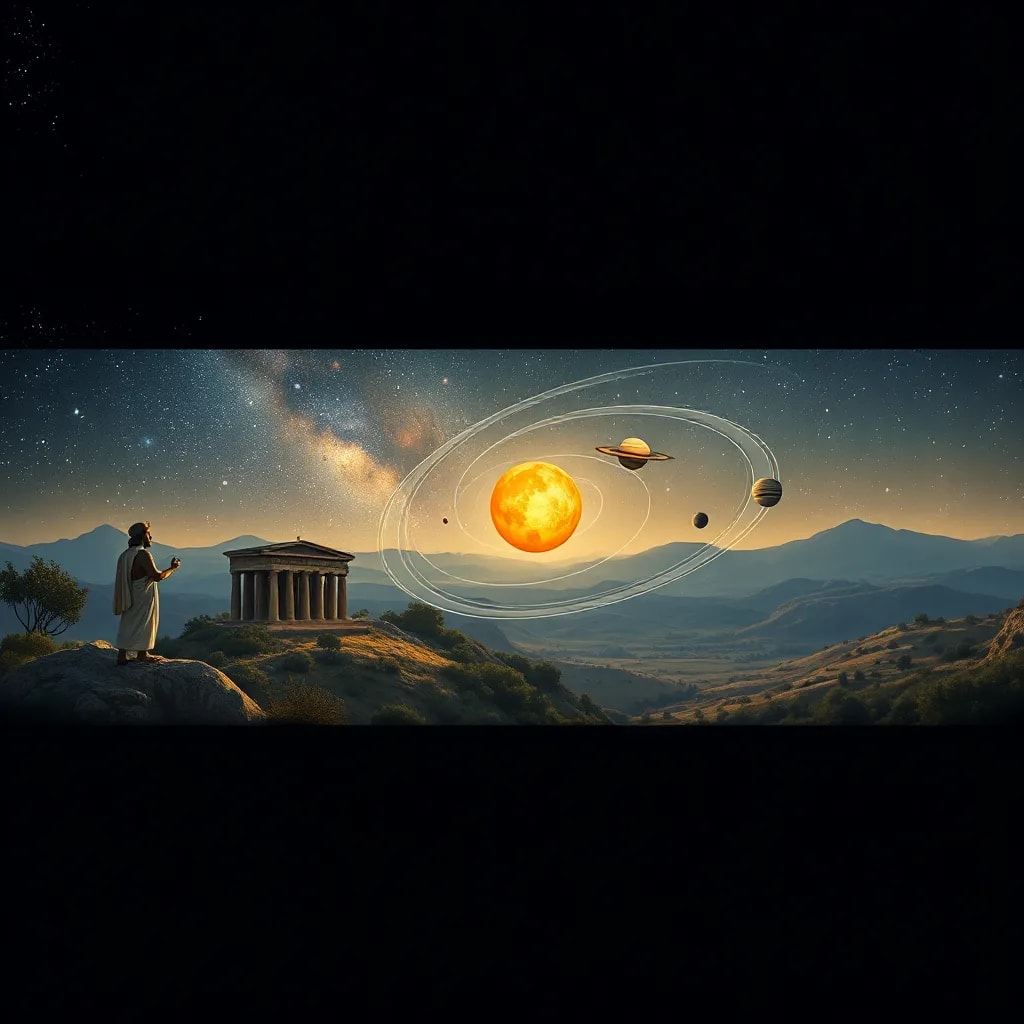
When we hear names like Mars, Jupiter, or Venus, we rarely pause to ask where those names come from. Yet behind each planetary name lies a rich tapestry of mythology, history, and human curiosity. The story of how planets were named isn't just a list of pretty words—it’s a reflection of our ancestors’ attempts to make sense of the universe, to give form to the unknown, and to project meaning onto the glowing lights in the sky.
Let’s take a journey through time and space to uncover how the planets of our solar system got their names—and what those names tell us about ourselves.
Wandering Stars and Roman Gods
To the ancients, most of the stars in the night sky were fixed in their positions. But a few behaved differently—they wandered. These moving lights caught the attention of skywatchers in ancient Babylon, Greece, India, and China. The Greeks called them planētēs, meaning "wanderers," and the name stuck: planets.
The five planets visible to the naked eye—Mercury, Venus, Mars, Jupiter, and Saturn—have been known since antiquity. The Romans, who inherited much of their astronomical knowledge from the Greeks, named these celestial bodies after their gods, each chosen to match the planet’s observed qualities:
- Mercury, the swiftest-moving planet, was named after the fleet-footed messenger god.
- Venus, the brightest and most beautiful object in the night sky after the Moon, was linked to the goddess of love and beauty.
- Mars, with its red hue, evoked the image of blood and war, fitting for the god of war.
- Jupiter, the largest planet, bore the name of the king of the Roman gods.
- Saturn, slow-moving and distant, was named after the god of time and agriculture.
Interestingly, the Greeks had their own names for these planets: Hermes (Mercury), Aphrodite (Venus), Ares (Mars), Zeus (Jupiter), and Cronus (Saturn). But it was the Latin (Roman) names that became the standard, thanks to the dominance of the Latin language in science and culture throughout Europe.
The Modern Planets: Beyond the Naked Eye
For centuries, these five were the only known planets. But with the invention of the telescope, the solar system revealed more secrets—and more planets.
Uranus was discovered in 1781 by British astronomer William Herschel. At first, he wanted to name it Georgium Sidus ("George’s Star") in honor of King George III. Thankfully, the international scientific community opted for a name that fit the mythological theme: Uranus, the ancient Greek god of the sky and father of Saturn.
Neptune followed in 1846, after a mathematical prediction led astronomers to its discovery. With its striking blue color, the planet was named after the Roman god of the sea.
Pluto, though no longer considered a full-fledged planet since its reclassification in 2006, holds a special place in the public imagination. It was discovered in 1930, and its name was suggested by an 11-year-old girl from Oxford named Venetia Burney. She proposed Pluto, the Roman god of the underworld—a fitting name for a cold, distant, and shadowy world.
Why Not Greek Names?
While the Greeks were among the first to study and name the planets, the Roman names became dominant due to Latin’s central role in European education, science, and the church for centuries. Latin was the language of scholarship, and as European astronomy developed, Roman mythology provided a shared framework for naming celestial objects.
Exceptions and Modern Trends
Not all celestial bodies follow the Roman mythological model. For example, many of Uranus’s moons are named after characters from the works of William Shakespeare and Alexander Pope, rather than mythological figures. Examples include Titania, Oberon, and Ariel.
Meanwhile, asteroids and dwarf planets are named from a wide range of mythologies and cultures. Some bear names of Greek goddesses, Norse giants, Indigenous spirits, or even famous scientists and fictional characters. In 2006, the dwarf planet Eris was named after the Greek goddess of strife—a nod to the debate it sparked over Pluto’s status.
Today, the International Astronomical Union (IAU) oversees the naming of celestial objects, aiming for a balance of tradition, cultural diversity, and scientific clarity.
More Than Just Names
Planetary names are more than labels. They are echoes of ancient stories, symbols of how humans across time have viewed the cosmos. They tell us that we’ve always looked to the skies and seen something greater than ourselves—gods, myths, mysteries.
By naming planets after deities, we weren’t just giving them titles. We were making sense of them, linking the heavens to our beliefs, dreams, and fears. And in doing so, we left a trail of our imagination scattered across the stars.
Final Thoughts
The next time you hear the name of a planet, think beyond the astronomy textbook. Think of ancient civilizations gazing up at the night sky, trying to understand the wandering lights above. Think of how language, myth, and discovery intertwine.
Our planetary names are a testament to humanity’s enduring relationship with the cosmos—a bridge between science and story, fact and wonder. Because in every name, from Mercury to Pluto, there lives a whisper of a tale we’ve been telling for thousands of years: the tale of how we found our place in the universe.
About the Creator
Keep reading
More stories from Holianyk Ihor and writers in Futurism and other communities.
Why Is the Night Sky Dark? The Olbers’ Paradox Explained
When you look up at the night sky, it’s easy to be overwhelmed by its vastness and quiet beauty. Tiny stars twinkle against an ocean of blackness, stretching endlessly in all directions. But have you ever truly wondered — why is the night sky dark at all? It seems like a simple question, yet it puzzled scientists for centuries and sparked one of the most fascinating paradoxes in astronomy: Olbers’ Paradox.
By Holianyk Ihor7 months ago in Futurism
About Binding Prometheus
I want to start actively advocating on behalf of my own work, and the most valuable part of my canon is, without a doubt, Binding Prometheus, the play I have been working on since 2019 and only finished in 2023 as part of my MA. The play itself is an amalgamation of a million different inspirations. On one end, it evokes the Ancient Greek myth-play, deriving its own title from the earliest extant work of Western drama we have, Aeschylus’s Prometheus Bound. On the other end, it borrows significantly from the sci-fi bulwarks from over the years, namely Mary Shelley’s Frankenstein and Karel Capek’s Rossum’s Universal Robots. The play could be an episode of Black Mirror, I fear. I don’t know. I’ve only ever seen one episode of Black Mirror.
By Steven Christopher McKnight17 days ago in Futurism




Comments
There are no comments for this story
Be the first to respond and start the conversation.