
How Planetary Defense Works: The Modern Methods Behind Tracking Asteroids
Space

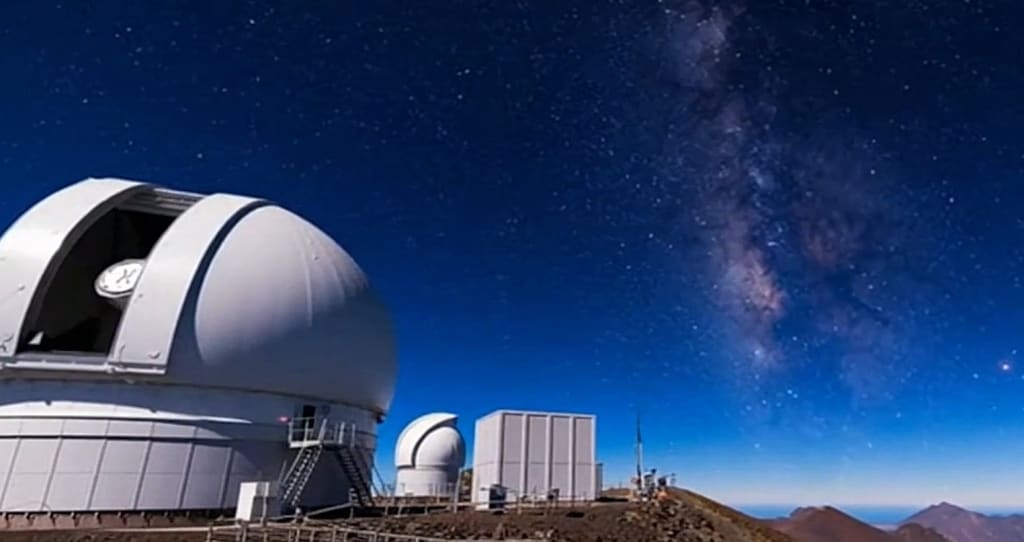
When we look up at the night sky, it often appears calm, steady, and predictable. But beyond that serene view lies a dynamic neighborhood of drifting rocks, icy remnants, and fast-moving objects. Among them are asteroids—cosmic leftovers from the early Solar System that occasionally wander a little too close to Earth.
Most pass harmlessly by, but history reminds us that even a relatively small asteroid can cause tremendous damage. That’s why humanity has built a global system designed to spot these objects early, predict their paths, and, if necessary, stop them from becoming a threat. This system is known as planetary defense.
What Exactly Is Planetary Defense?
Planetary defense is a coordinated scientific and technological effort aimed at detecting, tracking, and predicting the orbits of near-Earth objects (NEOs)—primarily asteroids and comets. It also involves assessing their potential danger and developing technologies to deflect or disrupt a hazardous object long before it can reach Earth.
In simple terms:
- planetary defense gives Earth advance warning and a chance to act.
- How We Find Potentially Hazardous Asteroids
The earlier an asteroid is detected, the more options humanity has to protect the planet. Today’s tracking network uses several complementary methods—each with its strengths.
1. Optical Telescopes: The Sky’s Daily Scanners
Optical telescopes remain the workhorses of asteroid detection. They capture thousands of images every night, searching for anything that moves against the backdrop of distant stars.
One of the most productive systems is Pan-STARRS, located in Hawaii. Every clear evening, its wide-field cameras sweep large portions of the sky. By comparing images taken minutes apart, software identifies objects that appear to shift position—often tiny, faint dots barely distinguishable from noise.
Example: In 2011, Pan-STARRS₁ discovered asteroid 2011 AG5, which initially raised concerns due to a small but non-zero chance of a future Earth impact. Thanks to continued observations, scientists refined its orbit and ruled out danger. Without early detection, uncertainty could have grown instead of shrinking.
But optical telescopes have limitations:
- They can only observe at night.
- Cloud cover blocks the view.
- Some asteroids approach from the daylight side of Earth—making them invisible.
That’s where other technologies come in.
2. Radar Systems: Turning Asteroids Into High-Resolution Targets
Once an asteroid is discovered, radar becomes one of the most powerful tools for understanding it.
Facilities such as NASA’s Goldstone Solar System Radar in California transmit radio waves that bounce off an asteroid and return to Earth. The way the signal reflects back allows scientists to calculate properties that optical observations cannot provide, including:
- the object’s distance with meter-level accuracy
- its speed and rotation
- surface features like craters, ridges, and boulders
- its approximate shape and size
Some radar images are so detailed that they resemble grainy 3D models. For instance, radar observations of asteroid 101955 Bennu revealed its distinctive spinning-top shape long before spacecraft arrived there.
Radar is especially important for objects on uncertain orbits because even small improvements in trajectory calculations can eliminate—or confirm—impact scenarios.
3. Space-Based Telescopes: Seeing What Earth Cannot
Space telescopes solve a major limitation of ground observatories: the inability to see objects hidden in sunlight. Infrared telescopes are particularly valuable because asteroids, warmed by the Sun, glow in infrared wavelengths even if they’re dark and difficult to spot in visible light.
NASA’s NEOWISE mission has been instrumental in discovering and characterizing thousands of NEOs. Observing from orbit allows it to detect asteroids approaching from directions inaccessible to ground telescopes.
Infrared measurements also help scientists distinguish small, bright asteroids from large, dark ones—something that purely optical observations can’t do well.
4. Automation and AI: The New Era of Asteroid Tracking
Modern telescopes generate enormous quantities of data, far more than humans can analyze manually. Artificial intelligence and advanced algorithms now handle much of the initial detection work.
These systems can:
- detect faint, fast-moving objects
- filter out noise and artifacts
- predict orbits based on very limited observational data
- identify unusual objects that might otherwise be overlooked
In 2023, an AI tool developed by the University of Washington, called HelioLinc3D, discovered an asteroid that earlier surveys had missed due to its unusual trajectory. It’s a preview of how machine learning will enhance planetary defense in the coming decade.
How Scientists Assess Danger
Once an asteroid is detected, astronomers track it repeatedly to refine its orbit. They often calculate predictions stretching decades or even centuries ahead. Models consider gravitational influences, sunlight pressure, and subtle forces like the Yarkovsky effect, where uneven heating causes the asteroid to drift over time.
If calculations show even a tiny chance of impact—typically less than 0.01%—the asteroid is listed on monitoring systems such as NASA’s Sentry risk table for ongoing analysis.
Can We Actually Deflect an Asteroid?
Yes. In 2022, NASA’s DART mission demonstrated the first real-world test of kinetic impact technology. By deliberately crashing a spacecraft into asteroid moonlet Dimorphos, scientists successfully changed its orbital period—a breakthrough moment for planetary defense.
Future concepts include:
- gravity tractors, where a spacecraft slowly tugs an asteroid
- laser ablation, heating the surface to create thrust
- ion-engine attachments, pushing the asteroid over years
None of these methods require blowing an asteroid up Hollywood-style. In fact, fragmentation is undesirable—it could create multiple dangerous fragments instead of one.
Why Planetary Defense Matters
Earth has been hit before—most recently in 2013, when a small asteroid exploded over Chelyabinsk, shattering windows across an entire city. That asteroid was only about 20 meters wide and went undetected.
A 140-meter asteroid, the minimum size considered regionally dangerous, could destroy a large metropolitan area. The good news is that, thanks to planetary defense systems, we’re discovering more asteroids than ever—and with enough warning time, even a city-killer could be nudged harmlessly aside.
Humanity cannot control all cosmic events, but planetary defense ensures we aren’t caught off guard.
About the Creator
Keep reading
More stories from Holianyk Ihor and writers in Futurism and other communities.
59 Missions to Mars: Why Only Half Have Succeeded and What It Means for Humanity
Mars has long been humanity’s ultimate frontier. The Red Planet has captured our imagination for decades, promising answers to questions about the origins of life, the history of our solar system, and even the future of humanity itself. Yet despite decades of effort, reaching Mars has proven to be far more difficult than many expected.
By Holianyk Ihor2 months ago in Futurism
About Binding Prometheus
I want to start actively advocating on behalf of my own work, and the most valuable part of my canon is, without a doubt, Binding Prometheus, the play I have been working on since 2019 and only finished in 2023 as part of my MA. The play itself is an amalgamation of a million different inspirations. On one end, it evokes the Ancient Greek myth-play, deriving its own title from the earliest extant work of Western drama we have, Aeschylus’s Prometheus Bound. On the other end, it borrows significantly from the sci-fi bulwarks from over the years, namely Mary Shelley’s Frankenstein and Karel Capek’s Rossum’s Universal Robots. The play could be an episode of Black Mirror, I fear. I don’t know. I’ve only ever seen one episode of Black Mirror.
By Steven Christopher McKnight11 days ago in Futurism
Wi-Fi Chipset Market Size and Forecast 2025–2033
Introduction: Wi-Fi Chipsets at the Heart of the Connected World Wireless connectivity has become as essential as electricity in the modern digital economy. From smartphones and laptops to smart homes, industrial automation, and connected vehicles, seamless internet access underpins everyday life. At the core of this connectivity ecosystem lies the Wi-Fi chipset—a fundamental semiconductor component that enables devices to communicate over wireless networks.
By Aaina Oberoi5 days ago in Futurism


Comments
There are no comments for this story
Be the first to respond and start the conversation.