
How Galaxy Models Are Created: Peering into the Structure of the Universe
Space

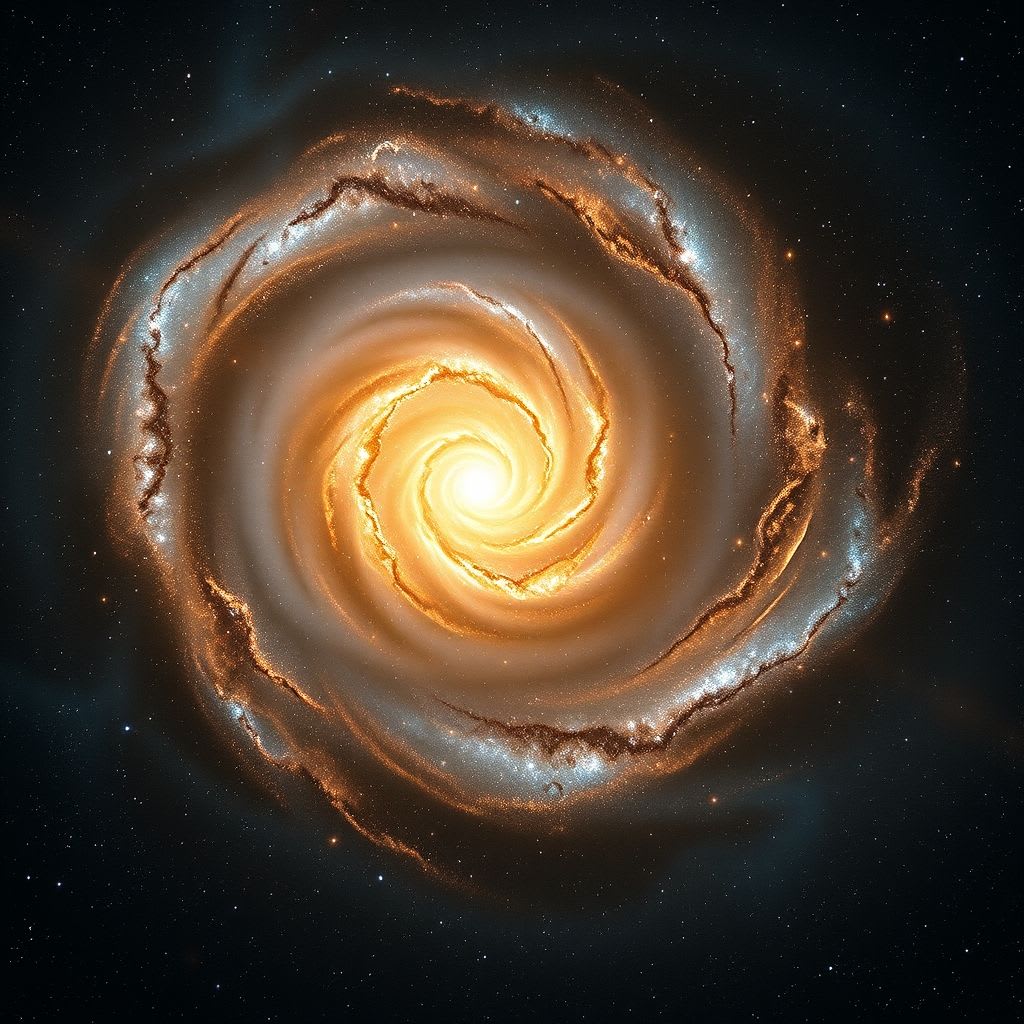
Modeling galaxies is one of the most fascinating and complex areas of modern astrophysics. These enormous islands of stars, stretching across hundreds of thousands of light-years, hold countless mysteries about the origins and evolution of the cosmos. To unlock these secrets, scientists build sophisticated mathematical and computer models that do far more than create pretty pictures — they allow us to understand how the universe formed its first structures after the Big Bang and to predict what will happen to galaxies billions of years from now.
What Is a Galaxy Model?
A galaxy model is a scientific reconstruction of a galaxy’s structure, dynamics, and evolution. Depending on the purpose, these models can range from simple approximations to highly detailed simulations involving billions of particles that represent stars, dark matter, gas, and cosmic dust.
Broadly speaking, there are two main types of galaxy models:
- Analytical Models: These use equations to describe how mass is distributed within a galaxy, how fast it rotates, and how gravity shapes its overall structure. They offer a simplified yet powerful way to understand general galactic behavior.
- Numerical Simulations: Running on supercomputers, these simulate the physical processes in galaxies over billions of years. They divide the galaxy into millions or billions of particles, each representing an element of matter, and calculate how they interact with each other through gravity, gas dynamics, and more.
What Are Galaxies Made Of?
Before scientists can model a galaxy, they must understand its key components:
- Stars — the bright, visible matter forming the main bulk of a galaxy.
- Gas and Dust — the raw materials from which new stars are born.
- Dark Matter — an invisible substance that outweighs visible matter and plays a dominant role in shaping the galaxy through gravity.
- Black Holes, especially the supermassive ones often found at galactic centers, which profoundly influence galactic dynamics.
Each of these components behaves differently and interacts in complex ways. Researchers create separate physical models for stars, gas, dark matter, and black holes, then combine them to build a complete galactic simulation.
How Are Computer Simulations of Galaxies Created?
Creating a galaxy simulation starts with choosing key parameters such as total mass, size, density, composition, and even where the galaxy sits in space. The process generally follows these steps:
- Particle Division: The galaxy’s mass is broken down into millions or billions of particles. Each particle might represent a star, a gas cloud, or a clump of dark matter.
- Applying Physical Laws: Forces like gravity, gas pressure, magnetic fields, and radiation affect these particles. The simulation computes how these forces influence particle movement and interactions over time.
- Time Evolution: The model advances step-by-step, simulating the galaxy’s changes across billions of years. Each step depends on the results of the previous ones, allowing the galaxy to evolve naturally within the simulation.
- Visualization and Analysis: The output data is processed into visual images, graphs, and movies that show the galaxy’s rotation, star formation, collisions with other galaxies, and eventual fate.
Famous Galaxy Simulation Projects
Among the most impressive and ambitious projects is Illustris and its successor, IllustrisTNG. These simulations cover hundreds of millions of light-years and include data on tens of thousands of galaxies. They have revealed how the large-scale structure of the universe formed and evolved from the early cosmos to the present day.
Another notable simulation is EAGLE, which focuses on star formation physics and how black holes impact galactic development.
Why Are These Models Important?
Understanding the Past: Simulations recreate the universe’s early epochs, helping scientists test theories about how the first galaxies came into existence.
Predicting the Future: They enable predictions about our own Milky Way’s fate—such as its expected collision with the Andromeda galaxy billions of years from now.
Testing Hypotheses: Researchers can run simulations with different parameters—like varying dark matter amounts or rotation speeds—to see how these factors influence galaxy formation and behavior.
How Do Scientists Verify These Models?
To ensure a model is accurate, researchers compare simulation results with real observations from powerful telescopes such as the Hubble Space Telescope, the James Webb Space Telescope, and radio observatories like ALMA and VLA. If the simulated galaxy’s star distribution, spiral arm structure, or black hole activity matches what is observed in the cosmos, confidence in the model’s validity grows.
Looking Ahead: The Future of Galaxy Modeling
As computing power continues to increase exponentially, galaxy models become more detailed and realistic. Soon, simulations will include intricate processes like the chemical evolution of stars, cosmic ray influences, and perhaps even effects from quantum gravity. One day, we may have a simulation so lifelike that we can virtually “live” through the history of the universe — an interactive cosmic symphony of matter, energy, and time.
Conclusion
Creating galaxy models is a remarkable fusion of precise science, cutting-edge computing, and a philosophical quest to understand our place in the cosmos. Each simulation brings us one step closer to answering the profound question: How did order arise from chaos to form the magnificent galaxies we see in the night sky?
In this grand journey, galaxy modeling is not just about numbers and codes — it’s about tracing the cosmic story that connects every star, every planet, and ultimately, ourselves to the vast, unfolding universe.
About the Creator
Keep reading
More stories from Holianyk Ihor and writers in Futurism and other communities.
The Solar Corona: The Mysterious Fiery Crown of the Sun
The solar corona is the Sun’s outermost atmospheric layer — its most rarefied and hottest part. Although barely visible from Earth except during a total solar eclipse, the corona holds countless mysteries that scientists have been striving to unravel for decades. What makes it so unique, and why is studying it essential not only to understanding the Sun but also to predicting the space weather that impacts our planet?
By Holianyk Ihor7 months ago in Futurism
About Binding Prometheus
I want to start actively advocating on behalf of my own work, and the most valuable part of my canon is, without a doubt, Binding Prometheus, the play I have been working on since 2019 and only finished in 2023 as part of my MA. The play itself is an amalgamation of a million different inspirations. On one end, it evokes the Ancient Greek myth-play, deriving its own title from the earliest extant work of Western drama we have, Aeschylus’s Prometheus Bound. On the other end, it borrows significantly from the sci-fi bulwarks from over the years, namely Mary Shelley’s Frankenstein and Karel Capek’s Rossum’s Universal Robots. The play could be an episode of Black Mirror, I fear. I don’t know. I’ve only ever seen one episode of Black Mirror.
By Steven Christopher McKnight16 days ago in Futurism
Flexible Packaging Market Size and Forecast 2024–2033
Introduction The global packaging industry is undergoing a fundamental transformation as businesses, regulators, and consumers demand lighter, more sustainable, and more functional solutions. At the heart of this transformation lies flexible packaging—a category that has moved far beyond its early reputation for basic plastic wraps and bags. Today, flexible packaging is synonymous with innovation, sustainability, branding potential, and operational efficiency across industries.
By Aaina Oberoi3 days ago in Futurism



Comments
There are no comments for this story
Be the first to respond and start the conversation.