
How China will rival Elon Musk’s Starlink Satellite Service
Game on: Network services

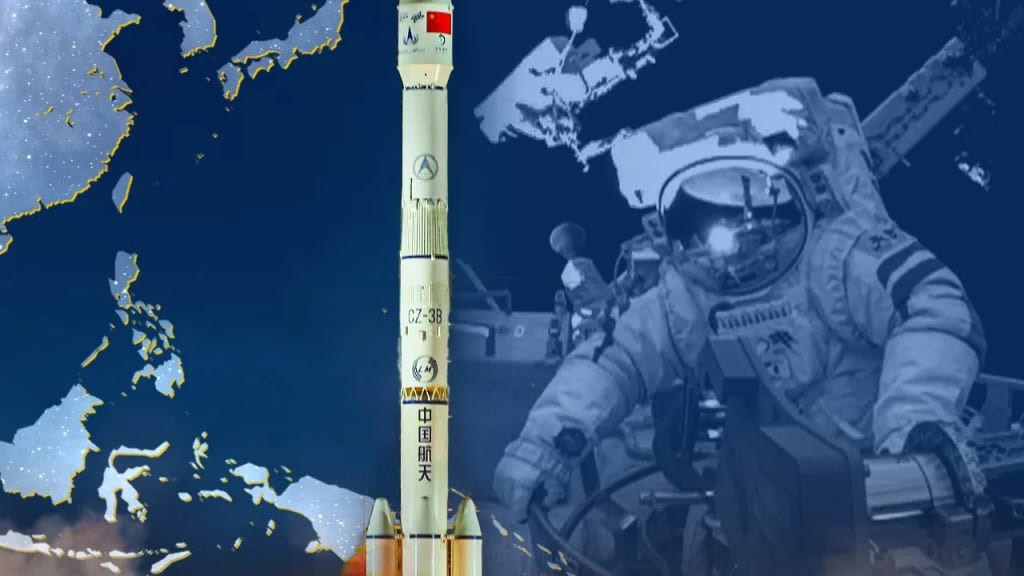
In early December, China launched its third batch of low Earth orbit (LEO) internet satellites. This constellation, known as Qianfan or "Thousand Sails," consists of 15,000 satellites. This initiative is aimed at competing with SpaceX's Starlink. Another project, Guo Wang, plans to deploy 13,000 satellites. A third effort, Honghu-3, aims for 10,000 satellites but has yet to launch any.
Since the beginning of 2021, investment in satellite systems in China has surged. This investment was spurred by Starlink's success and the potential to fill gaps in its service. Starlink has not yet reached every corner of the world. Some regions remain underserved, partly due to resistance from countries wary of unrestricted access to the internet. Nations like Russia and China likely view this as a challenge.
China, despite having the most internet users globally, is second only to India concerning unconnected populations. The country's strategy focuses on establishing itself as a science and technology power. For China, space represents an emerging frontier of technological influence. Their ambitious plans include landing astronauts on the moon by 2030 and creating a lunar base by 2035.
Catching up with Starlink won't be easy. Starlink already operates nearly 7,000 satellites and serves around 5 million customers in over 100 countries. SpaceX plans to expand its mega constellation to a staggering 42,000 satellites. In comparison, China aims for 38,000 across Guo Wang, Qianfan, and Honghu-3.
The development of these projects is closely tied to the Chinese government, although there is a growing role for the private sector. Guo Wang is entirely state-owned, backed by China Satellite Networks Limited. Qianfan is also primarily governed by the government, with significant investment from local authorities.
As of 2023, China ranked second globally in government space investment, pouring over $14 billion into space activities. The U.S. leads with more than $73 billion in funding. However, the challenge lies in launching these satellites. China struggles with mastering reusable rocket technology, a vital aspect that SpaceX has successfully refined. By 2030, Guo Wang may not have enough rockets to launch 10,000 satellites, but it could manage to deploy around 1,000.
Launch capacity is crucial as China needs to meet deadlines established by the International Telecommunications Union (ITU). Guo Wang has secured the necessary licenses but faces strict launch timelines. While Starlink and other companies like Eutelsat and Amazon's Project Kuiper are in the race too, China's push stems from various motivations, including countering potential threats from uncensored internet access.
Beijing recognizes the geopolitical risks posed by platforms like Starlink, which offer unfiltered access to information. In response, China is determined to provide an alternative model. While their satellites may not become primary internet providers in Western nations, areas like Russia, Afghanistan, and parts of Africa remain potential markets.
Africa has already adopted Huawei's 4G infrastructure significantly. China's provision of technologies influences these regions, creating long-term dependencies on Chinese systems. This strategy aligns with their national security objectives, especially in wartime when terrestrial internet infrastructure might become compromised.
China's investments reflect broader ambitions that resonate through military applications. Satellite systems enhance intelligence, connectivity, and coordination on the battlefield, a crucial factor in modern warfare. As the race to deploy LEO satellites heats up, concerns mount regarding space debris and the crowded orbital environment.
Without established regulatory frameworks governing LEO, satellite operators must independently navigate collision risks. They employ algorithms to predict potential conjunctions, which are critical for maintaining satellite longevity. As each satellite is designed for about five years of operational life, scientists are uncertain about the environmental effects when they are decommissioned.
Amidst increasing launches, including a projection of 58,000 by 2030, the competition for space is fierce. The consensus is that while China is poised to catch up, it won't necessarily surpass the United States. The U.S. government must prepare for heightened competition, as China's ambitions for global internet coverage through initiatives like Belt and Road could reshape geopolitical landscapes.
Ultimately, support for American innovators in satellite technology is essential. The ramifications of this competition extend beyond mere economics into the realms of national security and global influence.
About the Creator
Tafara Sibotshiwe
A versatile authentic writer and passionate storyteller. With a background in, Journalism, Engineering, History, Health & finance, they combine profound insight with creative flair to explore the complexities of the human experience.
Keep reading
More stories from Tafara Sibotshiwe and writers in Futurism and other communities.
Why you will never see Great White Sharks in Aquariums again!
From hammerheads to orcas, aquariums worldwide attract millions of visitors who marvel at dangerous marine creatures. Yet, one ocean menace remains elusive in captivity: the great white shark. Despite being famously known as a fearsome predator, no great white is currently held in aquariums. Oddly enough, over the past 70 years, more than 30 great whites have been observed in various aquariums.
By Tafara Sibotshiweabout a year ago in Futurism
Your Face is Getting a Major Upgrade: 5 Game-Changing Features Coming to Meta Ray-Ban Display
When the $800 Meta Ray-Ban Display glasses hit the market in October, they felt like a prop pulled straight from a high-budget sci-fi thriller. For the early adopters who secured a pair, the experience of a heads-up display (HUD) glowing within their field of vision was nothing short of exhilarating. However, as with many first-generation devices, the initial thrill was tempered by a lingering sense that we were wearing a high-tech prototype—one that excelled at snapping photos and answering voice queries but remained largely tethered to a static, limited framework.
By Tech Horizonsabout 7 hours ago in Futurism
Australia Pro AV Market: Hybrid Work Demand, Digital Signage & Smart AV Technologies
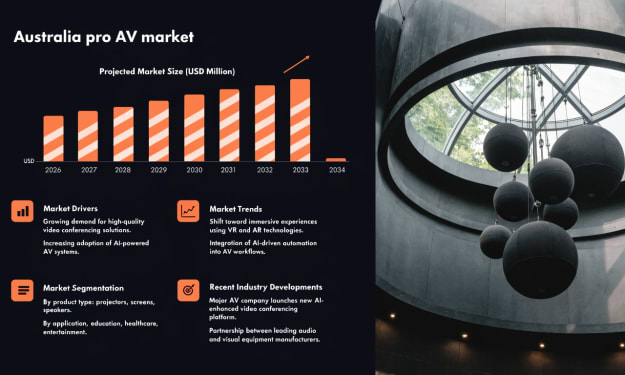
According to IMARC Group, the Australia pro AV market reached a value of USD 93.9 Million in 2025 and is projected to reach USD 133.6 Million by 2034, growing at a compound annual growth rate (CAGR) of 3.88% during 2026–2034. The market is expanding as organizations increasingly adopt advanced audiovisual solutions to support communication, collaboration and digital engagement. Hybrid work environments are encouraging businesses to invest in video conferencing systems, smart displays and integrated collaboration platforms that connect remote and in-office teams. At the same time, industries such as retail, hospitality and tourism are investing in digital signage to improve customer engagement and brand communication. As companies focus on creating interactive and technology-driven environments, professional AV solutions are becoming essential tools for modern workplaces, entertainment venues and commercial spaces across Australia.
By Kevin Cooper6 days ago in Futurism
Why Didn't Anyone Tell Us
Men, move along. This is not for you. This is for the women. I was forty-five when I began menopause. It is pretty young for that to be going on in a woman’s life, but I had undiagnosed PCOS, my entire life. Thank you to all the gynecologists I had seen my entire life. That in itself should encourage women to keep seeking second opinions, especially when you are not getting correct answers or any at all.
By Alexandra Grant4 days ago in Humans


Comments
There are no comments for this story
Be the first to respond and start the conversation.