
Your Face is Getting a Major Upgrade: 5 Game-Changing Features Coming to Meta Ray-Ban Display
More Than Just a Camera: How the First Big OS Update Transforms the World’s Most Advanced Smart Glasses

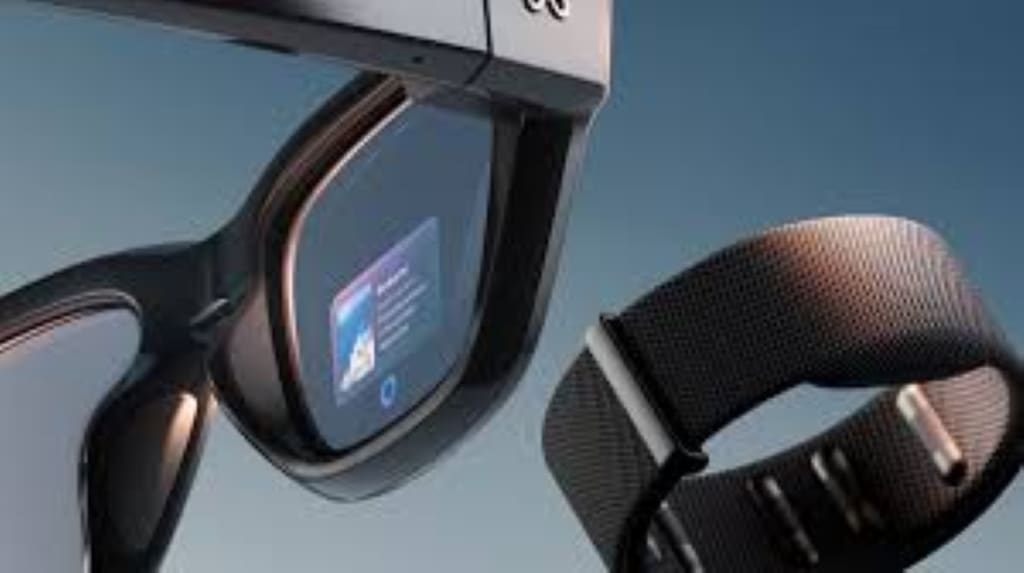
When the $800 Meta Ray-Ban Display glasses hit the market in October, they felt like a prop pulled straight from a high-budget sci-fi thriller. For the early adopters who secured a pair, the experience of a heads-up display (HUD) glowing within their field of vision was nothing short of exhilarating. However, as with many first-generation devices, the initial thrill was tempered by a lingering sense that we were wearing a high-tech prototype—one that excelled at snapping photos and answering voice queries but remained largely tethered to a static, limited framework.
The fundamental problem with early smart glasses has been their role as passive accessories. They were tools we reached for to complete a specific task before inevitably glancing back down at our smartphone screens. Because of functional limitations, the glasses often spent most of their time in "standby," waiting for a voice command. The software simply hadn't caught up to the ambitious promise of the hardware, leaving the dream of a truly "ambient" computer just out of reach.
That changes this month. Meta is rolling out the first major OS update for the Display glasses, and it marks a fundamental shift in the device's soul. This isn’t a mere collection of bug fixes; it is a transformation from a passive accessory into a proactive computing platform. By introducing deeper spatial navigation, "invisible" neural gesture controls, and a structured information architecture, Meta is finally giving us a glimpse of a future where our digital lives aren't tucked away in our pockets, but woven into the world around us.
--------------------------------------------------------------------------------
1. Your Life, Soundtracked by AI Vision
One of the most evocative additions in this update is the Spotify "Soundtrack Your World" feature. In a significant leap for contextual AI, Meta AI now uses the glasses' built-in camera to "see" and interpret your physical surroundings to curate the perfect audio backdrop. Whether you are gazing at the bruised purples of a mountain sunset, a classic album cover in a record store, or a neon-soaked concert poster, the AI analyzes the visual data to pick a song that fits the specific aesthetic of the moment.
"Hey Meta, play a song to match this view."
This feature fundamentally alters the relationship between our visual environment and our digital audio experience. Instead of fumbling with a phone to find a "vibe," your world becomes the playlist. It turns every scenic overlook or city street into a personalized cinematic experience, where a simple visual prompt triggers an immediate, relevant soundtrack—turning the mundane act of walking through a park into a curated, sensory event.
2. The Neural Band: Turning Fingers into a Game Controller
While the glasses launched with a simple ball-sliding game called Hypertrail, this update introduces two new titles that showcase the potential of wearable tech: GOAT and 2048. GOAT is a vertical platformer where you guide a jumping goat across crumbling platforms, while 2048 is the classic tile-sliding puzzle game.
What makes these games revolutionary isn't the graphics—it’s the "phantom-feel" of the control method. Using the Meta Neural Band, these games utilize Electromyography (EMG) to detect subtle muscle signals from finger-to-thumb taps and swipes. To make the goat jump, you simply tap your index finger to your thumb; to move, you swipe your thumb across your fingers.
This is a vital proof-of-concept for high-precision, "invisible" gesture control. By using a wrist-based band to detect muscle movement rather than relying on bulky, battery-draining hand-tracking cameras, Meta has found a way to let us interact with a HUD without looking like we’re swatting at invisible flies. It’s the birth of a control scheme that feels like a natural extension of the body.
3. The UI Goes Vertical: Why the New Widget Space Matters
The most significant structural change to the OS is the introduction of a new spatial dimension: the "Widgets & Live Activity Space." Previously, the interface was a horizontal affair, featuring a center home tab, a left-side settings menu, and a right-side two-column applet library containing shortcuts for everything from WhatsApp and Messenger to Maps and the Camera.
The update introduces a vertical layer. By swiping "up" from the center tab—or literally looking upward into the top of the HUD—users can access a dedicated dashboard of widgets. At launch, four widgets are available:
Reminders
Calendar events
Weather
Stocks
This mirrors the evolution of the smartwatch, moving the HUD away from a list of simple notifications and toward a structured, glanceable dashboard. By placing these "Live Activities" (like ongoing navigation or music) in a space that requires a deliberate upward glance, Meta is minimizing eye strain and clutter, ensuring that the information you need most is always "above" the noise of your daily life.
4. From Audio to Visual Productivity
Productivity on the glasses has received a major visual upgrade. Previously, checking your schedule was a voice-only affair; you had to ask Meta AI to read your Google or Outlook Calendar events aloud. The new update introduces a dedicated Calendar app, allowing users to "privately and visually" scan their full schedules and event details directly in the HUD. It’s the difference between hearing a list and seeing your day mapped out before you.
Perhaps even more impactful is the expansion of live captioning. While the glasses could already translate real-world conversations in real-time, they can now provide live captions for incoming audio on phone calls. Imagine standing on a bustling, screeching subway platform, unable to hear a word your boss is saying, but reading their instructions in real-time on your lenses like a secret superpower. This solves a real-world problem with an elegant, digital solution that feels indispensable for the modern professional.
5. The Infinite Scroll Hits the HUD
For the social media savvy, the Instagram integration has evolved from a basic communication tool into a full-blown content engine. Previously, you could only view Reels that were sent to you via Direct Message. Now, the Instagram app opens to the full, algorithmic Reels feed we’ve grown addicted to on our phones.
Navigation is handled entirely through the Neural Band: you scroll through the feed by swiping your thumb down against the side of your index finger. A double-tap of the index finger to the thumb "likes" the Reel, while a single tap opens a sharing menu. While this undeniably increases the "distraction factor" of the device, it represents the ultimate convenience for hands-free consumption. You can now catch up on your feed while walking the dog or waiting in line, all without ever breaking your posture to look at a handheld screen.
--------------------------------------------------------------------------------
Conclusion: The Future is in Sight
This update represents a significant leap in the maturity of the "HUD OS." By moving beyond simple voice commands and adding sophisticated gesture controls, spatial widgets, and dedicated productivity apps, Meta is proving that smart glasses are ready to be more than just a camera on your face—they are a legitimate computing platform.
As these features become more integrated into our daily routines, they bring us closer to a world where technology is no longer a destination we visit on a glass rectangle in our hands. It raises a compelling question: As the digital layer fixed to our field of vision becomes more capable and seamless, are we finally ready to stop looking down at our phones and start looking through our computers?
About the Creator
Tech Horizons
Exploring the future of technology, AI, gadgets, and innovations shaping tomorrow. Stay updated with Tech Horizons!
Keep reading
More stories from Tech Horizons and writers in Futurism and other communities.
Your Galaxy Watch 7 Just Got a Major 2026 Refresh: 4 Things You Need to Know
For many of us, the ping of a software update notification often triggers a brief moment of anxiety—a nagging worry that a new patch might slow down a reliable device or tether us to a charger. However, in the high-stakes tech landscape of early 2026, these updates have evolved into the primary way our hardware actually improves over time. As the new Galaxy S26 series makes its debut, Samsung is ensuring the Galaxy Watch 7 receives the same software dignity as its latest flagships, proving this 2024-era wearable remains a vital, high-performing pillar of the ecosystem. The big news this week? The February 2026 security update has officially moved beyond its initial testing grounds in South Korea and has gone global.
By Tech Horizonsabout 8 hours ago in Futurism
Australia Pro AV Market: Hybrid Work Demand, Digital Signage & Smart AV Technologies
According to IMARC Group, the Australia pro AV market reached a value of USD 93.9 Million in 2025 and is projected to reach USD 133.6 Million by 2034, growing at a compound annual growth rate (CAGR) of 3.88% during 2026–2034. The market is expanding as organizations increasingly adopt advanced audiovisual solutions to support communication, collaboration and digital engagement. Hybrid work environments are encouraging businesses to invest in video conferencing systems, smart displays and integrated collaboration platforms that connect remote and in-office teams. At the same time, industries such as retail, hospitality and tourism are investing in digital signage to improve customer engagement and brand communication. As companies focus on creating interactive and technology-driven environments, professional AV solutions are becoming essential tools for modern workplaces, entertainment venues and commercial spaces across Australia.
By Kevin Cooper6 days ago in Futurism
WhatsApp Business API: A Complete Guide to Business Messaging in 2026
Over the past decade, the way businesses communicate with customers has changed dramatically. Traditional channels such as email and phone support are still widely used, but instant messaging has become one of the most preferred ways for people to interact with brands. Customers increasingly expect quick responses, convenient updates, and support that feels personal rather than formal.
By Olivia Carter3 days ago in Futurism
My First Time Skiing and I Got Lost, Alone, in the French Alps
Looking back, I can trace some of my life’s biggest adventures to a simple action from my sister. She’d introduced me to Tommy (a very long time ago), a colleague of hers, who had overshared his penchant for Italian-looking women, and I ticked that box.
By Chantal Christie Weissa day ago in Humans



Comments
There are no comments for this story
Be the first to respond and start the conversation.