
Why you will never see Great White Sharks in Aquariums again!
Oceans, the only ideal habitat!

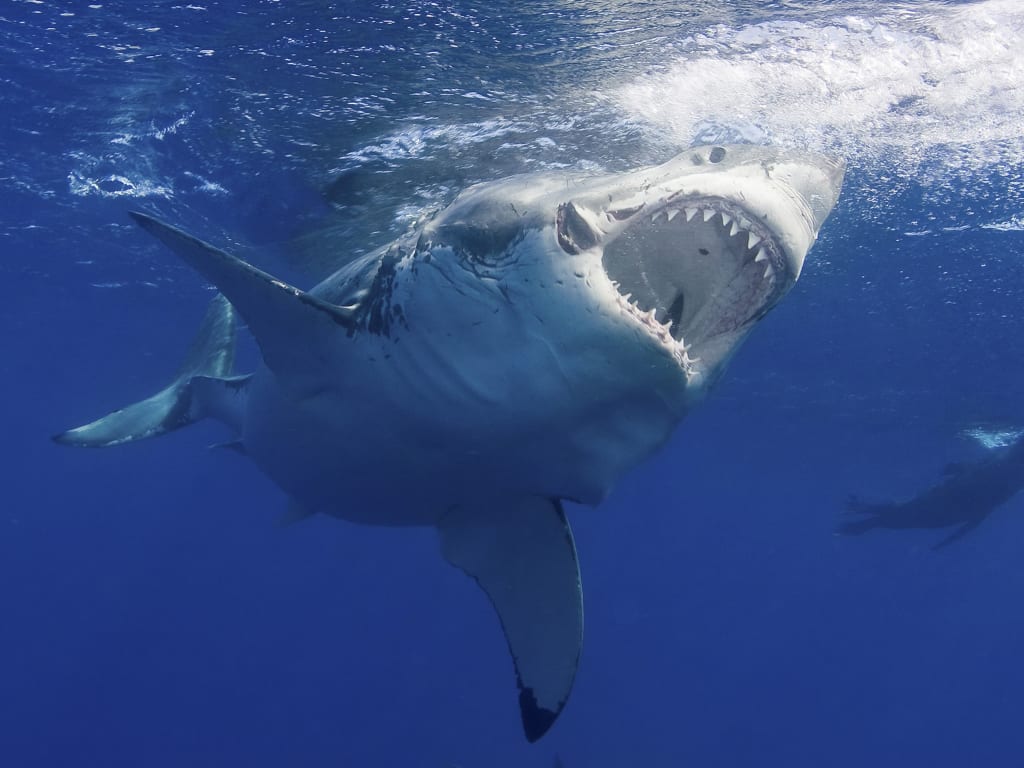
From hammerheads to orcas, aquariums worldwide attract millions of visitors who marvel at dangerous marine creatures. Yet, one ocean menace remains elusive in captivity: the great white shark. Despite being famously known as a fearsome predator, no great white is currently held in aquariums. Oddly enough, over the past 70 years, more than 30 great whites have been observed in various aquariums.
So, where did they all go? Buckle up as we dive into the history of great whites in captivity. Sharks evoke fear among many. A survey by Ipsos Public Affairs revealed that over 48% of Americans fear sharks, more than wolves or bears. Great whites, being the largest predatory fish—often reaching 20 feet—are the most intimidating. They can swim at speeds of up to 35 mph, while humans average just 2 mph. This makes escaping a great white virtually impossible.
Armed with 53 elongated serrated teeth, these creatures have a powerful bite that exerts 4,000 PSI—over 25 times stronger than a human's. With a jaw like that, it’s no wonder they account for 37% of unprovoked shark attacks since 1580. Unsurprisingly, if you value your life, keeping your distance from these predators is wise.
Despite their terrifying reputation, humans have always sought to get close to great whites. Aquariums launched numerous attempts to keep these sharks for public display, beginning in the 1950s at Marine Land of the Pacific. It was a significant event, as the aquarium needed extraordinary exhibits to fill its vast space. They captured a juvenile great white that had been seen near Scripps Pier. It was brought to the aquarium but died within a day.
Other aquariums didn't fare better. In 1968, Manly Marine Land Aquarium tried housing a great white caught off the Australian coast. Although it survived the tumultuous journey, it faced conditions that were too crowded and stressful. By 1968, four attempts to keep these sharks capped out with each one dying in less than 48 hours.
After years of failed attempts, the release of "Jaws" in 1975 heightened both fear and fascination with sharks. Following this, aquariums scrambled to exhibit great whites. SeaWorld San Diego captured several, but each met a similar fate: death shortly after arrival. In fact, the competition intensified, with San Francisco's Steinhardt Aquarium implementing elaborate capture methods.
In 1980, Steinhardt made headlines when they captured a great white nicknamed Sandy. She survived for only three days. Again, those attempting to house a great white met frustration.
Years passed, and attempts eventually died down. In 2004, Monterey Bay Aquarium made a groundbreaking attempt. They built an enormous tank that could hold a million gallons of water. They captured a great white that survived for an impressive 198 days—longer than previous attempts. However, the shark grew to a size where it began preying on smaller fish in the tank. In the end, Monterey had to release it due to safety concerns.
Fast forward to 2016, when an adult great white was displayed at Okinawa Churaumi Aquarium in Japan. Unfortunately, it survived only three days. The last known great white in captivity was Rosie, a preserved specimen from 1997, caught in a fishing net.
The reasons for the struggles in keeping great whites in captivity are multi-faceted. They grow large, are highly migratory, and require enormous tanks. The transport process also contributes to their demise, as many are caught in gill nets, leaving them immobilized. Mojambo Water Dream's 1 million gallon tank at Monterey was the only successful attempt, yet even that proved insufficient for long-term care.
Their extraordinary costs—including capture, transportation, and maintenance—make it financially unfeasible for many aquariums. In light of these challenges, it's unlikely we'll see great whites back in aquariums anytime soon. The ocean remains their ultimate habitat.
What shocked you most about this journey into the lives of great whites? Did you ever encounter one in captivity? Share your thoughts in the comments below.
About the Creator
Tafara Sibotshiwe
A versatile authentic writer and passionate storyteller. With a background in, Journalism, Engineering, History, Health & finance, they combine profound insight with creative flair to explore the complexities of the human experience.
Keep reading
More stories from Tafara Sibotshiwe and writers in Futurism and other communities.
AI and the 5th Industrial Revolution
Let us explore what life will be like on Earth in 2074. Imagine 50 years from now. Artificial intelligence will have a profound impact on our planet and civilization. AI stands for Artificial Intelligence, which is basically the ability of computer systems to perform tasks that usually require human intelligence. AI systems can learn, solve problems, make decisions, and do much more.
By Tafara Sibotshiweabout a year ago in Futurism
Cell Dissociation Market Outlook: Advancements in Cell-Based Research and Growth Opportunities
According to IMARC Group's latest research publication, The global cell dissociation market size reached USD 404.8 Million in 2024. Looking forward, IMARC Group expects the market to reach USD 1,186.4 Million by 2033, exhibiting a growth rate (CAGR) of 12.06% during 2025-2033.
By James Whitman3 days ago in Futurism
Plant-Based Food Market: How AI and Innovation Are Shaping the Future of Sustainable Nutrition
Introduction The global food industry is undergoing a significant transformation as consumers shift toward healthier and more sustainable dietary choices. One of the most prominent trends emerging from this shift is the growing popularity of plant-based foods. These products are derived entirely from plant sources such as soy, peas, almonds, oats, coconut, and other plant ingredients, offering alternatives to traditional animal-based products.
By James Smith4 days ago in Futurism




Comments
There are no comments for this story
Be the first to respond and start the conversation.