
How Augmented Analytics Is Changing the Way We Use Data
Let's Dive in!

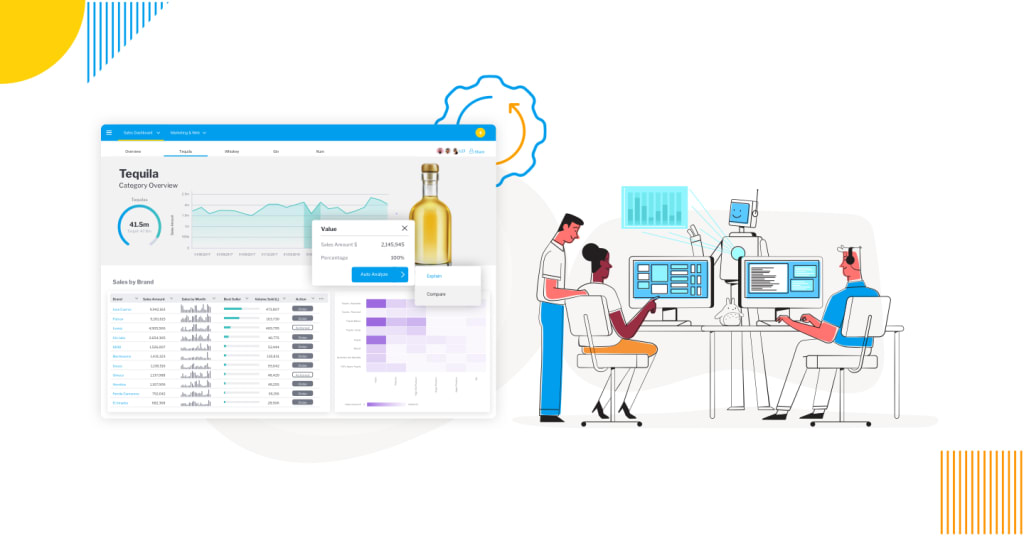
We’re surrounded by data—tons of it. Every click, every transaction, every customer interaction generates a trail of information. But for most businesses, the real challenge isn’t collecting data. It’s knowing what to do with it. How do you turn a mountain of raw numbers into real, actionable insight?
That’s where augmented analytics comes in. It’s not just another tech buzzword—it’s a powerful shift in how we work with data. And it’s already changing the game for everyone from small businesses to global enterprises.
What Is Augmented Analytics?
At its core, augmented analytics refers to the use of artificial intelligence (AI), machine learning (ML), and natural language processing (NLP) to make data analysis faster, easier, and more accessible.
Instead of spending hours wrangling data, building reports, and interpreting graphs, users get automated assistance. These tools surface insights, generate explanations, and even allow users to ask questions in plain language.
In simple terms: augmented analytics helps you make sense of your data—without needing a degree in data science.
Why Traditional Analytics Isn’t Enough Anymore
In traditional analytics, a typical process might look like this:
An executive asks a business question.
A data analyst pulls and cleans the data.
Reports or dashboards are built.
The executive reviews the insights—often days or weeks later.
This process is slow, dependent on specialists, and easy to bottleneck. And in fast-moving markets, delayed decisions can mean lost opportunities.
Augmented analytics automates many of those steps. It can prepare the data, scan it for meaningful trends, highlight outliers, and even answer natural language questions—all in real time.
That shift isn’t just about speed—it’s about enabling more people to engage with data directly and confidently.
Key Features of Augmented Analytics
So, what makes augmented analytics so powerful? Here are some of its most important features:
1. Automated Data Preparation
Preparing data for analysis often takes up to 80% of a data professional’s time. With augmented analytics, tasks like cleaning, merging, and transforming data can be done automatically.
This reduces human error and frees up analysts to focus on higher-value work like strategy and interpretation.
2. Insight Discovery
The system doesn't wait for a user to dig through dashboards. It actively analyzes data in the background, detecting patterns, outliers, and anomalies, then proactively notifies the user of anything important.
You don’t need to know what to look for—the system brings it to you.
3. Natural Language Query (NLQ)
Instead of writing code or SQL queries, users can ask questions in natural language, like:
“What were our top-selling products last quarter?”
The system understands the request, retrieves the data, and displays the results—often with charts and plain-English explanations.
4. Natural Language Generation (NLG)
This goes a step further by automatically creating written summaries of data insights. Think of it like having a virtual analyst who not only gives you the chart but also explains what it means in everyday language.
5. Predictive and Prescriptive Analytics
With built-in machine learning, augmented analytics can not only show what’s happening now but also suggest what might happen next—and what actions to consider.
This helps teams move from reactive decisions to proactive planning.
Real-World Benefits
The real power of augmented analytics is in what it enables across organizations. Here’s how it’s transforming the way people work:
1. More People Can Use Data
Previously, only those with technical skills could get real value from analytics tools. Now, with natural language interfaces and automated insights, anyone can explore data and find answers themselves.
This democratization of data empowers teams and reduces the dependency on overburdened analytics departments.
2. Faster, More Confident Decisions
By cutting down the time it takes to go from question to insight, teams can make better decisions in the moment. Whether it’s adjusting a campaign, optimizing a process, or spotting a problem early, speed is a competitive advantage.
3. Uncover Hidden Opportunities
Automated discovery tools can reveal patterns that human analysts might miss—especially in large or complex datasets. This could mean finding a hidden market segment, detecting fraud early, or identifying operational inefficiencies.
4. Scalability
As your organization grows, so does your data. Augmented analytics scales with you—handling increasing volume and complexity without needing to proportionally grow your analytics team.
Common Use Cases
Augmented analytics is not limited to any one industry or department. Here are some popular applications:
Sales & Marketing: Identifying high-performing campaigns, predicting customer churn, optimizing pricing strategies.
Operations: Monitoring performance metrics, managing supply chains, forecasting demand.
Finance: Anomaly detection, expense analysis, predictive forecasting.
Customer Support: Identifying service trends, sentiment analysis from feedback, improving resolution times.
Challenges and Considerations
Of course, no technology is without its challenges. While augmented analytics offers big advantages, successful adoption requires attention to a few key areas:
1. Data Quality Still Matters
Even the smartest system can’t produce good insights from bad data. Organizations still need strong data governance and cleaning processes to ensure accurate outputs.
2. User Trust and Adoption
If users don’t understand or trust the results, they won’t use them. Transparency, explainability, and training are crucial to help teams embrace this new way of working.
3. Change Management
Introducing augmented analytics may require new workflows, redefined roles, and cultural adjustments. Leadership support and communication are essential.
Best Practices for Getting Started
If you’re ready to explore augmented analytics, here are some steps to consider:
Start with a clear use case
Focus on a specific problem or department where fast insights can add clear value.
Ensure your data is clean and accessible
Augmented analytics works best when it has reliable data to pull from.
Engage end-users early
Get feedback from the people who’ll actually use the insights. This helps shape the implementation and drives adoption.
Provide training and support
Even if the tools are intuitive, a little guidance goes a long way in building confidence and trust.
Measure impact
Track key metrics like decision speed, user engagement, and cost savings to show the ROI of your analytics investment.
The Future of Augmented Analytics
We’re just at the beginning of what augmented analytics can do. As AI becomes even more sophisticated and intuitive, we can expect:
Real-time analytics that provide immediate feedback on business activity.
Voice-based interaction where users can simply talk to their data tools.
Tighter integrations with productivity apps, making insights available wherever people work.
More ethical and explainable AI that ensures fairness and transparency in automated decisions.
Ultimately, the goal is simple: help people make better decisions, faster—with less guesswork and more confidence.
Final Thoughts
Augmented analytics is more than a trend—it’s a fundamental shift in how we interact with data. By combining automation, AI, and natural‑language capabilities, it’s changing the role of analytics in the workplace. It’s no longer just a specialist tool—it’s becoming an everyday assistant.
Whether you’re in marketing, finance, operations, or leadership, augmented analytics can help you move from data overload to data empowerment. If you want to dive deeper into what augmented analytics really means—its components, challenges, and how it works—check out this detailed article: What Is Augmented Analytics.
About the Creator
Yellowfin BI
Yellowfin is a leading BI and analytics provider, combining dashboards, automated monitoring, data storytelling, and collaboration. Trusted by 29,000+ organizations in 75 countries for innovation.
Keep reading
More stories from Yellowfin BI and writers in Futurism and other communities.
What Is Data Storytelling and Why Does It Matter in Analytics?
In today’s data-driven world, we’re surrounded by numbers, charts, dashboards, and reports. But even with all this information at our fingertips, one essential ingredient is often missing: understanding.
By Yellowfin BI4 months ago in Futurism
About Binding Prometheus
I want to start actively advocating on behalf of my own work, and the most valuable part of my canon is, without a doubt, Binding Prometheus, the play I have been working on since 2019 and only finished in 2023 as part of my MA. The play itself is an amalgamation of a million different inspirations. On one end, it evokes the Ancient Greek myth-play, deriving its own title from the earliest extant work of Western drama we have, Aeschylus’s Prometheus Bound. On the other end, it borrows significantly from the sci-fi bulwarks from over the years, namely Mary Shelley’s Frankenstein and Karel Capek’s Rossum’s Universal Robots. The play could be an episode of Black Mirror, I fear. I don’t know. I’ve only ever seen one episode of Black Mirror.
By Steven Christopher McKnight23 days ago in Futurism


Comments
There are no comments for this story
Be the first to respond and start the conversation.