
How AI Is Changing Our Daily Lives in 2025
Discover how artificial intelligence is transforming the way we live, work, and interact in 2025.
Introduction
Artificial Intelligence (AI) has long been a science fiction fantasy, but in 2025 it is part of our everyday lives. From healthcare systems to personal assistants, AI is transforming how we live, work, communicate, and make choices. In this comprehensive article, we examine the many ways that AI is transforming our lives in 2025, its pros and cons, and what the future may hold.
1. AI in Smart Homes and Personal Assistants
AI-powered smart homes are now the norm in 2025. Smart assistants like Amazon Alexa, Google Assistant, and Apple's Siri have evolved as more intelligent, context-aware systems. They now perceive our needs through routines, habits, and real-time data. AI can turn lighting on and off, operate home appliances, suggest meals based on the eating habits, and even monitor household stocks.
Smart thermostats, home security systems, and cleaning robots (like AI-driven Roombas) bring convenience, security, and comfort. With better natural language processing and machine learning, these assistants now understand to recognize emotional tones and respond with empathy, providing a more personalized experience.
2. AI in Transportation and Mobility
Autonomous cars, previously a dream, now are a reality in urban cities worldwide. Autonomous vehicles of Tesla, Waymo, and many more companies provide safe and cost-effective transportation. AI-powered ride-sharing services map routes, reduce gasoline consumption, and bring traffic down.
Public transport also uses AI systems for scheduling, maintenance, and real-time public communication. AI processes dynamically optimize traffic lights to smooth out flow, and predictive analytics avoid accidents by analyzing areas of risk.
3. Healthcare with AI
AI has revolutionized medicine in 2025. Machine learning-based diagnostics can detect diseases like cancer, Alzheimer's, and heart disease more accurately and earlier than ever. AI-enabled radiology, pathology, and genomics have significantly improved patient outcomes.
Personalized medicine is now standard, with AI analyzing genetic data to tailor treatments for individuals. Virtual health assistants monitor patients 24/7, reminding them to take medications and alerting doctors to abnormal signs. Robotic surgeries, guided by AI, offer precision beyond human capability, reducing recovery times and surgical risks.
Also, AI is crucial to mental health. Apps and wearables track mood, sleep, and stress levels and notify users in real-time for intervention or direct them to a therapist as needed.
4. AI in Education
The education sector has been transformed. Learning is customized by AI tutors, who learn how to adjust to students' learning style, pace, and knowledge deficiency areas. Students receive immediate feedback, which aids in an efficient and engaging learning process.
Artificial intelligence helps teachers with assessment, lesson preparation, and the identification of students who need additional support. Online classrooms have incorporated real-time translation and accessibility tools to enhance learning.
Besides, AI develops problem-solving skills and critical thinking abilities through adaptive learning platforms that offer real-world simulations and game-based materials.
5. AI in Work and Productivity
Artificial intelligence has transformed the workplace. Virtual AI workers do routine work, freeing up people to perform higher-value, more creative tasks. AI programs in marketing, finance, and logistics analyze huge databases to pull out wisdom, predict trends, and refine operations.
Remote working has been supplemented by AI-enabled collaboration software, including recording meetings, summarizing discussions, and automating task scheduling. AI also helps in recruitment by pre-screening CVs, examining candidates' behavioral patterns, and eliminating unconscious bias.
In creative arts, AI aids music, art, and content generation, enabling and augmenting human creatives rather than competing with them
6. AI in Entertainment and Media
The likes of Netflix, Spotify, and YouTube use AI to recommend content tailored to one's taste. By 2025, the algorithms have advanced even further, producing personalized experiences based on mood, viewing history, and even biometric feedback.
Content also made by AI is on the rise. From AI-written scripts to virtual influencers and digital people who look, talk, and move like humans, boundaries between technology and creativity are becoming increasingly blurred.
Video games employ AI to create dynamic, interactive worlds and NPCs (non-playable characters) that react to the actions of the players, creating immersive gameplay.
7. Shopping and Retail with AI
Shopping in 2025 is fueled by AI from top to bottom. From stock management to personalized marketing, AI optimizes customer experience. Smart mirrors in the store suggest clothes, and virtual try-on and AR shopping provide more reliable online purchases.
AI chatbots handle customer service efficiently, scanning questions and repairing issues in seconds. In the background, predictive analytics forecast demand, cut waste, and optimize supply chains.
Even payment systems have gotten smarter with AI detecting fraud in real-time and enhancing transaction security.
8. AI in Finance and Banking
Artificial intelligence is at the center of managing personal finance. Robo-advisors provide personalized investment suggestions as per users' goals, risk tolerance, and market trends. AI technologies aid individuals in managing budgets, tracking expenses, and saving funds better.
Banks use AI for customer service, fraud detection, credit scores, and disbursal of loans. Chatbots can explain loan terms, resolve account issues, and conduct transactions securely.
Stock exchanges use algorithmic trading based on real-time analysis of global data, which makes markets more efficient but potentially volatile.
9. AI in Law and Governance
Legal systems are augmented by AI through analysis of documents, research of case precedents, and even predicting the outcome of cases. AI accelerates legal proceedings by streamlining paperwork and identifying relevant precedents.
Governments use AI to manage resources, monitor public views, and make data-driven decisions. Urban planning, waste management, and disaster response mechanisms are smarter and more timely with the usage of AI.
But this is accompanied by ethical concerns regarding surveillance, data privacy, and algorism transparency.
10. AI and Social Relationships
Socially aware robots and virtual friends are gaining popularity, especially among the isolated and elderly. They provide conversation, companionship, and reminders for daily tasks.
Social network sites use AI to censor messages, provide friend suggestions, and detect abusive behavior. AI also helps users manage their digital well-being by tracking screen time and suggesting a break.
But reliance on AI-facilitated communication has raised alarms about emotional intelligence and human relationships.
11. Ethical Issues in Challenges
While it is useful, AI poses certain ethical issues. Bias in software, privacy in data, job loss, and surveillance are some of the issues that need to be resolved, and making safer AI systems fair, transparent, and accountable is crucial.
Regulatory frameworks are evolving, but it is difficult to maintain pace with innovation. Uncertainty exists as to who is liable when AI systems malfunction or cause harm.
Educating the public about AI and hearing from a variety of voices during the creation of AI is crucial to creating inclusive, ethical technology.
12. The Future of AI Beyond 2025
In the future, AI will keep evolving. Brain-computer interfaces, general AI (AGI), and quantum computing have the potential to transform what is possible with AI.
We can imagine AI not just as a tool, but as a partner, acting in concert with humans in every domain of life. With wise development, AI can be a tremendous force for good, solving problems like climate change, pandemics, and poverty.
But that requires watchfulness, ethics, and commitment to placing humanity at the center of technological progress.
Conclusion
AI is no longer a future way of thinking—it is the tapestry of our present reality. By 2025, it touches nearly every aspect of our lives, from waking up to sleeping. Though it has countless benefits, it also requires us to rethink our values, our duties, and our relationship with technology. AI is only at the threshold of its beginning, and its impact will continue to grow in the years to come. Our job is to guide its development sensibly, that it contributes to human life and not detracts from it.
About the Creator
Reader insights
Nice work
Very well written. Keep up the good work!
Top insight
Excellent storytelling
Original narrative & well developed characters
Keep reading
More stories from Mohamed Amine and writers in Futurism and other communities.
Sustainable Marine Fuel Market To Reach USD 836.0 Billion by 2034 at 51.5% CAGR
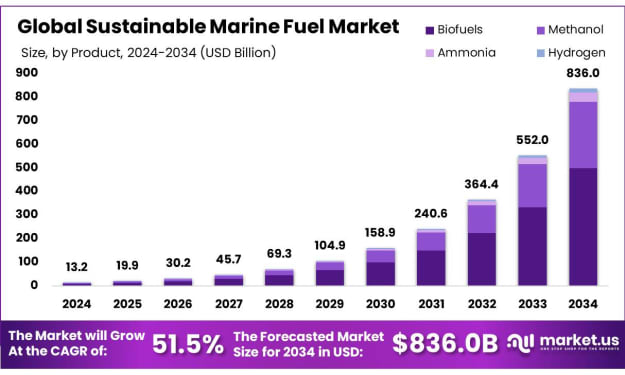
The global Sustainable Marine Fuel Market is projected to grow rapidly, increasing from USD 13.1 billion in 2024 to around USD 836.0 billion by 2034, representing a compound annual growth rate (CAGR) of 51.5% between 2025 and 2034. In 2024, Europe led the market with more than 51.0% of the global share, generating approximately USD 6.7 billion in revenue. This expansion is largely driven by the maritime sector’s urgent need to reduce emissions, as shipping currently accounts for about 2.5% of global greenhouse gas (GHG) emissions, a figure that could rise to nearly 17% by 2050 without effective mitigation measures.
By Hayden Kulas3 days ago in Futurism
Saudi Arabia Poultry Market: Food Security, Domestic Production & Growth Outlook
According to IMARC Group's latest research publication, Saudi Arabia poultry market size reached USD 19.0 Billion in 2024. The market is projected to reach USD 26.6 Billion by 2033, exhibiting a growth rate of 3.4% during 2025-2033.
By Shubham Sharma about 17 hours ago in Futurism



Comments
There are no comments for this story
Be the first to respond and start the conversation.