
Holographic Displays and the Future of 3D Communication
How the world is moving from flat screens to life-like holograms that bring people, products, and ideas to life.

Introduction: From Flat Screens to Floating Images
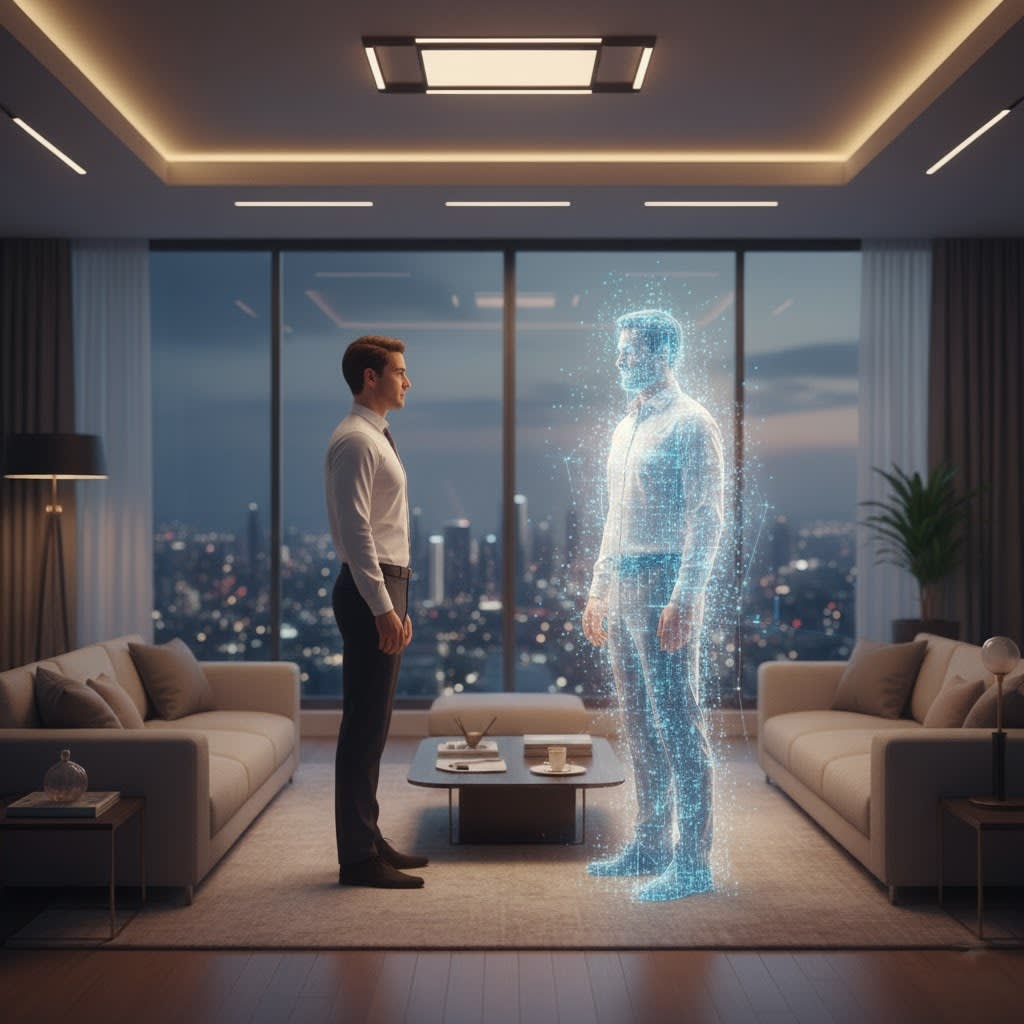
For many years, we have been watching our world through flat screens — on phones, TVs, and computers. But imagine a world where you don’t just *see* someone on a screen, you *see* their 3D image standing right in front of you. This is not a scene from a science fiction movie anymore — it’s becoming reality through **holographic displays**. These displays project three-dimensional images that look real, even though they’re made entirely of light. In the near future, holographic technology could change how we communicate, learn, shop, and even love.
What Is a Holographic Display?
A holographic display is a new type of technology that creates **3D images that appear to float in the air**. Unlike traditional 3D glasses or VR headsets, you don’t need any special equipment to see the image. It’s visible to the naked eye from different angles, just like a real object.
Think of it like this: instead of seeing a video call on your phone, you’ll see the full 3D image of the person — standing or sitting right in front of you. You could walk around them, view their gestures, and even feel like they’re actually there.
This is made possible by lasers, light-field projection, and advanced AI software that calculate how light bounces in real life. The result is a **lifelike hologram** that feels almost magical.
The Magic Behind the Light
Creating a hologram isn’t simple. The display works by **bending and controlling light waves** to form a 3D image. When your eyes see the image from different angles, your brain processes it as real depth — just like seeing an actual object.
There are different kinds of holographic technologies being developed today:
*Laser-based holograms** that project light into the air.
*Augmented reality holograms** that appear through glasses or lenses.
*AI-powered holograms** that can move, talk, and even respond to emotions.
Big companies like **Microsoft (with HoloLens)**, **Looking Glass Factory**, and **Samsung** are investing heavily in this technology. Some have already created holographic meetings where people from different countries appear together in 3D — no headset required!
A New Way to Communicate
Imagine calling your family across the world, and instead of a video call, you see them sitting beside you as a full 3D image. That’s the future of communication holographic displays promise.
Businesses are already testing this. For example:
* In **education**, teachers can appear as holograms in classrooms anywhere in the world.
* In **medicine**, doctors can use holograms to explain surgeries or show 3D scans of organs.
* In **entertainment**, singers can perform as holograms on multiple stages at once.
The possibilities are endless — and all of them bring people closer together, even when they’re far apart.
Changing the Way We Work and Learn
Holographic meetings could replace traditional video conferences. You won’t just *see* your colleagues — you’ll be able to look around the room and interact naturally. It will make remote work more human and realistic.
In schools and universities, holographic lessons could help students learn complex topics more easily. Imagine a science class where a hologram of the solar system floats above your desk, and you can walk around each planet to explore it.
This kind of learning experience could make education more exciting and effective.
The Future of Shopping and Marketing
Businesses are already experimenting with holographic ads. Instead of posters or screens, stores can display 3D products that customers can view from all sides. You could even “try on” holographic clothes before buying them online.
In real estate, you could tour a holographic version of a house before it’s even built. In car showrooms, you could see a life-size 3D model of a car, open its doors, and explore the interior — all made of light.
Challenges and What Comes Next
Like every new technology, holographic displays still face challenges. The equipment is expensive, requires powerful computing, and needs special environments to work perfectly. But as technology improves, costs will drop, and holographic displays will become as common as smartphones are today.
In the next decade, we may see **holographic TVs**, **3D social media chats**, and even **virtual holographic assistants** helping us in our homes. The future of communication will no longer be flat — it will be alive, interactive, and three-dimensional.
Conclusion: The Light of the Future
Holographic displays are more than just a cool invention — they are the **next step in human connection**. They bring a sense of presence, emotion, and depth that traditional screens can never match. From education to medicine, business to entertainment, this technology will touch every part of our lives.
As we move into the future, the line between the real and the digital world will slowly fade — and what will remain is light, color, and connection in its most beautiful 3D form.
About the Creator
Keep reading
More stories from Kashif Wazir and writers in Futurism and other communities.
The World’s First Ever Hotel in Space is Set to Open in 2027 with Gyms, Restaurants and Bars
The dream of staying in space is about to become a reality as the world’s first hotel in orbit is scheduled to open in 2027. This hotel will not just be a small capsule or a temporary station for astronauts. Instead, it will be a full-scale hotel designed for tourists, offering gyms, restaurants, bars, and entertainment, allowing people to live comfortably in space while enjoying breathtaking views of Earth. The space hotel is being developed by a private aerospace company that specializes in commercial space travel. Its goal is to make space tourism more accessible and to offer an experience unlike anything on Earth. Guests will have the opportunity to float in zero gravity, watch the sunrise from orbit, and enjoy the unique sensation of living in a completely different environment. The hotel will have multiple modules connected together, each designed for different purposes.
By Kashif Wazir3 months ago in Futurism
Whiskey Market Outlook: Premiumization Trends and Global Spirits Consumption Growth Opportunities
According to IMARC Group's latest research publication, The global whiskey market size reached USD 75.1 Billion in 2025. Looking forward, IMARC Group expects the market to reach USD 118.1 Billion by 2034, exhibiting a growth rate (CAGR) of 4.90% during 2026-2034.
By James Whitmanabout 5 hours ago in Futurism



Comments
There are no comments for this story
Be the first to respond and start the conversation.