
Global Video Surveillance Market Size & Forecast 2026–2034
AI, Smart Cities, and Cloud Video Redefine Security as the Market Grows from US$ 90.23 Billion in 2025 to US$ 246.82 Billion by 2034


Global Video Surveillance Market
Video Surveillance Market Outlook
Video surveillance refers to the use of cameras, sensors, recorders, and software platforms to monitor, record, and analyze activities across physical environments for security, safety, and operational efficiency. The ecosystem today goes far beyond traditional closed-circuit television (CCTV). It now includes internet protocol (IP) cameras, network and cloud-based video management systems (VMS), edge devices, and AI-powered analytics capable of recognizing faces, tracking objects, and detecting anomalies in real time.
According to Renub Research, the global video surveillance market is projected to grow at a CAGR of 11.83% from 2026 to 2034, expanding from US$ 90.23 billion in 2025 to US$ 246.82 billion by 2034. This robust growth reflects a convergence of forces: rising security concerns, accelerating smart city initiatives, and rapid adoption of AI-enabled video analytics across commercial, residential, transportation, and public infrastructure.
Worldwide, governments are embedding surveillance into urban development strategies to improve public safety, traffic flow, and emergency response. Enterprises are leveraging video analytics to reduce theft, optimize operations, and improve customer experience. At the consumer level, affordable smart cameras, doorbells, and mobile-connected systems have normalized home surveillance. Technological advances—high-resolution imaging, edge computing, cloud storage, and AI—are making these systems more scalable, accurate, and cost-efficient, positioning video surveillance as a core pillar of digital transformation.
Growth Drivers in the Video Surveillance Market
Increasing Security Concerns and Crime Prevention
Escalating concerns around public safety, terrorism, vandalism, and theft are driving investments in video surveillance across government, commercial, and residential sectors. Rapid urbanization and dense population clusters heighten the need for real-time monitoring in offices, housing complexes, airports, railway stations, shopping centers, and industrial parks. Video surveillance not only deters crime but also provides evidentiary records, improves situational awareness, and supports faster incident response.
In India, large-scale public projects underscore this trend. In August 2025, Rail Vikas Nigam Limited received approval for a ₹906.50 million comprehensive video surveillance system to be deployed across 441 railway stations—an initiative aimed at strengthening passenger safety and operational oversight. Similar investments in transportation hubs, municipal infrastructure, and public spaces are being replicated worldwide.
Advances in AI, Analytics, and Smart Surveillance
The integration of artificial intelligence, machine learning, and advanced analytics is transforming video surveillance from passive monitoring into proactive, automated intelligence. Modern systems enable facial recognition, behavior analysis, object detection, and threat identification with minimal human intervention. These capabilities reduce response times, improve accuracy, and lower long-term operational costs.
AI-powered surveillance is increasingly applied in smart cities, retail analytics, traffic management, and industrial safety. Cloud-based and edge-computing architectures further enhance scalability and performance by processing data closer to the source while maintaining centralized oversight.
A notable example is the launch of Drishticam by Yotta Data Services in November 2024. Built on Videonetics’ multi-tenant VSaaS platform, the solution delivers secure, AI-driven cloud surveillance optimized for enterprise deployments and total cost of ownership. Such innovations illustrate how software-led ecosystems are becoming as critical as camera hardware.
Expansion of Smart Cities and Infrastructure Projects
Smart city development and infrastructure modernization are among the strongest catalysts for market growth. Governments are investing heavily in intelligent transportation systems, automated traffic control, crowd management, and integrated command centers. Video surveillance—connected with IoT platforms—enables real-time decision-making for policing, disaster response, and urban planning.
Urbanization trends amplify this demand. According to UN-Habitat and World Bank projections, urban populations in emerging economies are rising rapidly, necessitating scalable surveillance for airports, highways, metros, and commercial districts. The differentiated growth patterns across BRICS nations highlight opportunities for policy exchange and technology-driven solutions aligned with energy, climate, and demographic transitions.
Challenges in the Video Surveillance Market
Privacy Concerns and Regulatory Compliance
The proliferation of cameras and facial recognition technologies has intensified debates over data privacy, surveillance misuse, and civil liberties. Many countries now enforce stringent data protection and privacy laws governing how video data is collected, stored, shared, and retained. Compliance increases system complexity and operational costs, while public resistance in some regions can slow deployments. Market participants must balance security objectives with transparency, ethical use, and regulatory adherence.
High Installation Costs and Cybersecurity Risks
Advanced surveillance systems often require substantial upfront investment in hardware, networking, storage, and analytics software—posing adoption barriers for small businesses and cost-sensitive consumers. Additionally, the growing connectivity of surveillance networks exposes them to cybersecurity threats such as hacking, data breaches, and system tampering. Continuous investment in encryption, access controls, and secure architectures is essential to protect sensitive video data and maintain trust.
Market Segments
Video Surveillance Software Market
Software is increasingly the intelligence layer of surveillance. Video management systems, analytics engines, and cloud-based monitoring platforms convert raw footage into actionable insights. Demand is rising for features such as facial recognition, motion detection, behavioral analysis, and real-time alerts. Cloud and edge-based software architectures offer scalability and lower infrastructure costs, while AI integration reduces human dependency and improves automation—making software a key growth engine.
Video Surveillance Services Market
Services encompass system design, installation, integration, maintenance, monitoring, and managed security. As solutions grow more complex—particularly with AI and cloud components—organizations are outsourcing operations to specialized providers. Service-based models lower capital expenditure and ensure continuous optimization. Small and medium-sized enterprises, in particular, rely on third-party experts for implementation and lifecycle management.
Hybrid Video Surveillance Market
Hybrid systems integrate analog and IP technologies, enabling organizations to modernize incrementally without replacing legacy infrastructure. Cost-sensitive users benefit from centralized management of mixed networks while gaining improved video quality and analytics. Retail, education, and transportation sectors frequently adopt hybrid models during digital transitions, making this segment a practical bridge between traditional and fully digital surveillance.
IP-Based Video Surveillance Market
IP surveillance represents the long-term direction of the industry. Networked cameras, cloud storage, and analytics-driven platforms deliver superior image quality, scalability, and remote accessibility. Enterprises favor IP systems for integration with smart building platforms, access control, and data analytics. As bandwidth availability and cybersecurity frameworks improve, IP surveillance continues to displace analog solutions.
Application-Based Analysis
Residential Video Surveillance
Home security is one of the fastest-growing segments, driven by urbanization, rising property-related concerns, and the proliferation of smart home devices. Wireless cameras, video doorbells, and mobile-connected systems offer ease of use, cloud storage, and remote monitoring. DIY installations and subscription-based services have made surveillance accessible to a broader consumer base, turning residential security into a mass-market category.
Commercial Video Surveillance
Offices, retail outlets, malls, hotels, warehouses, and corporate campuses deploy surveillance for asset protection and operational efficiency. Advanced analytics support customer behavior analysis, people flow optimization, and inventory monitoring. Retailers, in particular, use video analytics to reduce shrinkage and improve store performance. Growing digitization and heightened security requirements continue to fuel adoption in the commercial segment.
Military & Defense Video Surveillance
Defense applications demand rugged, high-performance systems for border security, battlefield monitoring, base protection, and intelligence gathering. Thermal imaging, night vision, AI-based threat detection, and UAV-integrated surveillance are increasingly deployed to enhance situational awareness. Rising defense budgets and geopolitical uncertainties are driving sustained demand for advanced surveillance technologies in this segment.
Regional Insights
United States Video Surveillance Market
The U.S. represents one of the most mature markets, with extensive adoption across retail, healthcare, transportation hubs, and corporate campuses. IP and cloud-managed systems dominate new deployments, complemented by facial recognition, license plate recognition, and edge analytics. The residential segment is expanding rapidly due to smart home adoption and DIY solutions. In October 2025, Eagle Eye Networks launched Eagle Eye Remote Video Monitoring, combining AI with professional monitoring to detect and respond to threats proactively—illustrating the market’s shift toward intelligent, service-led models.
United Kingdom Video Surveillance Market
The UK has long been a global leader in CCTV deployment, particularly in urban centers. Growth today is driven by analog-to-IP migration and intelligent analytics. While strict data protection laws shape system design, businesses increasingly seek compliant, transparent solutions. In June 2025, Sony introduced a beta “Camera Verify” feature within its Camera Authenticity Solution, enabling external verification of image authenticity—a response to rising concerns over digital manipulation in the AI era.
China Video Surveillance Market
China is the world’s largest and fastest-growing surveillance market, propelled by extensive smart city initiatives and public safety programs. Applications span transportation, industrial facilities, and urban infrastructure, with widespread use of facial recognition and crowd analytics. Government spending and rapid AI adoption underpin growth, although regulatory scrutiny regarding data governance and responsible use continues to increase.
Brazil Video Surveillance Market
Brazil’s market is expanding as crime rates, urbanization, and security awareness rise. Both public and private sectors are investing in surveillance for crime prevention, traffic management, and infrastructure protection. IP and cloud-based systems are gaining traction for their scalability and cost benefits, although budget constraints and uneven infrastructure can moderate growth.
UAE Video Surveillance Market
The UAE stands out for its rapid adoption of advanced surveillance in airports, transportation systems, shopping malls, and government facilities. Strong financial capacity, world-class infrastructure, and a national focus on smart cities and digital transformation are driving demand for AI analytics, facial recognition, and integrated command-and-control platforms. The UAE is expected to remain a regional leader in next-generation surveillance.
Market Segmentation
By Component
Hardware
Software
Services
By System Type
Analog Surveillance
IP Surveillance
Hybrid Surveillance
By Application
Public Facilities
Commercial
Residential
Industrial
Military & Defense
Infrastructure
By Geography
North America: United States, Canada
Europe: France, Germany, Italy, Spain, United Kingdom, Belgium, Netherlands, Turkey
Asia Pacific: China, Japan, India, South Korea, Thailand, Malaysia, Indonesia, Australia, New Zealand
Latin America: Brazil, Mexico, Argentina
Middle East & Africa: Saudi Arabia, UAE, South Africa
Competitive Landscape
The global video surveillance market is characterized by innovation, consolidation, and a growing emphasis on software and services. Leading players are expanding AI capabilities, cloud offerings, and cybersecurity frameworks to differentiate their portfolios.
Key Companies Analyzed (with Five Viewpoints: Overview, Key Person, Recent Developments, SWOT, Revenue):
Honeywell International Inc.
Hangzhou Hikvision Digital Technology Co., Ltd.
Bosch
Schneider Electric SE
Panasonic Holdings Corporation
Cisco Systems Inc.
TKH Group N.V.
Motorola Solutions, Inc.
These firms are investing in AI-driven analytics, edge computing, and integrated security ecosystems while navigating regulatory environments and privacy expectations across regions.
Final Thoughts
The global video surveillance market is entering a transformative decade. From US$ 90.23 billion in 2025 to US$ 246.82 billion by 2034, growth will be powered by AI, smart cities, and cloud-based platforms that turn video into real-time intelligence. While challenges around privacy, cybersecurity, and cost persist, innovation in software, services, and hybrid architectures is lowering barriers to adoption.
As security converges with digital infrastructure, video surveillance will evolve from a reactive safety measure into a strategic tool for urban management, business optimization, and national security. Organizations that prioritize ethical deployment, regulatory compliance, and technological integration will be best positioned to lead in this fast-expanding, high-impact market.
About the Creator
Keep reading
More stories from Aaina Oberoi and writers in Futurism and other communities.
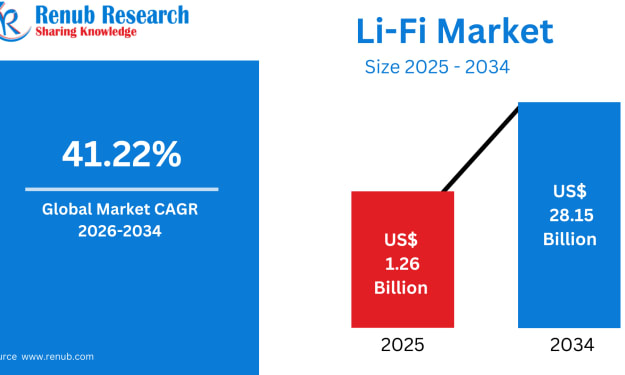
Global Li-Fi Market Size & Forecast 2026–2034
Introduction: Lighting the Next Chapter of Connectivity Wireless communication has become the backbone of the modern digital world. From smartphones and laptops to industrial automation and smart cities, connectivity defines productivity, convenience, and innovation. Yet, traditional radio-frequency (RF) technologies such as Wi-Fi and cellular networks are increasingly constrained by spectrum congestion, interference, security vulnerabilities, and performance bottlenecks.
By Aaina Oberoi3 days ago in Futurism
About Binding Prometheus
I want to start actively advocating on behalf of my own work, and the most valuable part of my canon is, without a doubt, Binding Prometheus, the play I have been working on since 2019 and only finished in 2023 as part of my MA. The play itself is an amalgamation of a million different inspirations. On one end, it evokes the Ancient Greek myth-play, deriving its own title from the earliest extant work of Western drama we have, Aeschylus’s Prometheus Bound. On the other end, it borrows significantly from the sci-fi bulwarks from over the years, namely Mary Shelley’s Frankenstein and Karel Capek’s Rossum’s Universal Robots. The play could be an episode of Black Mirror, I fear. I don’t know. I’ve only ever seen one episode of Black Mirror.
By Steven Christopher McKnight17 days ago in Futurism
Top 10 Fintech Software Development Companies in USA 2026
In today’s rapidly evolving digital finance landscape, fintech companies and traditional financial institutions alike are investing heavily in advanced software solutions that enable secure transactions, seamless customer experiences, and robust compliance with regulatory standards. As we enter 2026, the demand for specialized fintech software development services continues to grow, driven by technologies such as blockchain, artificial intelligence (AI), machine learning (ML), and cloud-native architectures. Choosing the right development partner can make or break a fintech project, whether it’s launching a next-generation digital wallet, a mobile banking platform, a payment processing system, or a comprehensive financial analytics suite. This article profiles the top 10 fintech software development companies that stand out in the United States market for their innovation, technical expertise, industry experience, and ability to deliver scalable, secure solutions that meet the unique needs of finance organizations.
By Steve Waugh4 days ago in Futurism



Comments
There are no comments for this story
Be the first to respond and start the conversation.