
Global E-Commerce Market Size and Forecast 2025–2033
How AI, Cross-Border Trade, and Secure Digital Payments Are Reshaping Global Online Retail


Global E-Commerce Market Outlook
The global e-commerce market continues to redefine how consumers shop and how businesses operate across borders. According to Renub Research, the Global E-Commerce Market is projected to grow from US$ 6,568.57 billion in 2024 to US$ 12,632.68 billion by 2033, registering a compound annual growth rate (CAGR) of 7.54% during 2025–2033.
This impressive expansion is driven by a combination of AI-powered personalization, rapid growth in cross-border commerce, and advancements in secure digital payment technologies. As consumers increasingly prefer convenience, personalization, and speed, e-commerce platforms are investing heavily in innovation to meet evolving expectations.
Overview of the Global E-Commerce Industry
Over the past decade, e-commerce has transformed from a convenient alternative to traditional retail into a dominant global sales channel. Digital marketplaces now connect businesses to customers across continents, eliminating geographical barriers and reshaping global trade dynamics. From groceries and electronics to fashion, healthcare products, and home furnishings, nearly every consumer category has experienced a surge in online demand.
The widespread adoption of smartphones, improved internet infrastructure, and increased comfort with online payments have played a critical role in this evolution. The COVID-19 pandemic further accelerated adoption, pushing millions of first-time users to shop online and permanently altering consumer behavior. Even as physical stores reopened, many consumers continued to rely on digital platforms due to their efficiency and expanded product access.
Today, global giants such as Amazon, Alibaba, and Walmart dominate the landscape, while regional and niche platforms continue to gain traction by catering to localized preferences and specialized product categories.
Technology Driving the Next Phase of Growth
Artificial Intelligence and Personalization
Artificial intelligence (AI) has become a cornerstone of modern e-commerce operations. Platforms use AI to analyze browsing behavior, purchase history, and customer preferences to deliver personalized product recommendations. This not only enhances the shopping experience but also improves conversion rates and customer retention.
AI is also being deployed in virtual fitting rooms, especially in apparel and fashion retail. These tools allow customers to create digital avatars and visualize how garments will fit, significantly reducing return rates. In 2023, European fashion leader Zalando introduced a virtual fitting solution enabling users to see how different sizes from various brands might fit their body type, improving both satisfaction and operational efficiency.
5G and Enhanced Mobile Commerce
The expansion of 5G networks is transforming mobile commerce by enabling faster load times, high-quality multimedia content, and real-time interactions. Live-stream shopping, virtual product launches, and immersive online marketplaces are becoming increasingly realistic due to low-latency connectivity.
As mobile devices account for a growing share of online transactions, e-commerce platforms are prioritizing mobile-first strategies to capture this expanding user base.
Key Growth Drivers and Market Challenges
Cross-Border Commerce Expansion
One of the most significant drivers of e-commerce growth is the expansion of cross-border trade opportunities. High-speed internet, smartphone penetration, and accessible digital payment systems have made international shopping easier than ever.
Improved global logistics networks and third-party fulfillment services have shortened delivery times and reduced shipping costs, enabling businesses of all sizes to serve international customers efficiently. Consumers now enjoy access to a broader range of products, often at competitive prices.
Secure Digital Payment Ecosystems
The development of secure online payment systems has been essential to the sustained growth of e-commerce. Digital wallets, contactless payments, and mobile banking solutions have simplified transactions while enhancing security.
Technologies such as encryption, biometric authentication, and multi-factor verification have increased consumer trust. The rise of Buy Now, Pay Later (BNPL) services has also contributed to higher purchase volumes by offering flexible payment options.
Cybersecurity and Data Privacy Concerns
Despite rapid growth, cybersecurity remains a major challenge. As transaction volumes increase, so does the risk of data breaches, identity theft, and cyberattacks. Protecting sensitive customer information is critical for maintaining trust and regulatory compliance.
E-commerce companies must comply with stringent data protection laws such as GDPR and CCPA, investing heavily in secure infrastructure, monitoring systems, and staff training. A single security breach can lead to financial losses and long-term reputational damage.
Return and Refund Management
Return and refund processing presents another operational challenge. High return rates—especially in fashion and electronics—can significantly increase logistics and restocking costs. Consumers expect seamless return experiences, and poor handling can negatively impact brand loyalty.
To address this, companies are leveraging data analytics and automation to optimize reverse logistics, track returned goods efficiently, and minimize associated costs while maintaining customer satisfaction.
Regional Market Insights
United States E-Commerce Market
The United States represents one of the most mature and competitive e-commerce markets globally. Major players such as Amazon, Walmart, and eBay dominate, while niche platforms continue to emerge.
Key trends include subscription-based models, social commerce, and same-day delivery services. Although challenges such as cybersecurity risks and return management persist, continuous innovation in logistics and digital payments is expected to sustain long-term growth.
Germany E-Commerce Market
Germany is one of Europe’s largest e-commerce markets, driven by high digital literacy and strong consumer trust. Categories such as apparel, electronics, and groceries perform particularly well.
While platforms like Amazon.de and Zalando lead the market, smaller specialized retailers are gaining popularity. Strict data protection regulations under GDPR pose compliance challenges, but consumer confidence and technological advancement continue to fuel expansion.
India E-Commerce Market
India’s e-commerce market is among the fastest growing globally, supported by increasing internet penetration, widespread smartphone adoption, and a young population. Platforms such as Amazon India, Flipkart, and Myntra dominate, alongside rapidly growing regional players.
Mobile commerce, social commerce, and digital wallets have transformed shopping habits, particularly in semi-urban and rural areas. Although logistics infrastructure and price sensitivity remain challenges, India offers immense long-term growth potential.
United Arab Emirates (UAE) E-Commerce Market
The UAE e-commerce market is expanding rapidly due to high internet penetration, a tech-savvy population, and strong government support for digital transformation. Platforms like Amazon.ae, Noon, and Carrefour lead the market.
Mobile shopping, fast delivery services, and digital payments are key growth drivers. Despite competition and logistical complexities, favorable policies and rising consumer trust continue to support market expansion.
E-Commerce Market Segmentation
By Product Categories
Food and Beverage
Apparel and Accessories
Health, Personal Care, and Beauty
Computer and Consumer Electronics
Office Equipment and Supplies
Toys and Hobby
Furniture and Home Furnishing
Books, Music, and Video
Others
By Payment Methods
Digital Wallet
Credit Card
Debit Card
Account-to-Account (A2A)
Buy Now, Pay Later (BNPL)
Cash on Delivery
Prepay
Other (Including Cryptocurrency)
Competitive Landscape and Key Companies
The global e-commerce market is highly competitive, with companies analyzed across four key perspectives: overview, leadership, recent strategies, and financial insights.
Major players include:
Amazon.com Inc.
Alibaba Group Holding Limited
Walmart Inc.
eBay Inc.
Rakuten Inc.
Zalando SE
Otto Group
JD.com, Inc.
These companies continue to invest in AI, logistics optimization, and payment innovations to strengthen their global presence.
Final Thoughts
The global e-commerce market is entering a new phase of intelligent, secure, and highly personalized growth. With market value expected to nearly double by 2033, driven by AI adoption, cross-border trade, and digital payment innovation, e-commerce will remain a cornerstone of the global economy.
While challenges such as cybersecurity, regulatory compliance, and return management persist, continuous technological advancement and evolving consumer expectations will continue to shape the industry’s future. For businesses and investors alike, the global e-commerce landscape offers significant opportunities throughout the 2025–2033 forecast period.
About the Creator
Marthan Sir
Educator with 30+ years of teaching experience | Passionate about sharing knowledge, life lessons & insights | Writing to inspire, inform, and empower readers.
Keep reading
More stories from Marthan Sir and writers in Futurism and other communities.
North America Smart Home Security Camera Market Trends & Summary
Introduction Smart home security has rapidly evolved from a luxury add-on into a mainstream household necessity across North America. Among the most influential components of this transformation are smart home security cameras—devices that combine artificial intelligence (AI), cloud computing, and seamless internet connectivity to offer real-time surveillance and peace of mind. As concerns around property safety rise and smart home ecosystems become more deeply embedded in daily life, security cameras are emerging as the backbone of connected home protection.
By Marthan Sir28 days ago in Futurism
About Binding Prometheus
I want to start actively advocating on behalf of my own work, and the most valuable part of my canon is, without a doubt, Binding Prometheus, the play I have been working on since 2019 and only finished in 2023 as part of my MA. The play itself is an amalgamation of a million different inspirations. On one end, it evokes the Ancient Greek myth-play, deriving its own title from the earliest extant work of Western drama we have, Aeschylus’s Prometheus Bound. On the other end, it borrows significantly from the sci-fi bulwarks from over the years, namely Mary Shelley’s Frankenstein and Karel Capek’s Rossum’s Universal Robots. The play could be an episode of Black Mirror, I fear. I don’t know. I’ve only ever seen one episode of Black Mirror.
By Steven Christopher McKnight11 days ago in Futurism
Saudi Arabia Office Furniture Market: Smart Workspaces, Ergonomic Demand, Commercial Expansion & Vision 2030
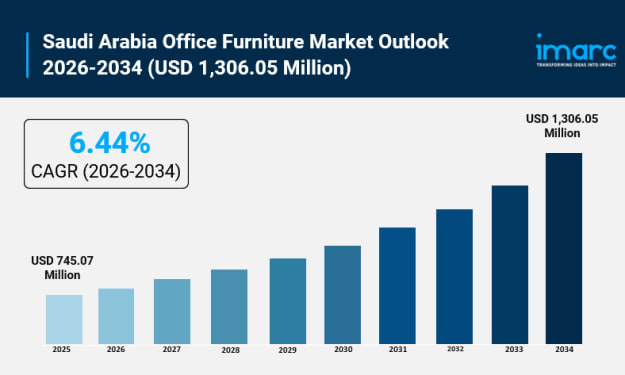
According to IMARC Group's latest research publication, Saudi Arabia office furniture market size was valued at USD 745.07 Million in 2025. The market is projected to reach USD 1,306.05 Million by 2034, exhibiting a growth rate (CAGR) of 6.44% during 2026-2034.
By Jeffrey Wilsonabout 6 hours ago in Futurism



Comments
There are no comments for this story
Be the first to respond and start the conversation.