
Germany Candy Market Size & Forecast 2025–2033
A Nation Fueled by Flavor: Tradition, Innovation & Premiumization Drive Germany’s Growing Candy Market


The Germany Candy Market is poised for consistent growth, expanding from US$ 3.21 billion in 2024 to US$ 4.53 billion by 2033, according to Renub Research. This reflects a CAGR of 3.91% during 2025–2033, driven by evolving consumer tastes, demand for healthier confections, and Germany’s deeply rooted cultural association with premium sweets. From the iconic gummy bear to handcrafted marzipan and artisan chocolates, Germany’s confectionery landscape blends long-standing tradition with modern innovation—ensuring the market remains one of Europe’s most resilient.
Germany Candy Market Outlook
Candy occupies a timeless place in Germany’s culinary identity. Whether it’s the smooth richness of chocolate, the playful chew of gummies, or the aromatic sweetness of licorice, confectionery is an inseparable part of German culture. The country’s artisanal expertise, high-quality raw materials, and regional specialities—such as Lübeck marzipan or the world-famous Haribo gummy bears—have earned international admiration.
Seasonal celebrations such as Christmas, Easter, Oktoberfest, and Kinderfest significantly boost candy consumption. Germans also love seasonal candies, with festive-specific chocolates, pralines, and shaped sweets contributing a sizeable share of annual sales.
Today’s candy landscape in Germany is shaped by two critical trends:
Demand for healthier, natural, and low-sugar confections
Premiumization, with consumers seeking artisanal, fair-trade, and single-origin offerings
This ongoing evolution ensures that the German candy market remains vibrant, competitive, and culturally significant.
Growth Drivers in the Germany Candy Market
1. Deep-Seated Cultural Tradition Fuels Steady Demand
Germany ranks among Europe’s most candy-loving nations, with confectionery woven into daily life and festive customs. German consumers snack regularly, indulge during celebrations, and preserve a strong emotional connection to their favorite confectionery brands.
Seasonal markets—especially the beloved Weihnachtsmarkt (Christmas Markets)—generate enormous spikes in demand as chocolates, marzipan, pralines, and sugar confections take center stage.
A shift toward premium offerings is also evident.
In 2022, around 75% of German consumers preferred single-origin chocolate, demonstrating strong interest in provenance and purity.
Germans consumed nearly 24 pounds of chocolate per person in the same year, showcasing the country’s appetite for indulgence.
The result is unwavering consumer loyalty—built on trust, heritage, and high product quality—that continues to bolster confectionery sales year-round.
2. Innovation in Healthier, Sustainable & Premium Offerings
German consumers have become more health-conscious and environmentally aware. As a result, brands are expanding their portfolios with:
Low-sugar and sugar-free candies
Organic and vegan gummies
Functional candies infused with vitamins or herbal extracts
Products with clean labels and natural sweeteners
Sustainability is a key pillar of this shift.
More than 80% of all chocolate confectionery sold in Germany in 2022 used sustainably sourced cocoa, up dramatically from just 3% in 2011. This shift is largely attributed to the German Initiative on Sustainable Cocoa.
Premiumization is another important trend. Consumers are trading up for:
Ethically sourced cocoa
Bean-to-bar artisanal chocolates
Small-batch handcrafted confections
Eco-friendly packaging
This dual shift—toward health and premium quality—is especially strong among younger and urban consumers seeking indulgence without guilt.
3. Expanding Distribution Channels Strengthen Market Reach
Germany’s candy market enjoys robust, multi-channel distribution, including supermarkets, hypermarkets, convenience stores, specialty shops, and increasingly, online channels.
Major retailers such as:
Edeka (6,049 stores)
Aldi (2,249 stores)
strengthen nationwide access to confectionery.
In 2023, 58.8% of confectionery retail sales occurred in supermarkets and hypermarkets, demonstrating their dominance.
Retail innovation—including digital signage, enhanced store layouts, and targeted in-store promotions—ensures stronger customer engagement.
Online retail is also rising rapidly, providing avenues for:
Bulk buying
Niche and international candy discovery
Subscription candy boxes
Direct-to-consumer offerings from premium brands
This omnichannel distribution ensures near-constant product availability, supporting ongoing market growth.
Challenges in the Germany Candy Market
1. Rising Health Concerns & Sugar Regulations
Germany faces increasing pressure to combat rising obesity rates and high sugar consumption. As a result:
Regulators are demanding clearer nutritional labeling
Brands are pressured to reduce sugar content
Reformulation must preserve taste—an expensive, complex challenge
Marketing high-sugar candy is becoming more restricted
While these demands encourage innovation, they also place financial and operational pressure on traditional confectionery makers.
2. Intense Competition in a Saturated Market
Germany’s confectionery market is fiercely competitive, with domestic champions, global giants, and artisanal brands all vying for consumer attention.
Key competitive pressures include:
Price wars driven by supermarket and discount chains
Marketing challenges for small premium manufacturers
Constant innovation demands to stay relevant
Saturated product categories make it difficult for emerging brands to differentiate without significant investment.
Germany Candy Market—Category Insights
🍫 Germany Chocolate Candy Market
Chocolate is Germany’s largest and most culturally significant confectionery segment. Known globally for its richness and purity, German chocolate sees strong domestic and export demand.
Current trends include:
Growing popularity of dark chocolate for perceived health benefits
Rising demand for fair-trade and single-origin varieties
Seasonal peaks during Christmas and Easter, which account for a significant share of annual chocolate sales
❄️ Germany Mints Candy Market
Mints hold steady popularity due to their dual role as impulse purchases and functional breath-freshening solutions.
Top trends include:
High preference for sugar-free mints
Increased demand for functional mints containing herbal extracts or vitamins
Convenient pocket-friendly packaging
This category benefits from steady consumer demand driven by refreshment and convenience.
🏪 Germany Candy in Convenience Stores
Convenience stores play a crucial role in Germany’s confectionery distribution, especially in major cities and transport hubs.
Key advantages include:
High impulse purchase rate
Perfect pack sizes for commuters
Seasonal displays driving festive sales
This channel continues to thrive with young, on-the-go consumers.
📦 Germany Candy Online Retail
E-commerce is emerging as a major growth engine for the candy market.
Consumers increasingly turn online for:
Bulk purchases
Imported or niche candies
Artisanal confections
Subscription boxes
Direct-to-consumer strategies help smaller brands reach nationwide audiences.
🏬 Germany Candy Specialty Retailers
Specialty stores appeal to connoisseurs and tourists seeking artisanal, premium, or global sweets.
These stores provide:
Curated experiences
Handmade chocolates
Gourmet items and gifts
While their share is smaller than supermarkets, their influence on premiumization is significant.
Regional Market Highlights
🍬 Bavaria Candy Market
Bavaria’s confectionery culture is rich, celebrated through:
Marzipan
Chocolates
Festive sweets during Oktoberfest
The region is also home to globally recognized confectionery manufacturers, boosting market prominence.
🍭 Berlin Candy Market
Berlin’s diverse, modern, and health-conscious population supports:
Vegan confectionery
Artisanal chocolatiers
Experimental flavors
Premium international candies
Its strong tourism sector further boosts candy sales.
🍬 Saxony Candy Market
Saxony retains strong traditional confectionery roots, producing:
Stollen
Nougat
Regional specialty sweets
The region blends heritage with innovation to attract a wide consumer base.
Market Segmentations
By Type
Chocolate Candy
Non-chocolate Candy
Hard-Boiled Candies
Pastilles, Gums, Jellies & Chews
Toffees, Caramels & Nougat
Mints
Others
By Distribution Channel
Supermarkets/Hypermarkets
Convenience Stores
Specialist Retailers
Online Retail
Others
Top Regions/States
North Rhine-Westphalia
Bavaria
Baden-Württemberg
Lower Saxony
Hesse
Berlin
Rhineland-Palatinate
Saxony
Hamburg
Rest of Germany
Top Companies Covered
Each company covered with: Overview, Key Person, Recent Developments, SWOT & Revenue Analysis
Perfetti Van Melle Group BV
The Topps Company Inc.
Mondelez International Inc.
Haribo GmbH & Co. KG
Mars Incorporated
Ferrero Group
Nestlé SA
The Hershey Company
Grupo Arcor
Cloetta AB
Final Thoughts
Germany’s candy market continues to thrive, blending deep-rooted confectionery heritage with cutting-edge innovation. The shift toward healthier, premium, and sustainably produced sweets aligns perfectly with evolving consumer expectations. As Germany's distribution channels expand—especially online—the market’s reach widens further, creating opportunities for both global giants and artisanal players.
With a strong cultural foundation, rising premiumization, and a growing appetite for guilt-free indulgence, the Germany Candy Market is set to experience steady, long-term growth through 2025–2033.
About the Creator
Sushant. Renub Research
I’m Sushanta Halder, Digital Marketing Manager at Renub Research with 15+ years in SEO, content, PPC & lead generation. Passionate about data-driven growth strategies.
Keep reading
More stories from Sushant. Renub Research and writers in Futurism and other communities.
Telemedicine Market Companies Analysis
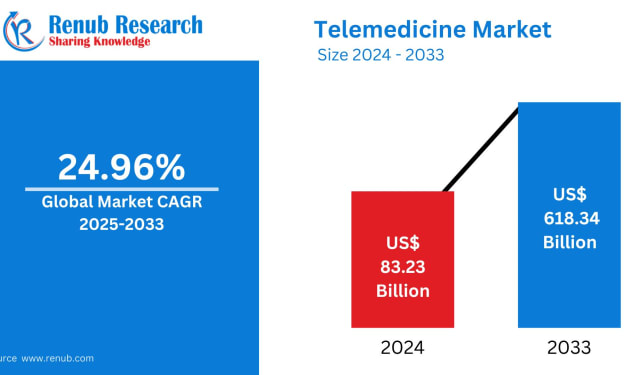
The global Telemedicine Market is undergoing one of the most profound transformations in modern healthcare. As per Renub Research, the industry is expected to grow from US$ 83.23 Billion in 2024 to an astonishing US$ 618.34 Billion by 2033, expanding at a CAGR of 24.96% (2025–2033). This surge reflects the rapid acceptance of remote healthcare solutions, technological breakthroughs, and increasing consumer comfort with digital-first medical care.
By Sushant. Renub Researchabout a month ago in Futurism
About Binding Prometheus
I want to start actively advocating on behalf of my own work, and the most valuable part of my canon is, without a doubt, Binding Prometheus, the play I have been working on since 2019 and only finished in 2023 as part of my MA. The play itself is an amalgamation of a million different inspirations. On one end, it evokes the Ancient Greek myth-play, deriving its own title from the earliest extant work of Western drama we have, Aeschylus’s Prometheus Bound. On the other end, it borrows significantly from the sci-fi bulwarks from over the years, namely Mary Shelley’s Frankenstein and Karel Capek’s Rossum’s Universal Robots. The play could be an episode of Black Mirror, I fear. I don’t know. I’ve only ever seen one episode of Black Mirror.
By Steven Christopher McKnight11 days ago in Futurism


Comments
There are no comments for this story
Be the first to respond and start the conversation.