


Tomas — The Walk to the Transfer
I leave our cabin quietly so I don’t wake Elena.
The corridor outside is already alive.
The gravity is gentle here — not Earth-heavy, not Moon-light — just enough that your boots feel honest and your bones remember their work. The floor panels glow a soft amber underfoot. The walls curve wide and steady, the whole car nearly fifty feet across, more like the hallway of a ship than a train.
To my left a woman is carrying a basket of greens from the hydro car, the leaves still beaded with mist. A pair of kids drift past her, arguing about a school project that involves a crater map and a fungus culture. Somewhere down the hall, a violin is practicing badly but bravely.
I pass the dining car. Breakfast is in full motion — steam, voices, the smell of bread and coffee. Engineers in blue coveralls, med techs in white, miners with dust still in their hair. Someone calls my name and raises a mug.
“Tomas you be the moving man!”
I lift a hand in reply and keep going.
Beyond the living cars the tone changes. The walls grow thicker. The lights cooler. The windows narrower. We’re entering the working spine of the train.
I check the board at Junction C:
2-G LOOP TRANSFER — ON TIME
Good.
The transfer car waits at the end of the corridor, already sealed and humming. Its door slides open when it recognizes me. Inside, only a few seats — all facing forward — and heavy straps hanging from the ceiling.
I take a seat, pull the harness across my chest, and exhale.
The door seals.
The car begins to move.
At first it’s nothing. Then the floor starts to push. Not a shove — a promise. My body will grow heavier, as if the Moon is slowly remembering what gravity means. The tunnel curves tighter. The hum deepens. The numbers on the wall tick down:
100… 90… 80.
The transfer car moves from the 6000 foot loop to the 1300 foot loop, and two gees arrive like a second skeleton wrapping itself around me.
My boots press hard against the deck.
The car eases into the flow. Magnetic couplers engage with a muted thud that you feel more than hear. The door ahead unlocks.
When it opens, I step into the 2-G train — and the weight of the future presses down.
Tomas — 2-G Lab Transfer
The 2-G lab car hums around me.
Everything here feels alive: liquids move like thick honey, crystals cling to their containers, and tiny green shoots twist toward overhead lights as if they know the world around them is heavier than usual.
I strap on the ecto-skeleton at the harness point. The frame hugs my spine, locks at the shoulders and knees.
In zero-G I barely feel it; at two Gs it’s my second skeleton — strong, uncomplaining, precise. Without it, moving a crate would bend me like a crescent moon.
A mag-cradle lifts the first experiment box off the lab car deck.
Protein Crystal — Stage 12.
The box is almost impossibly heavy in this gravity, dense with fragile growths.
I guide it into the exoskeleton’s grips. Every step requires thought. Two gees presses down like an invisible hand on my chest. The ecto-skeleton holds it steady. My boots scrape the floor, pushing me forward, each stride measured, mechanical.
I slide the crate onto the transfer car deck. Mag locks click. Done.
Next comes the second box. Bone Matrix — Sample 14D.
This one is awkward, top-heavy. I rotate it carefully, feeling the skeleton’s servos adjust to my motions. The crate floats just slightly, but the weight is real, enough to remind me why we built these frames.
Three more boxes follow — each with its own challenges: delicate cultures, half-formed tissue, liquids that would slosh catastrophically if gravity were less controlled. I move with the rhythm of the train, of the track, of my own heartbeat syncing with the hum of the labs.
Once all outgoing experiments are secure, I turn back to the lab car. Four new boxes are ready to be installed. Antibiotic Cultures — Stage 5. Fungal Growth Trials — Sample 22C. The ecto-skeleton braces them for me, letting me lift, rotate, and settle without breaking my back or the fragile contents.
The boxes click into the magnetic decks. The lab hum deepens. Everything settles. I take a breath. My suit sensors show my heart rate elevated, but my muscles are relaxed — the skeleton doing the work, me doing the thinking.
I glance around the lab. Crystals glint, liquids pulse, green shoots twist. It’s a small ecosystem, accelerated by gravity itself. And for the next few hours, it will live or fail because I moved it correctly. Because I’m careful.
Done.
I release the ecto-skeleton. My legs feel heavy in a new, human way. My back thanks me. I look at the train, the weight of the Moon pressing through the walls, and I know that in this little rolling lab, we are bending gravity to serve life.
Tomas — The First Cask
The cask had been ready for three days before I admitted it.
You don’t rush these things.
You let the silence tell you when it’s time.
In the high-Gs of the lab train, where the curve of the hull presses its weight through your bones, I stood in front of the rack and watched the glass.
Each cask was small — barely larger than a toolbox — but in two gees they felt like anchor stones. Lunar glass, thick and flawless, with a faint green edge where the regolith still remembered being starlight. Inside, the alcohol moved slow and heavy, wrapped around lattices of burned oak I’d charred myself months before. The wood was black and cracked, spiderwebbed with carbon. It had given up its smoke, its sugars, its history.
Two years in this gravity.
On Earth, it would have taken five.
I unlocked the inspection port and drew a single breath through the valve.
Oak. Smoke. Something sharp and sweet that only time makes.
That was it.
I closed the seal and marked the cask with my own hand: T-01.
The first.
Word didn’t spread because I announced it.
It spread because stations talk.
By the end of the cycle I had three inquiries.
By the next morning, eleven.
They came carefully, all of them pretending not to want it too much.
A European trade officer asked what I would accept in exchange.
A corporate syndicate offered machine time and oxygen credits.
A Chinese liaison from China’s train delivered a statement about wasteful resource use — and then quietly asked if sealed bids would be acceptable.
A Russian logistics officer from the Russian train didn’t negotiate at all. He only asked when the cask would be moved. Each of the other two bases could age alcohol, but viewed it as a waste of resources.
I told them the same thing.
One cask.
Sealed bids.
Not money alone.
The alcove felt smaller after that.
The glass racks hummed.
The alcohol pressed heavier against its walls, as if it knew.
When the time came, I disengaged the clamps.
Two gees makes everything honest.
The cask did not want to be lifted.
The glass was slick with condensation.
My arms shook as the weight settled into my chest, my spine, my teeth. If I slipped — if the glass failed — the floor would explode in flames from the very high proof alcohol.
I moved like a man carrying a star.
Step by step.
Breathing shallow.
Listening to the train.
At the auction lockbox I seated the cask and engaged the mag-restraints. The rack accepted it with a deep metallic click. The bids were already waiting.
I sealed the chamber and leaned against the wall.
For the first time since leaving Earth, something had been made here that was not just survival.
It was culture.
And it was for sale.
About the Creator
Mark Stigers
One year after my birth sputnik was launched, making me a space child. I did a hitch in the Navy as a electronics tech. I worked for Hughes Aircraft Company for quite a while. I currently live in the Saguaro forest in Tucson Arizona
Keep reading
More stories from Mark Stigers and writers in Futurism and other communities.
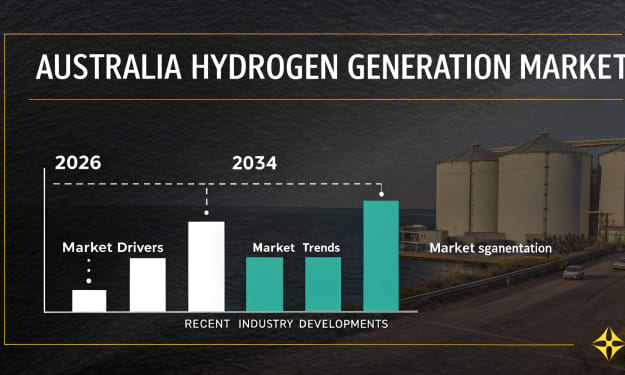
Australia Hydrogen Generation Market: Renewable Production, Infrastructure Development & Policy Support
According to IMARC Group, the Australia hydrogen generation market reached USD 3,450.00 Million in 2024 and is projected to grow to USD 5,444.53 Million by 2033, exhibiting a compound annual growth rate (CAGR) of 5.20% during 2025–2033. This steady expansion reflects Australia’s strategic ambition to position itself as a global clean energy leader. Across Australia, hydrogen is emerging as a cornerstone of long-term decarbonization strategy, supporting industrial transformation, export diversification and renewable energy integration. As the nation intensifies its commitment to achieving net-zero emissions by 2050, hydrogen generation—particularly renewable or “green” hydrogen—is becoming central to energy policy and infrastructure planning.
By Shrestha Roy4 days ago in Futurism
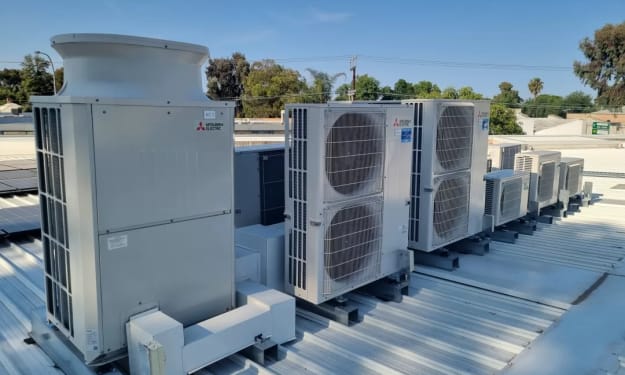
Commercial Air Conditioner (AC) Market Outlook: Energy Efficiency Demand and Infrastructure Expansion Opportunities
According to IMARC Group's latest research publication, The global commercial air conditioner (AC) market size reached 19.3 Million Units in 2024. Looking forward, IMARC Group expects the market to reach 28.4 Million Units by 2033, exhibiting a growth rate (CAGR) of 4.15% during 2025-2033.
By James Whitman3 days ago in Futurism

Comments
There are no comments for this story
Be the first to respond and start the conversation.