

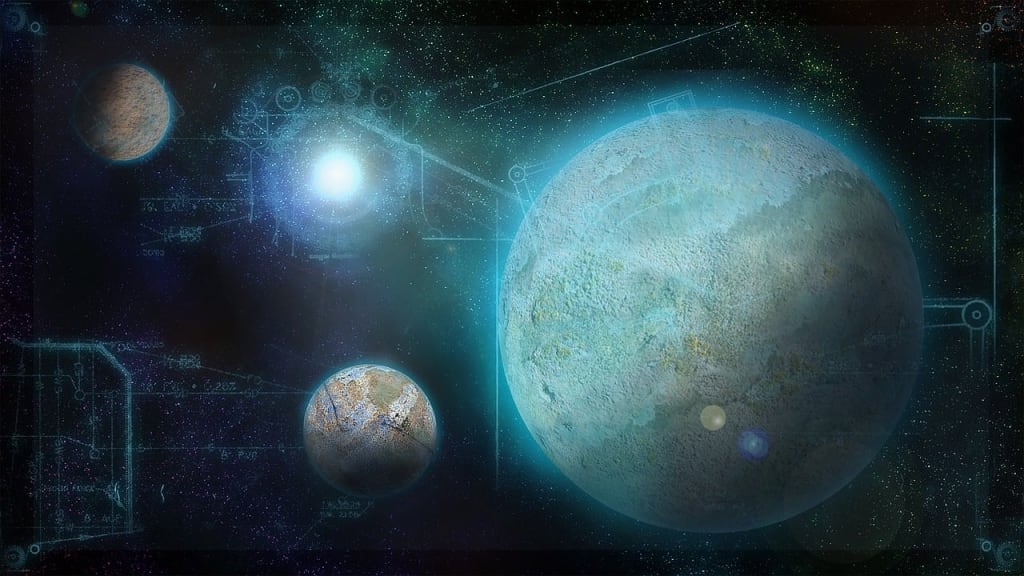
As the 21st century progresses, humanity's fascination with outer space continues to grow, fueled by rapid advancements in technology, ambitious space missions, and the increasing accessibility of space exploration. This article delves into the future science space, analyzing the latest developments and breakthroughs in the field, as well as the challenges and opportunities that lie ahead. From space agriculture to interplanetary colonization, from space tourism to cutting-edge space propulsion systems, we explore the myriad ways in which future science space will shape our lives and redefine our understanding of the universe.
Space Agriculture: Feeding Colonists on the Moon and Beyond
One of the major challenges for future space colonization is the need to produce food in extraterrestrial environments. Recent experiments have shown the potential for growing plants in lunar soil, a milestone achievement for scientists from the University of Florida. This breakthrough could pave the way for future colonists to cultivate crops in lunar greenhouses, enabling them to establish a sustainable food supply on the Moon.
Additionally, state-of-the-art technologies like 3D bioprinting are being developed to create synthetic meat in space. If perfected, this technology could provide a nutritious and sustainable food source for astronauts on long-term missions, such as a journey to Mars.
Space Architecture: Designing Habitats for Life Beyond Earth
As humanity expands its presence in the cosmos, the role of space architects will become increasingly important. These specialists will be responsible for designing habitats that can withstand the harsh conditions of space while providing a comfortable and functional living environment for inhabitants. From space stations orbiting Earth to lunar bases and Martian colonies, space architects will face numerous challenges, such as utilizing local resources, dealing with microgravity, and ensuring adequate radiation shielding.
Space Tourism: A Cosmic Vacation for the Masses
As private companies like SpaceX and Blue Origin continue to develop reusable rocket technology, the cost of space travel is expected to decrease, making space tourism a reality for more people. In the near future, tourists will be able to experience the thrill of spaceflight and the breathtaking view of Earth from orbit. Companies like Amazon and Telesat are also working on satellite constellations that will provide global internet coverage, ensuring that even remote space tourists can stay connected to the world below.
Interplanetary Travel: Reaching Mars and Beyond
One of the most ambitious goals of future science space is the exploration and eventual colonization of other planets in our solar system. Plasma rocket technology, which propels spacecraft at speeds up to 34 miles per second, has the potential to drastically reduce the travel time between Earth and Mars. This could make manned missions to the Red Planet more feasible and could even pave the way for eventual human settlement.
Furthermore, the development of advanced excavation tools, inspired by the jaws of sea urchins, will enable astronauts to dig more efficiently in Martian soil, allowing them to access vital resources and conduct important research on the planet's geology.
Space Health: Ensuring the Well-being of Astronauts
Long-duration space missions pose numerous health risks for astronauts, including exposure to harmful radiation, muscle atrophy, and bone loss. Future science space is working on innovative solutions to mitigate these risks, such as the development of active shielding technology for spacecraft, which could significantly reduce astronauts' exposure to radiation.
Scientists are also studying the effects of microgravity on human reproduction by conducting experiments with sperm samples in space. The findings of these studies will be crucial in determining the feasibility of long-term human habitation in space and the potential for reproduction on other planets.
Space Energy: Powering the Future of Space Exploration
As we venture deeper into space, the need for efficient and abundant energy sources becomes increasingly important. Nuclear fusion, which involves the combining of atomic nuclei to release vast amounts of energy, has long been seen as the ultimate solution for providing clean, virtually limitless power for spacecraft and future space colonies. Researchers are tirelessly working to make nuclear fusion a reality, and if successful, this breakthrough could revolutionize space travel and make interstellar exploration possible.
Terraforming: Transforming Alien Worlds into Livable Environments
One of the most intriguing aspects of future science space is the concept of terraforming, or the modification of other planets to make them more Earth-like and habitable for humans. This ambitious endeavor would involve altering a planet's atmosphere, temperature, and possibly even its geology to create a more hospitable environment.
While terraforming is currently firmly in the realm of science fiction, ongoing research in the field of synthetic biology and advances in geoengineering technology could one day make this cosmic dream a reality, potentially opening up countless new worlds for human colonization.
Lunar Infrastructure: Building a Permanent Presence on the Moon
The Moon has always been a prime target for future science space endeavors, and establishing a permanent human presence there is a major goal for many space agencies. Lunar infrastructure, such as landing pads, refueling stations, and research facilities, will play a crucial role in facilitating future lunar missions and scientific research.
Innovative projects like the Moon's space-proof library, which will serve as an archive for all of humanity, demonstrate the potential for lunar infrastructure to preserve and expand human knowledge in the face of an uncertain future.
Asteroid Defense: Protecting Earth from Cosmic Threats
One of the greatest threats to life on Earth comes in the form of asteroids, which have the potential to cause widespread destruction if they were to collide with our planet. Future science space is dedicated to developing methods for detecting and deflecting these cosmic hazards, such as using nuclear weapons to break up incoming space rocks.
NASA and other space agencies are also working on missions to study and even land on asteroids, which could provide valuable information about their composition and trajectory, ultimately helping to develop more effective asteroid defense strategies.
Conclusion
As we look to the future of science space, it is clear that our journey into the cosmos is only just beginning. With each new discovery and technological breakthrough, we are presented with unprecedented challenges and opportunities, from sustainable space agriculture to the colonization of other planets. As humanity continues its quest to explore the universe, the innovations and advancements in future science space will undoubtedly reshape our lives and redefine our understanding of the cosmos.
About the Creator
Keep reading
More stories from PaTiK 6238 and writers in Futurism and other communities.
The Future of Work
As automation continues to reshape the job market, there is a growing need for individuals to keep up with the changing trends in technology. While some jobs may be lost to automation, new industries are emerging, which require different skill sets. In the next 10 years, several new jobs are expected to emerge that will become cornerstones of the future of work. In this article, we will discuss some of the new jobs that are expected to emerge in the future of work.
By PaTiK 62383 years ago in Futurism
About Binding Prometheus
I want to start actively advocating on behalf of my own work, and the most valuable part of my canon is, without a doubt, Binding Prometheus, the play I have been working on since 2019 and only finished in 2023 as part of my MA. The play itself is an amalgamation of a million different inspirations. On one end, it evokes the Ancient Greek myth-play, deriving its own title from the earliest extant work of Western drama we have, Aeschylus’s Prometheus Bound. On the other end, it borrows significantly from the sci-fi bulwarks from over the years, namely Mary Shelley’s Frankenstein and Karel Capek’s Rossum’s Universal Robots. The play could be an episode of Black Mirror, I fear. I don’t know. I’ve only ever seen one episode of Black Mirror.
By Steven Christopher McKnight22 days ago in Futurism
UAE Green Hydrogen Market Outlook: Key Trends & Future Prospects
According to IMARC Group's latest research publication, the UAE green hydrogen market size reached USD 8.14 Million in 2024. The market is projected to reach USD 258.49 Million by 2033, exhibiting a growth rate of 46.85% during 2025-2033.
By Abhay Rajputabout 6 hours ago in Futurism


Comments
There are no comments for this story
Be the first to respond and start the conversation.