
UAE Green Hydrogen Market Outlook: Key Trends & Future Prospects
Key Drivers, Government Policies & Market Forecast


According to IMARC Group's latest research publication, the UAE green hydrogen market size reached USD 8.14 Million in 2024. The market is projected to reach USD 258.49 Million by 2033, exhibiting a growth rate of 46.85% during 2025-2033.
How AI is Reshaping the Future of UAE Green Hydrogen Market
- Electrolyzer Performance Optimization: AI algorithms analyze real-time operational data to identify optimal temperature, pressure, and electrical current parameters, boosting hydrogen yields by up to 20% while reducing energy waste and operational costs.
- Renewable Energy Synchronization: Machine learning models balance intermittent solar and wind inputs with electrolyzer output, ensuring maximum green hydrogen production when renewables are abundant while avoiding costly grid dependence during low-generation periods.
- Predictive Maintenance Systems: AI-driven telemetry monitors electrolyzer components, predicting equipment failures before they occur. This reduces unplanned downtime, extends asset lifespan, and improves overall system reliability across UAE hydrogen facilities.
- Production Forecasting Analytics: Advanced AI platforms analyze weather patterns, renewable generation forecasts, and demand signals to optimize hydrogen production schedules, improving storage management and ensuring cost-effective operations throughout supply chains.
- Process Efficiency Enhancement: Explainable AI techniques using game theory assign numerical values to operational variables, enabling engineers to fine-tune production processes and achieve efficiency improvements up to 40% compared to manual operation.
Explore Updated 2026 Market Trends & Analysis
How Vision 2030 is Revolutionizing UAE Green Hydrogen Industry
The UAE National Hydrogen Strategy 2050, aligned with Vision 2030's economic diversification goals, is transforming the Emirates into a global hydrogen powerhouse through ambitious production targets and massive infrastructure investments. The strategy aims to produce 1.4 million tonnes per annum of hydrogen by 2031—including 1 million tonnes of green hydrogen—requiring 15.3 GW of solar PV capacity and 8.7 GW of electrolyzer capacity. The government allocated AED 600 billion toward renewable energy projects through public-private partnerships involving ADNOC, Masdar, and TAQA. Abu Dhabi's Low-Carbon Hydrogen Policy Framework introduces innovative concepts like "hydrogen valleys"—integrated ecosystems connecting multiple applications—and "clean energy clusters" with dedicated transmission networks optimizing electricity and water supplies for hydrogen production. The strategy identifies ten key enablers including regulatory frameworks, research and development centers, and hydrogen oases—dedicated regions for production starting with two by 2031 and expanding to five by 2050. These initiatives support the UAE's net-zero commitment and position the country between Asian and European markets for strategic export advantages.
UAE Green Hydrogen Market Trends & Drivers
Industrial decarbonization is driving unprecedented demand for green hydrogen across UAE's hard-to-abate sectors, with government roadmaps mandating emissions reductions of 25% by 2031 and 100% by 2050 in aluminum, steel, chemicals, and fertilizers. Masdar and EMSTEEL successfully completed the Middle East's first green hydrogen pilot project for green steel production in Abu Dhabi—using hydrogen to extract iron from ore without carbon emissions. The Industrial Decarbonization Roadmap targets cumulative CO₂ reductions of 2.9 gigatonnes by 2050, examining over 50 advanced technologies including hydrogen for aluminum (Emirates Global Aluminum), steel (Emirates Steel), cement, and petrochemicals. ADNOC partnered with Fertiglobe to develop blue ammonia facilities and is advancing a 1 million tonne per annum ammonia production plant at TA'ZIZ Industrial Chemicals Zone in Ruwais, with over $2 billion in engineering and construction contracts awarded. TAQA and Abu Dhabi Ports are building an industrial-scale 2 GW solar-powered green hydrogen-to-ammonia facility at KEZAD, converting hydrogen to liquid ammonia for ship bunker fuel and export via Khalifa Port to Europe and East Asia.
Massive renewable energy infrastructure expansion is creating cost-competitive green hydrogen production capabilities that leverage the UAE's abundant solar resources. DEWA's solar-driven green hydrogen project at the Mohammed bin Rashid Al Maktoum Solar Park generated over 1 GWh of clean energy and eliminated approximately 450 tonnes of CO₂ emissions—demonstrating real-world viability of solar-to-hydrogen conversion. The 5 GW solar park provides electricity to pilot electrolysis facilities producing 20kg of hydrogen hourly for grid storage and power generation. The UAE's strategic location between Europe and Asia, combined with advanced port infrastructure at Khalifa Port and Jebel Ali, positions it as a regional hydrogen trade hub. Cross-border collaborations are accelerating market development—UAE-EU free trade negotiations explicitly include renewable energy and green hydrogen cooperation, while UAE-Morocco ventures plan $25 billion investments in green hydrogen projects. Declining renewable electricity costs and scaling electrolyzer manufacturing capacity are transitioning projects from pilots to commercial operations, with proposed 2,200 kilometer hydrogen pipeline network by 2040 connecting production hubs to export terminals.
Export market development and international partnerships are transforming UAE hydrogen from domestic initiative into global trade commodity with secured offtake agreements and strategic alliances. ADNOC made its first certified low-carbon ammonia shipment to Japan for power generation, signed agreements with Germany for blue ammonia supply, and established the Abu Dhabi Hydrogen Alliance with Mubadala and ADQ to position UAE as a major exporter. The National Hydrogen Strategy forecasts domestic demand reaching 2.1 megatons by 2031—with 50% from aluminum and steel, 30% from aviation and shipping—then increasing five-fold to 10.1 megatons by 2050 with aviation and shipping dominating at 50%. Masdar partnered with Norwegian firms and Aker Horizons to explore power-to-green hydrogen value chains, and with Yara for power-to-green ammonia opportunities targeting hard-to-abate sector decarbonization. International technology collaborations with Siemens and ENEOS advance electrolyzer efficiency and integration into energy portfolios. Sovereign-backed financing, clear regulatory frameworks, and active partnerships with U.S., Japanese, German, and South Korean firms are accelerating deployment. With active construction across six prospective hydrogen clusters and pipeline projects exceeding 60 GW dedicated renewable capacity, the UAE is establishing itself as a reliable, low-emission hydrogen producer for global markets.
UAE Green Hydrogen Market Industry Segmentation
The report has segmented the market into the following categories:
Technology Insights:
- Proton Exchange Membrane Electrolyzer
- Alkaline Electrolyzer
- Others
Application Insights:
- Power Generation
- Transport
- Others
Distribution Channel Insights:
- Pipeline
- Cargo
Regional Insights:
- Dubai
- Abu Dhabi
- Sharjah
- Others
Competitive Landscape
The competitive landscape of the industry has also been examined along with the profiles of the key players.
Recent News and Developments in UAE Green Hydrogen Market
- January 2025: UAE National Hydrogen Strategy outlined plans to harness solar energy capacity, carbon capture systems, and infrastructure corridors to accelerate supply chain readiness, including development of hydrogen oases and regulatory framework streamlining.
- April 2025: UAE and EU launched free trade agreement negotiations explicitly including renewable energy and green hydrogen as priority sectors for deeper cooperation, opening pathways for hydrogen exports to European markets.
- October 2024: Masdar and EMSTEEL successfully completed groundbreaking pilot project producing green steel using hydrogen-powered technology in Abu Dhabi—the first Middle East initiative extracting iron from ore using green hydrogen.
- November 2024: TA'ZIZ awarded over $2 billion in engineering, procurement, and construction contracts for essential site infrastructure, with preliminary assessments showing 50% lower carbon intensity ammonia production compared to conventional methods.
- December 2024: UAE-Morocco private venture announced plans to invest $25 billion in green hydrogen and ammonia project in Dakhla, Morocco, aiming to produce 1 million tonnes per year through phased development.
Note: If you require specific details, data, or insights that are not currently included in the scope of this report, we are happy to accommodate your request. As part of our customization service, we will gather and provide the additional information you need, tailored to your specific requirements. Please let us know your exact needs, and we will ensure the report is updated accordingly to meet your expectations.
About the Creator
Abhay Rajput
I am working in market research company that provides market and business research intelligence across the globe.
Keep reading
More stories from Abhay Rajput and writers in Futurism and other communities.
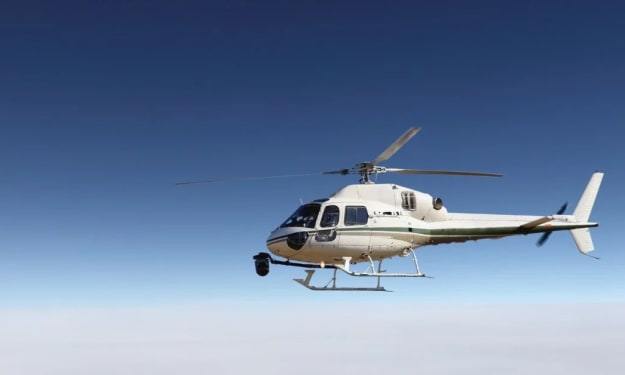
UAE Helicopter Services Market Outlook: Industry Growth, Challenges & Opportunities
According to IMARC Group's latest research publication, the UAE helicopter services market size reached USD 13.03 Million in 2024. The market is projected to reach USD 16.62 Million by 2033, exhibiting a growth rate of 2.74% during 2025-2033.
By Abhay Rajputabout 22 hours ago in Futurism
About Binding Prometheus
I want to start actively advocating on behalf of my own work, and the most valuable part of my canon is, without a doubt, Binding Prometheus, the play I have been working on since 2019 and only finished in 2023 as part of my MA. The play itself is an amalgamation of a million different inspirations. On one end, it evokes the Ancient Greek myth-play, deriving its own title from the earliest extant work of Western drama we have, Aeschylus’s Prometheus Bound. On the other end, it borrows significantly from the sci-fi bulwarks from over the years, namely Mary Shelley’s Frankenstein and Karel Capek’s Rossum’s Universal Robots. The play could be an episode of Black Mirror, I fear. I don’t know. I’ve only ever seen one episode of Black Mirror.
By Steven Christopher McKnight23 days ago in Futurism
Graphics Processing Unit (GPU) Market Size and Forecast 2025–2033
Graphics Processing Unit (GPU) Market Overview The Graphics Processing Unit (GPU) market is entering a historic growth phase, driven by the global surge in artificial intelligence (AI), machine learning (ML), high-performance computing (HPC), and immersive digital experiences. According to Renub Research, the global GPU market is expected to reach US$ 592.18 billion by 2033, growing from US$ 63.22 billion in 2024, at a remarkable CAGR of 28.22% from 2025 to 2033.
By Sushant. Renub Researcha day ago in Futurism
Rage
Content Warning: Domestic Violence, Assault Rage D. A. Ratliff “Who did this?” My voice echoed through the house. All I wanted was a cup of tea, but one of the twins, running through the house like maniacs, knocked it over. My nerves tingled, and every muscle in my body felt coiled like a spring. Survival seemed out of reach.
By D. A. Ratliff4 days ago in Fiction



Comments
There are no comments for this story
Be the first to respond and start the conversation.