
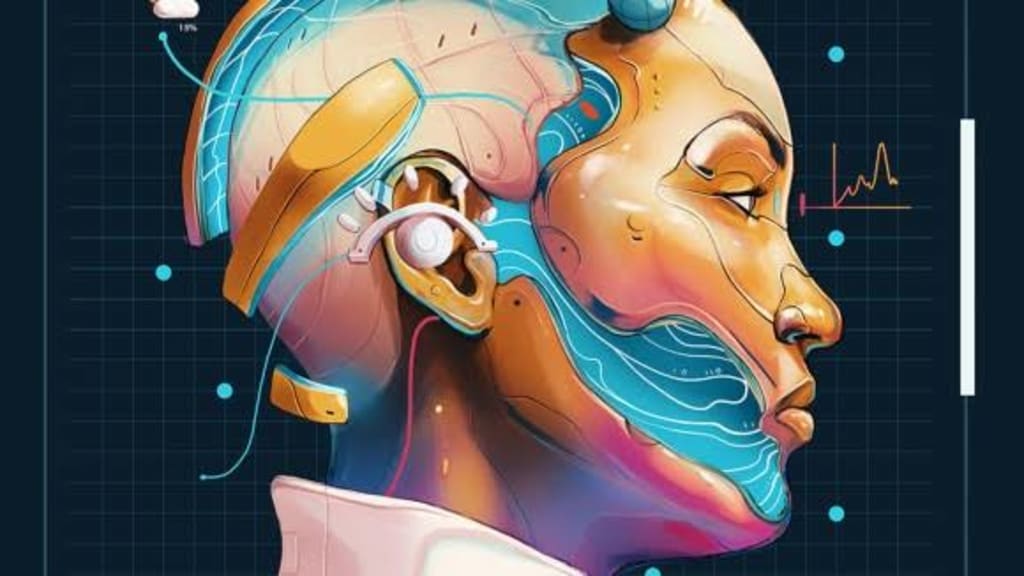
Artificial intelligence (AI) has evolved significantly since its inception. Early developments in AI focused on creating rule-based systems, also known as expert systems, which were able to mimic the decision-making abilities of human experts in specific domains. These systems were limited in their capabilities and could only perform tasks that they were explicitly programmed to do.
In the 1990s, machine learning (ML) emerged as a way to improve the capabilities of AI. Machine learning algorithms are able to learn from data and improve their performance over time without being explicitly programmed. This led to the development of more advanced AI systems, such as neural networks, which are inspired by the structure and function of the human brain.
Recent developments in AI have focused on deep learning, which is a subfield of machine learning that involves training large neural networks with many layers. These deep learning models have achieved state-of-the-art performance on a wide range of tasks, such as image recognition, natural language processing, and game playing.
The development of AI is ongoing and new breakthroughs are made regularly. Research in areas such as reinforcement learning, generative models, and transfer learning is leading to the development of even more advanced AI systems that can perform a wider range of tasks and continue to improve over time.
The future of Artificial Intelligence (AI) is both exciting and daunting. Exciting because of the limitless possibilities that AI offers, and daunting because of the potential impact it could have on society. AI has the power to revolutionize every industry and change the way we live our lives.
One of the most significant areas where AI is expected to make an impact is in the field of healthcare. AI-powered systems are already being used to analyze medical images, such as X-rays and CT scans, to detect diseases and tumors. This technology has the potential to save lives by detecting diseases in their early stages, when they are more treatable.
Another area where AI is expected to make a significant impact is in the field of finance. AI-powered systems can analyze large amounts of financial data and make predictions about the stock market and other investments. This technology can help investors make more informed decisions and potentially increase their returns.
In the field of transportation, AI is expected to play a crucial role in the development of autonomous vehicles. Self-driving cars, trucks, and buses have the potential to reduce accidents caused by human error, and improve transportation efficiency. This technology could also have a significant impact on the job market, as many jobs that involve driving will become redundant.
AI also has the potential to revolutionize the field of manufacturing. AI-powered systems can analyze data from sensors on manufacturing equipment to detect and predict maintenance issues, reducing downtime and increasing efficiency. Additionally, AI-powered robots can be used to perform repetitive tasks, freeing up human workers to focus on more complex and higher-value tasks.
In the field of retail and e-commerce, AI is expected to play a major role in personalizing the shopping experience for customers. AI-powered systems can analyze data on customer behavior and preferences to recommend products and offer personalized deals. This technology can also be used to optimize pricing and inventory management.
Another important area where AI is expected to make a significant impact is in the field of education. AI-powered systems can be used to personalize the learning experience for students, by analyzing data on their performance and adapting the curriculum to their needs. This technology can also be used to assist teachers in the classroom, by providing real-time feedback and suggestions.
Despite all the benefits that AI offers, it also poses significant challenges and risks. One of the biggest concerns is the potential for AI to take over jobs that are currently performed by humans. As AI becomes more advanced, it will be able to perform tasks that were previously thought to be the exclusive domain of humans, such as writing, programming, and even decision-making. This could lead to widespread job loss and social upheaval.
Another concern is the potential for AI to be used for malicious purposes. AI-powered systems can be used to conduct cyber attacks, spread misinformation, and even develop autonomous weapons. Governments and organizations around the world need to take steps to ensure that AI is developed and used responsibly, to mitigate these risks.
In conclusion, the future of AI is both exciting and daunting. AI has the potential to revolutionize every industry and change the way we live our lives. However, it also poses significant challenges and risks that need to be addressed. Governments and organizations around the world need to work together to ensure that AI is developed and used responsibly, for the benefit of all.
About the Creator
Keep reading
More stories from Bharani Dharan and writers in Futurism and other communities.
About Binding Prometheus
I want to start actively advocating on behalf of my own work, and the most valuable part of my canon is, without a doubt, Binding Prometheus, the play I have been working on since 2019 and only finished in 2023 as part of my MA. The play itself is an amalgamation of a million different inspirations. On one end, it evokes the Ancient Greek myth-play, deriving its own title from the earliest extant work of Western drama we have, Aeschylus’s Prometheus Bound. On the other end, it borrows significantly from the sci-fi bulwarks from over the years, namely Mary Shelley’s Frankenstein and Karel Capek’s Rossum’s Universal Robots. The play could be an episode of Black Mirror, I fear. I don’t know. I’ve only ever seen one episode of Black Mirror.
By Steven Christopher McKnight16 days ago in Futurism
United States Edible Offal Market Size and Forecast 2025–2033
United States Edible Offal Market The United States Edible Offal Market is expected to reach US$ 17 billion by 2033, rising from US$ 11.9 billion in 2024, registering a CAGR of 4.04% from 2025 to 2033. Supported by the development of value-added products and expanding retail availability, the market is being driven by rising demand for protein-rich foods, increasing consumer awareness of the nutritional benefits of organ meats, the sustainability and zero-waste movement, and the growing popularity of ethnic and traditional cuisines across the country.
By jaiklin Fanandish7 days ago in Futurism


Comments
There are no comments for this story
Be the first to respond and start the conversation.