
Exploring Life Beyond Earth: Web Telescope Reveals Potential Signs of Life on K2-18 b
New observations of a distant exoplanet hint at the possibility of biosignatures, reflecting both scientific discovery and the intricate design of the universe.

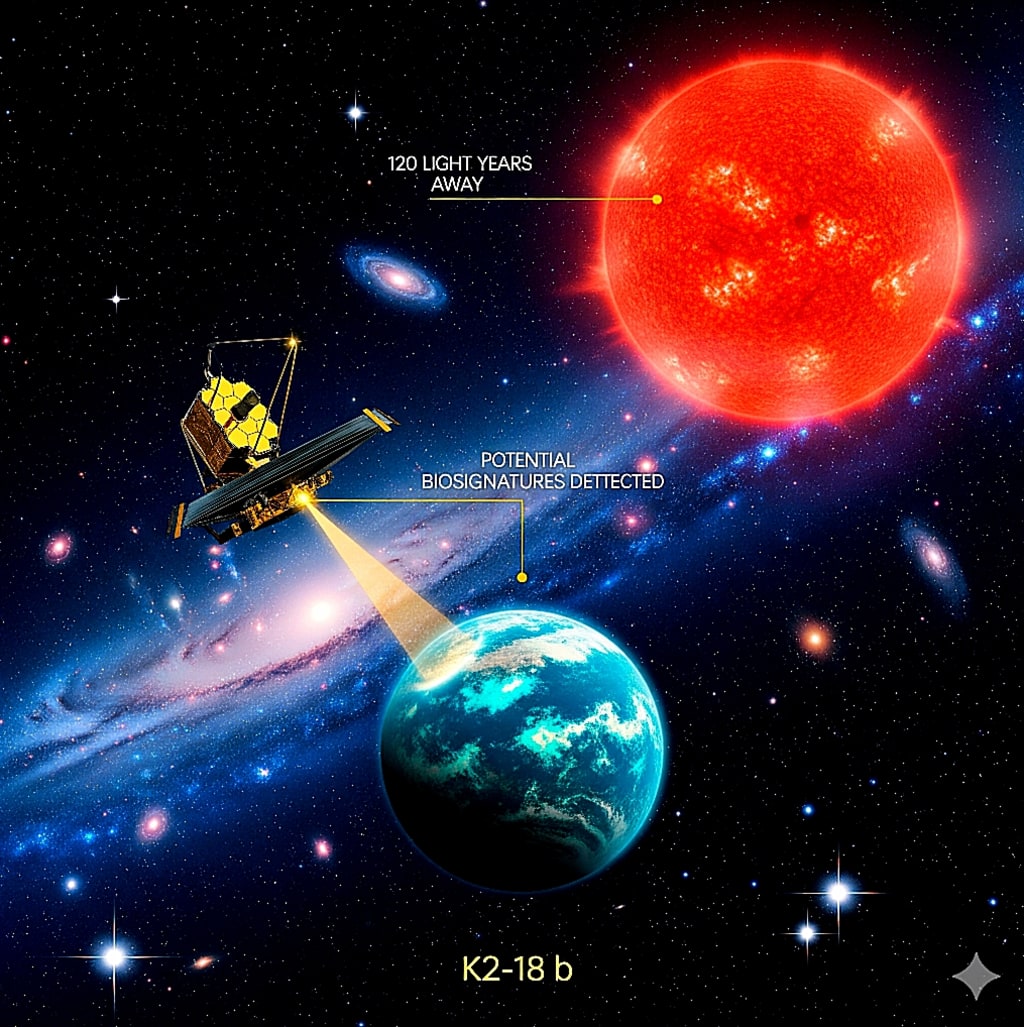
Exploring Life Beyond Earth: Webb Telescope Detects Potential Biosignatures on K2-18 b
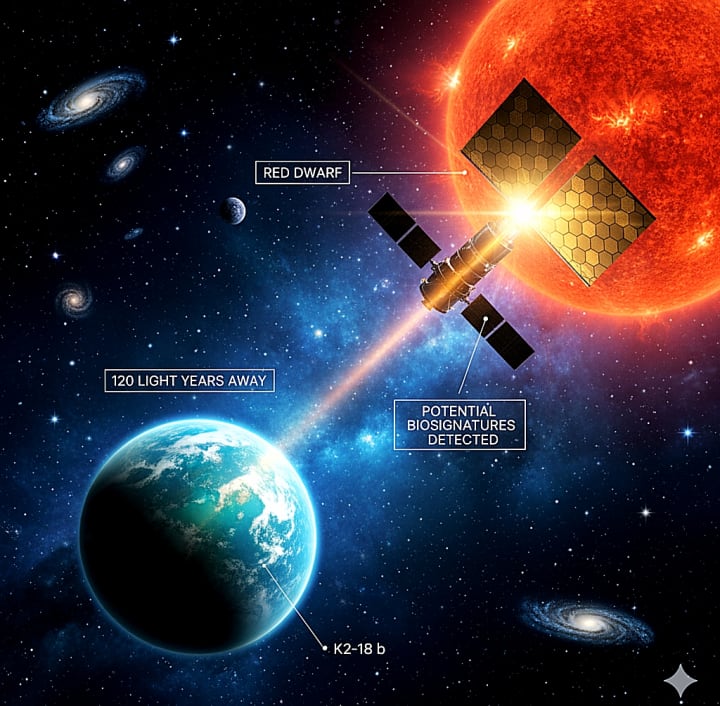
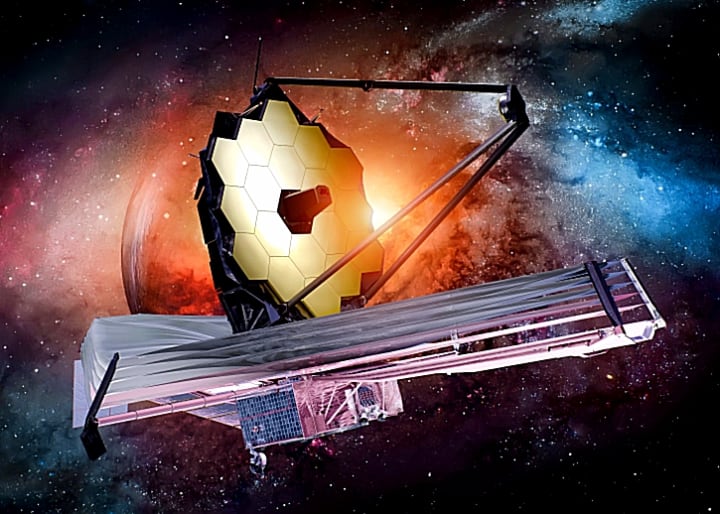
For centuries, humanity has pondered one of the most profound questions: Are we alone in the universe? With advancements in astronomy and space exploration, we are now closer than ever to finding an answer. NASA’s James Webb Space Telescope (JWST) has opened new frontiers in this search, providing unprecedented data on distant exoplanets. Among its most intriguing discoveries is K2-18 b, an exoplanet located approximately 120 light-years away in the constellation Leo. Observations of this planet have revealed the potential presence of biosignatures, offering tantalizing hints that life may exist elsewhere in the cosmos.
K2-18 b is classified as a “Hycean” planet—larger than Earth but smaller than Neptune. Its hydrogen-rich atmosphere and potential oceans make it a promising candidate for habitability. The planet orbits a red dwarf star and lies within the habitable zone, where liquid water could exist on its surface. These conditions, combined with atmospheric analyses, have sparked significant excitement among astronomers worldwide.
Scientific Observations and Biosignatures
Using spectroscopy, JWST has detected carbon dioxide, methane, water vapor, and possibly dimethyl sulfide (DMS) in the atmosphere of K2-18 b. On Earth, DMS is primarily produced by biological processes such as the activity of marine plankton. Its presence in the atmosphere of a distant exoplanet is intriguing because it may indicate biological activity beyond our planet.
While this does not provide conclusive evidence of extraterrestrial life, it positions K2-18 b as a key target for future observations. Scientists emphasize that these signals could also arise from non-biological processes, such as chemical reactions in the atmosphere. Nevertheless, the discovery represents a breakthrough in our ability to detect potential life on exoplanets, particularly on Hycean worlds that differ significantly from Earth in size and composition.
Hycean planets are a relatively new category of exoplanets, defined by their size, atmosphere, and potential for surface oceans. Unlike Earth-sized rocky planets, Hycean planets may support life in conditions previously thought inhospitable. By studying K2-18 b, scientists hope to understand how life might arise in diverse environments, expanding our conception of habitability beyond terrestrial norms.
The Order and Design of the Universe
Beyond scientific curiosity, the study of K2-18 b invites reflection on the order and precision inherent in the cosmos. Every exoplanet, star, and chemical process appears to follow consistent laws and intricate patterns. This remarkable level of organization suggests the presence of an underlying intelligence and design that orchestrates the cosmos with precision.
As noted in the Qur’an:
"Do they not see what is before them and what is behind them of the heavens and the earth? If We willed, We could cause the earth to swallow them or send upon them a sudden punishment. Indeed, in that are signs for every servant turning back [to Allah]." (Al-Anbiya: 30)
These verses remind us that the universe is not random or chaotic. Every element, from the orbit of distant planets to the chemical composition of atmospheres, exists under a deliberate and balanced system. Discoveries like K2-18 b reinforce this perspective, illustrating how the laws of nature and the potential for life are interconnected through precise order.
The detection of possible biosignatures on K2-18 b also highlights the remarkable balance necessary for life. The planet resides in a habitable zone, receives the right amount of stellar radiation, and maintains atmospheric conditions that could support oceans. Each of these factors demonstrates a delicate equilibrium that allows life—or at least the potential for life—to exist. From a reflective perspective, such balance suggests the presence of a conscious design behind the universe, inviting contemplation on the power and wisdom of Allah, the Creator.
Implications for Humanity and Scientific Exploration
K2-18 b’s discovery is more than a scientific milestone; it is a catalyst for philosophical reflection. The search for extraterrestrial life intersects with questions about the origin, purpose, and order of existence. It prompts humanity to consider that life, wherever it exists, emerges within systems governed by laws and balance—a universe that operates under the guidance of an intelligent Creator.
As astronomers continue to study K2-18 b, future observations will clarify whether the chemical signals indicate biological activity or non-biological processes. Even in the absence of confirmed life, the discovery demonstrates the structured and orderly nature of the cosmos, highlighting a design that extends far beyond Earth.
This perspective aligns with the Qur’anic view of the universe:
"It is He who created the heavens and the earth in truth. And the day He says, ‘Be,’ it is—and His word is the truth. His is the dominion [on] the day the trumpet is blown. [He is] Knower of the unseen and the witnessed, and He is the Wise, the Acquainted." (Al-An’am: 73)
These verses emphasize that every aspect of creation, from the vast cosmos to the tiniest chemical reaction, occurs under divine knowledge and wisdom. Observations of distant worlds like K2-18 b allow us to witness the complexity and harmony of creation, reinforcing the notion of Allah’s oneness and absolute authority over all systems.
The Future of Exoplanet Research
The study of K2-18 b is just the beginning. Scientists are now equipped with tools that allow for more detailed atmospheric analysis of exoplanets. With ongoing JWST observations and future missions, we may soon detect additional biosignatures, trace gases, or even signs of more complex biological systems on distant worlds.
Each discovery expands our understanding of how life may exist in varied conditions, and each confirmed pattern of order strengthens the argument that the universe operates according to a precise, deliberate design. For the thoughtful observer, this balance between science and reflection leads to a greater appreciation of the Creator and the meticulous organization of the cosmos.
Conclusion
K2-18 b’s potential biosignatures, its atmospheric composition, and its placement within the habitable zone all contribute to a remarkable narrative of order, possibility, and design. While the scientific community continues to analyze data and verify results, the discovery itself prompts reflection on the wisdom, power, and oneness of Allah.
This research reminds us that every star, planet, and system operates within a framework of laws and balance, suggesting that the universe is far from random. For those seeking to understand life beyond Earth, K2-18 b provides a unique opportunity to observe the cosmos’ precision and to contemplate the Creator behind it all.
In exploring K2-18 b, we are not just searching for extraterrestrial life; we are also witnessing a masterful orchestration of the universe, a system so intricately designed that it inspires both scientific inquiry and spiritual reflection. Every discovery serves as a reminder that the universe’s vastness and complexity point to a single, wise, and all-powerful Creator, guiding and sustaining all existence.
About the Creator
Amanullah
✨ “I share mysteries 🔍, stories 📖, and the wonders of the modern world 🌍 — all in a way that keeps you hooked!”
About Binding Prometheus
I want to start actively advocating on behalf of my own work, and the most valuable part of my canon is, without a doubt, Binding Prometheus, the play I have been working on since 2019 and only finished in 2023 as part of my MA. The play itself is an amalgamation of a million different inspirations. On one end, it evokes the Ancient Greek myth-play, deriving its own title from the earliest extant work of Western drama we have, Aeschylus’s Prometheus Bound. On the other end, it borrows significantly from the sci-fi bulwarks from over the years, namely Mary Shelley’s Frankenstein and Karel Capek’s Rossum’s Universal Robots. The play could be an episode of Black Mirror, I fear. I don’t know. I’ve only ever seen one episode of Black Mirror.
By Steven Christopher McKnight18 days ago in Futurism
UAE Board Games Market: Board Game Cafés, Imported Titles & Rising Popularity
According to IMARC Group's latest research publication, The UAE board games market size was valued at USD 101.66 Million in 2025 and is projected to reach USD 227.1 Million by 2034, growing at a compound annual growth rate of 9.34% from 2026-2034.
By Abhay Rajput4 days ago in Futurism
Wild Card Weekend Recap: What Happens Now?
I think I figured out why I love Wild Card Weekend so much. It's because it's the first playoff anything of the calendar year. The NFL season starts in the fall, and once upon a time, the champion was crowned either on or slightly before New Year's. The evolution of the NFL schedule has resulted in the playoffs starting just into the New Year, and currently, the final week of the season falls on the first weekend of the New Year, with Wild Card Weekend coming a week after that. So yes, chronologically, the NFL's Wild Card Weekend serves as the first playoff anything of the calendar year.
By Clyde E. Dawkins6 days ago in Unbalanced




Comments (1)
"This article beautifully blends cutting-edge space research with profound philosophical and spiritual reflections. The discussion on K2-18 b’s potential biosignatures is not only scientifically fascinating but also a powerful reminder of the intricate design and order of our universe. A refreshing perspective that bridges science and faith in a very thoughtful way—truly an inspiring read!"